Blog Archives
Biomoseying Along

Gricha German’s Biomos is a game with an important point on its mind. Could have fooled me. Let me propose a rule: if you intend for your game to make an important point, consider leveraging the medium’s unique strengths rather than squirreling that point away in the back of the rulebook. To be sure, the point is a sobering one that deserves widespread attention: over the past half-century, our planet has witnessed a 70% decline in monitored wild animal populations. That’s hard to fathom. If only somebody had modeled it in, say, a board game so we could visualize such a catastrophe.
Instead, Biomos moves in almost the exact opposite direction. You are a planet attempting to gather disparate biomes in order to sustain life. Even as a plaything with nothing on its mind but the accumulation of victory points, it fumbles the essentials.
Terrace Jerks

In the Urubamba Valley of the Andes Mountains there are extensive terraced earthworks. Located under the watchful gaze of Machu Picchu, itself a royal estate for overseeing the terraces, these were the principal growing grounds for the Inca Empire’s maize. The harvest was massive thanks to the valley’s careful arrangement of arable land, and much of it was fermented to produce chicha for the Inca’s many feasts and celebrations.
Very little of that comes through in Jeffrey CCH’s Sacred Valley. There are terraces all right, but they may as well be three separate fields. There are no earthworks, imperial-scale agricultural projects, or mountaintop citadels. There isn’t even any corn beer. Instead, Sacred Valley is about passive-aggressive farmers maximizing their yields while sabotaging their neighbors.
At least there are alpacas.
Eila and Something Disconcerting

I’ve never taken a firm stance on age ratings, in part because I’m not sure what they’re trying to impart. Most of the time, I take them as an evaluation of a game’s complexity, and a wishy-washy evaluation at that. A rating of 12+ won’t prove much of a deterrent to my nine-year-old because she plays more board games than her peers. That’s only the first limitation. I also can’t be certain that the designer invested much thought into it. Before I had children of my own, I couldn’t have told you the cognitive difference between ten and twelve years. And it isn’t as though the other numbers on a box bear much resemblance to reality. How often has a game’s estimated playtime proven to be hopelessly optimistic? These days, the only digits that really catch my eye are player counts.
I didn’t play Eila and Something Shiny with my daughter. Jeffrey CCH’s narrative experiment is a solitaire game, and for once I took that suggestion to heart rather than offering to loop in my kid. What a relief. Given the game’s friendly exterior, she might have accepted.
These Animals Need an Estate Tax
The king is dead. Long live the king’s many successors, claimants, and pretenders. Designed by Hong Kong-based creators Jeffrey CCH and Kenneth YWN, Inheritors is the latest in a long string of titles that demonstrate why hereditary monarchy is a terrible way to run a burrito cart, let alone a country. Maybe it should come as a surprise, then, that this transition is so smooth.
Off with Your Head
The latest trend in puzzle games is to tinker with communication. More properly, limitations on communication. The Mind, The Shipwreck Arcana, Codenames — the last few years have offered plenty of supernal examples. Have the player identify an island in a sea of noise, give them a way to provide limited glimpses of that island to their fellows, and then tell them to shut up. There you go. Puzzle game.
Ben Goldman’s Paint the Roses works in that same space, but according to a rhythm that feels more naturalistic and less constrained than its peers. Behind its pleasing Alice in Wonderland veneer, it just might be one of the finest limited communication games I’ve played.
Life Is the Bubbles

Game design is principally iterative. How’s that for an axiom? Although board gaming is no stranger to innovation, these are occasional detonations compared to our hobby’s long, slow, uphill periods of refinement. If that doesn’t sound glamorous, don’t shoot the messenger. Even less glamorous, the best refinements are often so granular that they often escape the untrained eye. How many cards you draw. The difference between drawing blind or from a market of visible offerings. The clarity of a user interface. Whether a defensive ability trumps all comers or merely hampers them. How smoothly points are calculated. What determines when the final tally is counted. The hundred small decisions that sum into a game that’s wildly different from another game, despite any number of outward similarities.
Oceans, designed by Nick Bentley, Dominic Crapuchettes, Ben Goldman, and Brian O’Neill, raises a sound question: how different is it from Evolution or Evolution: Climate? All were released by North Star Games. All are about explosive biological transformations and player-generated ecosystems. All are about eating your friends. Not like that, you dirty dog. With so many similarities, are there enough changes beyond the setting to warrant a second look?
Here’s a hint: everything I mentioned up in the first paragraph is something Oceans gets right, and those improvements still aren’t the best thing about it.
Unda da Sea: A Look at Oceans

To this day, Evolution — and in particular Evolution: Climate — remains one of those accessible games I’ll gladly recommend to nearly anybody. Family friendly, beautiful, fiercely competitive, and effortlessly illustrative of its namesake theory, it’s as easygoing or carnivorous as the people you’re playing with. Sometimes both at once.
But after three major iterations from North Star Games, the last thing I wanted was Evolution: Yet Again. Fortunately, their latest project, Oceans, understands its theme well enough to stay competitive. Which is why it transplants its predecessor’s core experiences — clever cardplay and an ever-shifting ecosystem — to not only beneath the waves, but also into an entirely new shape. And although this shift in DNA results in some castoffs along the way, this new form is fitter than ever.
If It Quacks Like a Quack…
Wolfgang Warsch is on a roll. Within the past year, he delivered the mathy Ganz Schön Clever, a great game that certain doofopoda don’t consider a game, a bunch of stuff I haven’t played because their titles are in German, and now The Quacks of Quedlinburg. I’d call his output improbable, except his games seem to truck in probability, so it’s… good odds? A fair shake? I have no idea.
On the surface, Quacks is about charlatan doctors peddling fake potions. But forget about that; it’s what we hoity-toity professionals call “setting pasta-toppa.”
Dude?

From Beau Beckett and Jeph Stahl, the creative duo behind 1812: The Invasion of Canada, 1775: Rebellion, 1754: Conquest, and 878: Vikings, comes their most important and serious cultural contribution yet—
A game in which you say “dude.”
And although it would be easy to repurpose the game’s tagline for my review — “it’s a game where you say dude” says everything about how amusing you’ll find it — I have opinions. Though most of them deal more with the sequel. Yes, you read that right: this game already has a sequel.
The Happiest of All Possible Planets
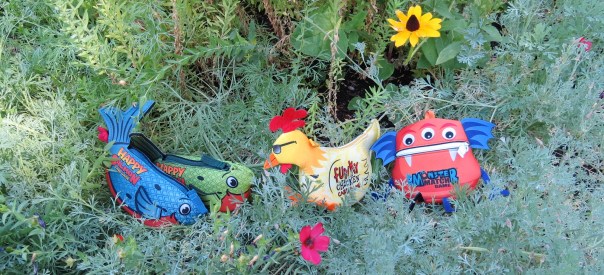
To this day, Happy Salmon remains the only game to occupy the hallowed annals of Best Week without first getting reviewed here on Space-Biff! Doubly embarrassing, considering that it earned its spot two Best Weeks ago. That’s right, way back in the dark ages of 2016.
But today I’m setting things right. Especially because North Star Games has since rounded out their Happy Planet line with two more creatures.

 SPACE-BIFF!