Blog Archives
Chu-se Wisely

The time has come for Tom Lehmann to design a trick-taker. Okay, that’s not wholly accurate. Chu Han, set during the Chu-Han Contention, is strictly a ladder-climber and card-shedder, but the genres overlap to such a degree that most laymen couldn’t tell the difference. More importantly, as befits the creator of Race for the Galaxy, Res Arcana, and Dice Realms, Chu Han has a few cool ideas up its sleeve.
Bottle Princess
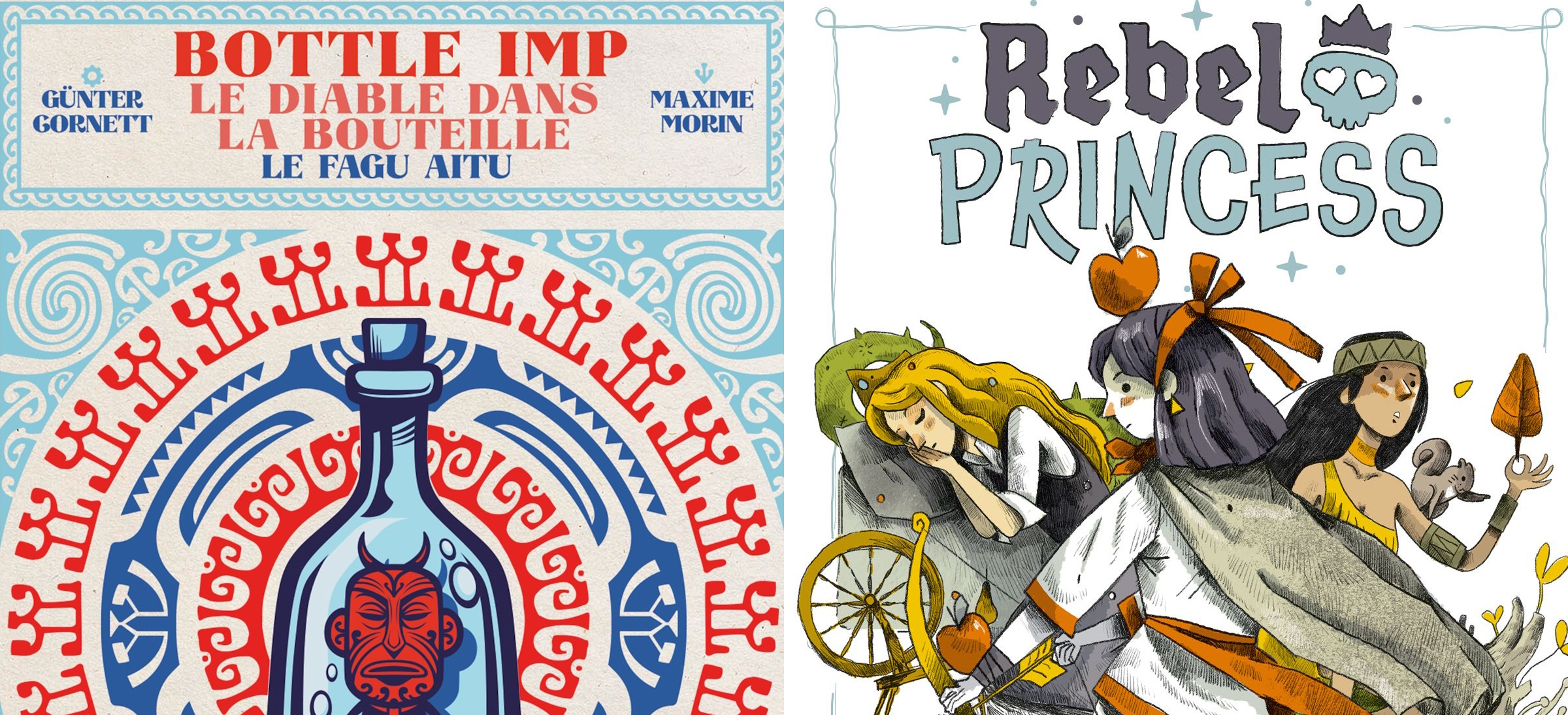
Since all I play anymore is trick-taking games, it seems fitting that I should inaugurate the New Year by writing about two titles that have been occupying my winter break: Bottle Imp, the reissue of Günter Cornett’s 1995 classic, and Rebel Princess by Daniel Byrne, Gerardo Guerrero, Kevin Peláez, and Tirso Virgós.
What’s their unifying thread? Mostly that trick-takers are often accused of being “themeless.” Probably because they often are. But these are two examples of how to imbue a trick-taker with a tangible setting, and in the process aid players in remembering the import of all those individual plays.
Galactic Relapse
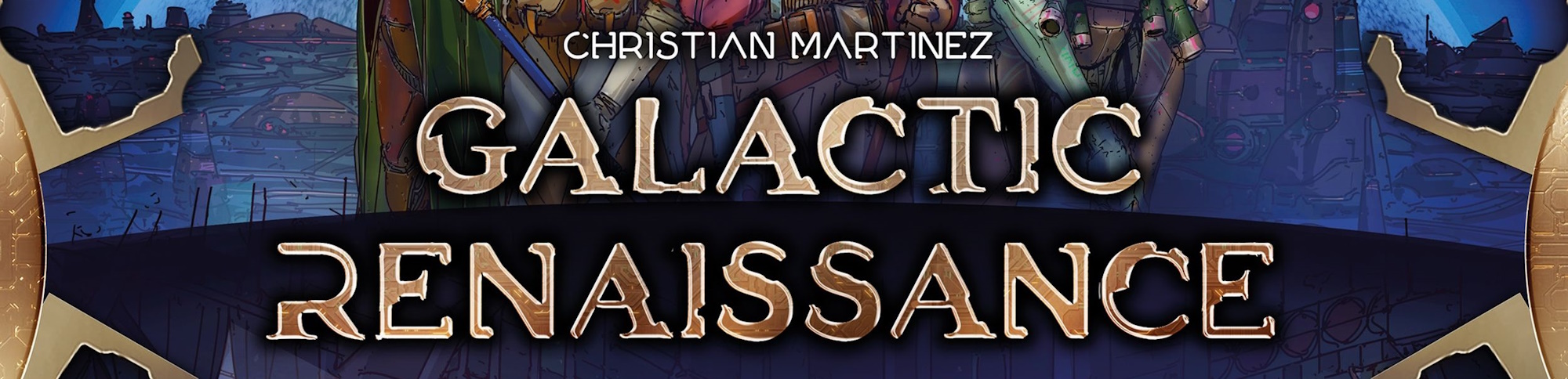
When it comes to board games, it isn’t always easy to tell the difference between a development and a regression. Take Galactic Renaissance, Christian Martinez’s followup to his supernal war-and-politics game Inis. On the surface, it covers much the same ground as that previous title, full of aggressive peacetimes, ill-advised conflicts that leave one poorer even in victory, and intersecting interests that are too testy to call alliances. Even the game’s geography, those far-flung planets only connected via warpgates, the way their abilities are contested and claimed, calls to mind the island terrain of its predecessor.
But this is no Inis. Despite riffing on many of the same ideas, Galactic Renaissance is a pockmarked experience, uneven in its best moments and frustrating and over-long the rest of the time. At its worst, it feels like a half-completed prototype for its predecessor.
The Galaxy Is on Orion’s Belt

Orion Duel is the sort of game fifth-dimensional beings play while waiting for the next Big Crunch to reset the universe. Designed by Alberto Branciari and Andrea Mainini, this is an abstract that nominally resembles John Nash’s classic game Hex, but with a few major wrinkles thrown in for good measure. I am very bad at it.
Almost Me

It could happen to anyone. Your band of adventurers hit the tavern too hard last night. When you woke up, every member of your party was accused of a different heinous crime. For some reason we’re presuming you didn’t commit the deeds in question. Before the queen tosses your sodden bones in the clank, you’ll need to clear your good (eh) name. It’s detectin’ time.
That’s the premise behind Almost Innocent, Philippe Attali’s cooperative deduction game, which is best described as aggressively fine.
Wouldst Thou Like the Taste of Margarine?

What happens when multiple covens of witches come together to determine which among them is most powerful? Why, chase victory points, of course! Stefano Di Silvio’s Evenfall won’t be winning any points for originality. Its best bits are mined wholesale from other tableau- and combo-builders. But it’s a slick package all the same, even if it seems to cast an enchantment of forgetfulness after each appearance on the table.
Cairn or Cairn’t?

I’m always befuddled when somebody asks if a higher-count title will work with only two people. Say, Christian Martinez’s excellent Inis or its expansion. Friend, let me stop you there. Don’t you already have the entire world at your fingertips? Aren’t you drowning in two-player games? Isn’t 2p your most competed-for count? It’s certainly mine. I can barely play the best two-player games, let alone those that are merely good.
Cairn is a two-player game. By Christian Martinez. Two facts that stand in diametric opposition in the tug-of-war for my interest. Let’s see how it fares.
Inising Along

One of the things I always look for with an expansion is whether it feels like an expansion. No, that isn’t meant to be a tautological nightmare. Rather, my hope is always that an expansion will integrate into the base game in such a way that it feels seamless, without snags or snake’s hands. Since Inis has been one of my favorite dudes-on-a-map games for the past three years, I was eager to see whether the five modules of its expansion were up to the task. And hey, if they turned out to be duds, at least I got to play more Inis. Did I mention that I’m a big fan of Inis?
Here’s the good news: Seasons of Inis scores a venerable four out of five. And although one of its modules doesn’t fit quite as fluidly as the rest, it isn’t any slouch, either.
The Dry-Erase Smudge Marks the Spot

Tim Curry has been captured! His treasure lies buried somewhere on the island. Gonzo, Rizzo the Rat, and that bemulleted blonde kid — professional pirates all, a real festival of conviviality — are racing to figure out Tim Curry’s clues and unearth the gold. That’s right, it’s Robert Louis Stevenson’s Treasure Island, a book that I’ve absolutely read. And in cardboard form, it may feature fewer musical numbers than the original, but it’s also a sublime deduction game.
Most of the time, anyway.
Swabber Sonar

There were precisely two problems with last year’s firecracker-in-a-tin-can Captain Sonar. One, it benefited from a crew of at least six people to staff its dueling submarines, and was further improved by a full complement of eight. And two, it was the direct opposite of a good meditation session. It could get so hairy it was almost a cure for balding.
Sonar — sans the Captain — is Matagot’s gesture of reconciliation toward those who suffered post-traumatic stress as a result of their time at the scope, helm, engine room, and torpedo tube. In theory, it’s the same grand sub-hunting action, but for two or four players and at a much more relaxed pace. The question, then, is whether Sonar represents a dry-erase The Hunt for Red October — or is it more akin to Down Periscope?

 SPACE-BIFF!