Blog Archives
Cutting the Cottage Pie
At this point, I don’t believe the fine folks at DVC Games have it in them to publish a bad game. Pacts, for example, is not only a fantastic divide-and-choose game, it’s probably the best example of its ilk.
Maybe that isn’t a tall order. Certainly it would sound more impressive if we were talking about deck-builders or trick-takers. Divide-and-choose is one of those mechanisms everybody understands at an instinctual level. We use it whenever we split a slice of pie. We contemplate it whenever the check comes due at a group dinner. But for all that, it’s never quite found its footing. Open a teach with, “Okay, this is one of those I-divide, you-choose things,” and my mind doesn’t exactly spark with excitement.
Until now. Because Ben Brin has cracked the code. Even though it isn’t quite as offbeat as other DVC titles, Pacts is one of their sharpest offerings yet.
Respond or Re;ACT
We’ve rightly developed some suspicion around the suffering artist trope, but I think deep down we’re all holding onto the idea that our art becomes a little bit tastier with some angst mixed in. I think the artists of Jenna Felli’s Bemused, wracked by doubt and dread. Or Jasper de Lange’s Bohemians, all penniless syphilitics. Want to create a masterwork? Sure. Go right ahead. But it’ll be better if you wedge a needle under your toenail.
But then there are the artists of Re;ACT: The Arts of War by Chris Lin, MingYang Lu, and Eric Zeringue. These folks are out here dueling each other in an arena, and although it might seem like the footrace between calligraphy and animation was settled long ago, here they both are, having the time of their lives. Step aside, suffering artists. This one’s for the artists who can’t wait to get back to the drawing table.
As for the game? Oh, right. That.
Space-Cast! #51. Mori, Zucchini, Napoleon
Ah, Napoleon. Old Boney. Roll’n’Bones. The Bone Zone. The guy’s got a lot of nicknames, and even more board games! The latest, and one of the most intriguing, is Battlefields of the Napoleonic Wars, codesigned by Paolo Mori and Alessandro Zucchini. Today on the Space-Cast!, we dive into the creation of this approachable hex-and-counter title, including its creators’ aversion to combat results tables, their choice of battles, and why they decided to publish under their own label.
Listen over here or download here. Timestamps can be found after the jump.
Sun Besties!

At the risk of sounding like a backwater bumpkin, I’ll admit I don’t know much about Inca mythology. After playing Ayar: Children of the Sun, the latest collaboration between Fabio Lopiano and Mandela Fernández-Grandon after last year’s overstuffed Sankoré… well, I still couldn’t tell you much. As near as I can tell, we’re following in the footsteps of a creator god’s grandchildren, founding civilization in our wake. Planting corn, thatching islands, that sort of thing.
For a nu-euro, that’s par for the course, I suppose.
Legend Became Tabletop
Countless players and critics have already pointed out that Matt Leacock’s Fate of the Fellowship is magnificent, and there will be no hot takes here. I’d call it the finest Lord of the Rings board game ever made, but I still have War of the Ring sitting unplayed on a shelf somewhere, and anyway there are so many wonderful tabletop adaptations of J.R.R. Tolkien’s trilogy that any quibbles would be matters of taste more than quality.
What impresses me the most is the granular stuff. The sheer amount of love poured into the adaptation, of course, but also the way Leacock has refined his original Pandemic formula until it’s all but unrecognizable. The crucial elements are present, but Fate is so far removed from that disease-inoculating 2008 original that it’s like observing evolution in freeze-frame.
This Is Not a Review of a Pipe
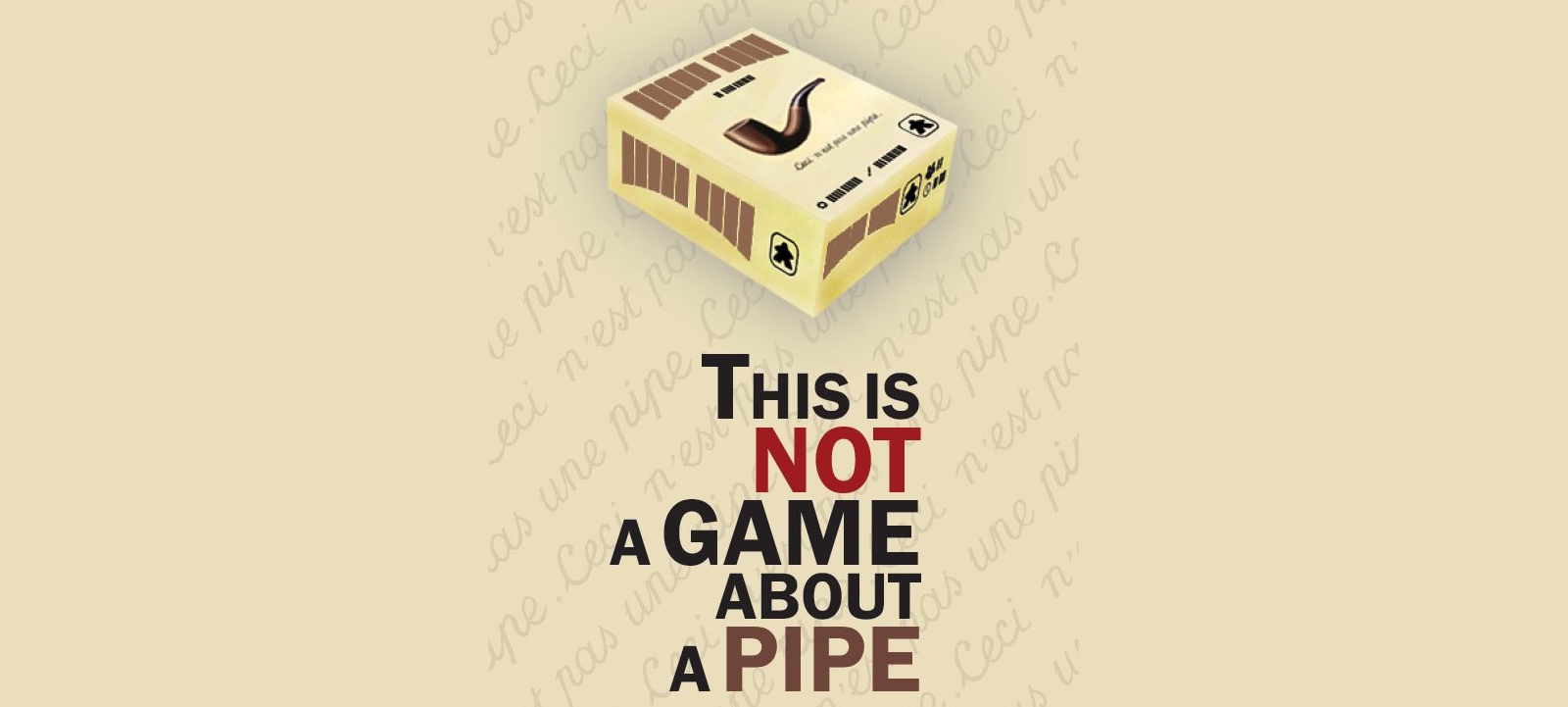
All I play anymore is trick-takers. And while some of them are challenging, others risk disappearing down their own pipe-hole in a semantic puff of tobacco smoke.
That isn’t a bad thing. This Is Not a Game About a Pipe, designed by Mac McAnally, may have started as a riff on René Magritte’s The Treachery of Images, but it’s a respectable little ditty in its own right, in no small part thanks to the way it forces players to construct studiously sensical statements about their cards.
Unnameable

After the first day of SDHistCon, where I played three games about opium peddling, I figured the second would be easier on my stomach. I could not have been more wrong.
It has no name. Its designer doesn’t want to be credited. Of all the many board games I’ve played, it’s the one that left me the most shaken.
“You are four senior Nazi officials,” our Teacher tells us. His hands are trembling. His mouth quirks between solemnity and something like an apologetic smile. “And you are conducting the Final Solution.”
EXTREME CONTENT AND SPOILER WARNINGS ARE IN EFFECT FROM THIS POINT. PROCEED ONLY AT YOUR OWN RISK.
Trick-Taking’s Back on the Menu, Boys!
The problem with sequels, especially in board games where sequels are mechanical artifacts first and narrative artifacts a distant second if at all, is that there isn’t necessarily more to say about them. Last year, Bryan Bornmueller’s The Fellowship of the Ring: Trick-Taking Game was one of my favorites. Now, as was foretold by some lady peering into a bowl of water, The Two Towers: Trick-Taking Game is here.
It’s more of the same.
That’s precisely what I wanted it to be. But it doesn’t necessarily make for interesting breakfast reading.
Nebulae, Medusae… Crownae?
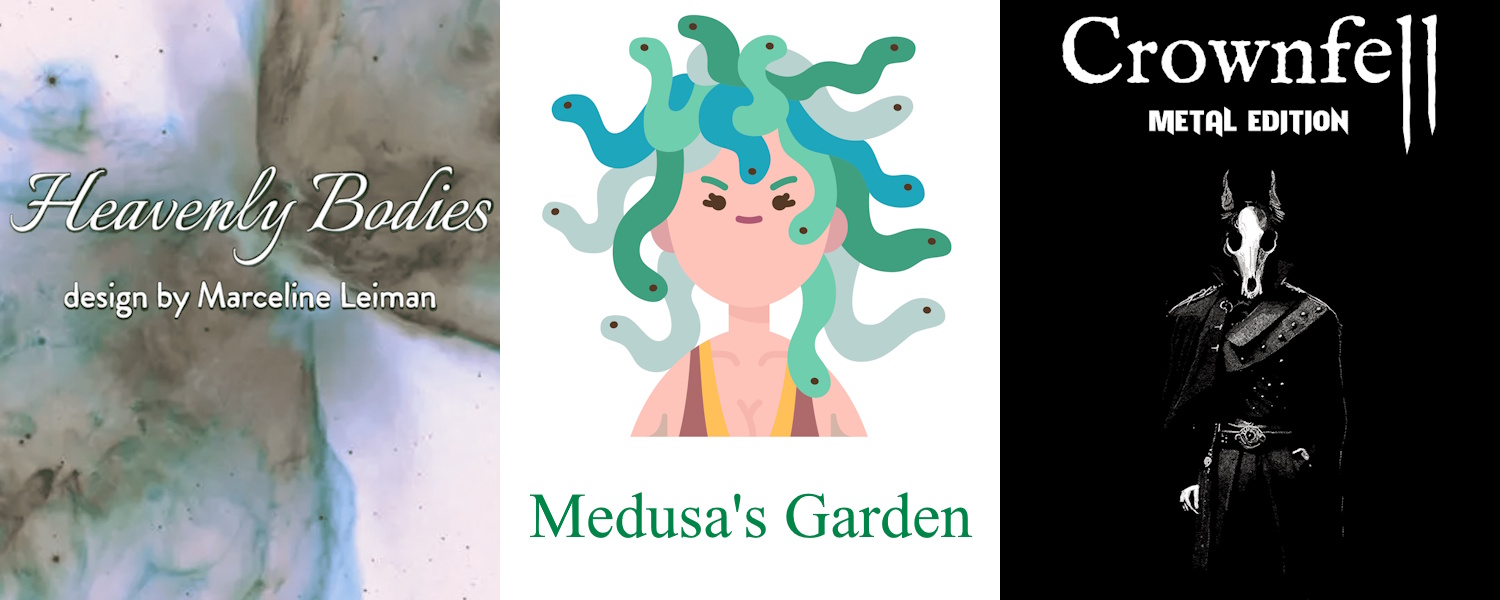
Yesterday on BlueSky, Marceline Leiman asked a great question. Using only one or two extremely vague words, how would I describe the titles on offer at this year’s Indie Games Night Market?
Now that I’ve given it some thought, I think I have an answer, although perhaps it’s more concrete than she was looking for. More even than last year, these games seem like they’re pushing boundaries. They capture the spirit of what it means to be “indie.” Not only in the sense that they don’t have publishers. Rather, that they see the hobby from a perspective apart. They know board games; they love board games; they’re in conversation with board games. But more than that, they’re board games as lenses through which one might behold the entirety of the hobby. Its past. Its present. Its future.
How’s that for a wanky answer? Oh well. What follows are three games I love for different reasons, but perhaps love even better for the same reason — because they’re outsiders paying homage to their hobby, but doing so in a way that’s so defiantly indie.
Paper Planes, Coupons, Stencils

We’re only a few days away from the Indie Games Night Market at Pax Unplugged. Funny how time gets away from us. Don’t worry, that’s less a plaintive cry about my fading youth than a statement on my incapability to properly schedule these things.
Fortunately, three of these titles fall into roughly the same category. The same two categories, even! These are tactile games that play best with family. Let’s take a look.

 SPACE-BIFF!