Blog Archives
Anthropic Rock Collector

Sea glass is the second coolest anthropic rock, ranked right behind fordite and waaaay above concrete. River Valley Glassworks, Adam Hill, Ben Pinchback, and Matt Riddle’s hot game of the moment, is about cute river creatures collecting fragments of discarded glass that have been tumbled smooth by the river. As befits the man-made artifacts you’re collecting, it’s wonderful to look at and feels incredible to manipulate. It’s also a little too superficial for my tastes.
Talking About Games: One Billion Biases

Bias. It’s a scary word, huh? We all have biases, but never as many as other people. Or is that also a bias?
Surprising nobody, reviewing a hundred-something board games a year leads to regular accusations of bias. “Oh, you only liked this game because you’re so handsome,” they’ll say. “Oh, you only liked this game because all the ladies write romance novels in which you’re plainly the author-insert character’s love interest. But you’re so coy. You play with your food. Not because you’re emotionally neglectful, oh no. Because of your dark past. Because you were mistreated and thus mistreat others. She can fix you. She will fix you. Anticipation shudders down the novel’s spine.”
Yes, it’s a difficult life I lead. But I bear the burden gladly. So let’s talk frankly about bias. What it is, why it is, and how it impacts every review, mine included.
The Whole World Is Watching

It’s a rare board game that asks you to locate yourself in history. To do more than merely visit some remote decade but to recognize your place within it, the ways it has accompanied your country, your family, your self all the way through to today.
Yoni Goldstein’s Chicago ’68 is, as the title indicates, about the Democratic National Convention of 1968 — fifty-six years ago this very week — when protests against the escalating Vietnam War flared into a riot between demonstrators and police. Its anxieties are our anxieties. War or peace, one nominee or another, racial tensions that remain with us still. We’ve played protest games before, but Chicago ’68 is the crispest example yet, neither abstracted like Bloc by Bloc nor given the bird’s eye view of Votes for Women.
Most of all, it has a profound, sickening familiarity that both of those titles lacked. This is play not only as history, but as a mirror.
Arabian Hammer

Periodization is a funny thing. Sorting history into discrete blocks is useful for the sake of memory and study, but often proves misleading the instant somebody takes those blocks as gospel rather than as a loose mental framework.
Take the unification of the Arabian Peninsula. From the European perspective, the ascent of the House of Saud was paved by the evaporation of the Ottoman Empire. On the Peninsula itself, however, the conflict had deeper roots, bound up in feuding tribal dynasties, the distant interests of multiple imperial overlords, and the passage of many decades.
Arabian Struggle, co-designed by Nick Porter and Tim Uren, and drawing on the Conflict of Wills system initially expressed in Robin David’s fascinating Judean Hammer, emphasizes the long view. A dozen wars, countless battles and raids and negotiations, and even the Great War itself are mere beats in its epochal narrative. At ten thousand feet, the details get fuzzy. It’s to Porter and Uren’s credit that the overall thrust of the conflict never goes missing.
The Man DeLorean
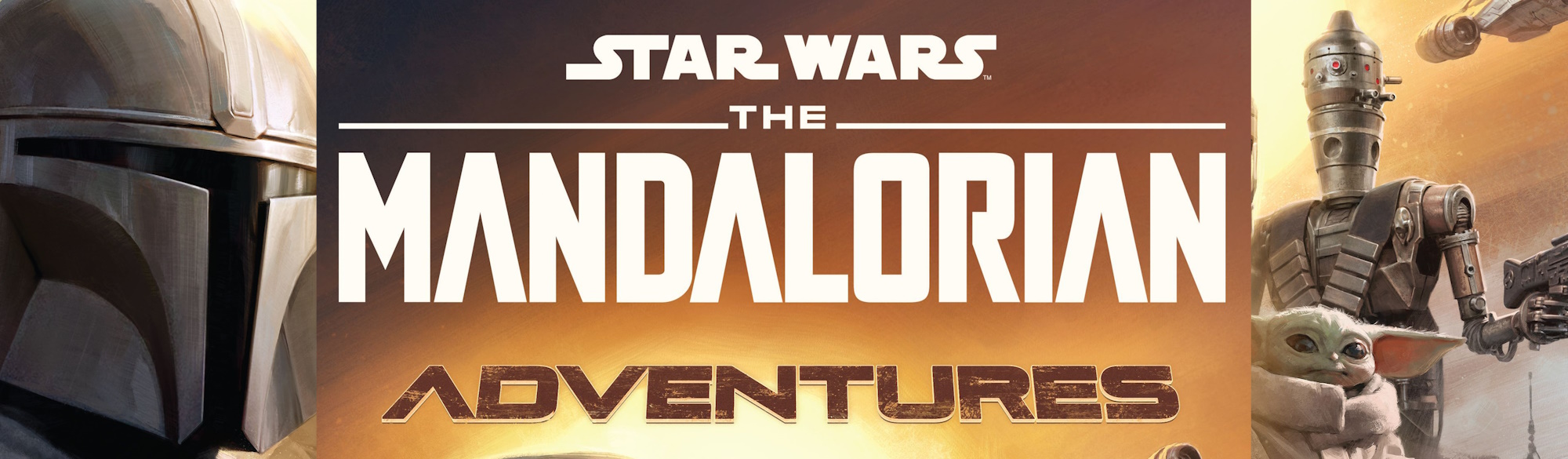
Here’s what I’ve gleaned from watching one episode of The Mandalorian. It’s Star Wars, all right. Boba Fett is taking petty bounties to reforge his armor after it was melted by that sandworm on Arrakis. He learns how to ride a bipedal potato, shoots up a town populated by four hundred gungoons, and saves Small Yoda from his old nemesis IG-88.
This is me blinking in bewilderment. People like this stuff?
The Mandalorian: Adventures is a board game adaptation of the entire first season by Corey Konieczka. It isn’t about to persuade me to watch more Star Wars. But in a huge twist worthy of a montage about riding a potato, I wouldn’t mind seeing an expansion with more shootouts, heists, and general buffoonery.
Walk the (Slack) Line
Peacemakers: Horrors of War fascinates me. This is my third visit to Sami Laakso’s Daimyria, a world not dissimilar to ours but populated by countless species of fur and scale and feather. Like humans, as we saw in Dale of Merchants, these creatures engage in mercantile exchange. In Lands of Galzyr, they wander off on continent-spanning adventures. And in Peacemakers: Horrors of War, they expend a great deal of energy on killing one another.
But not all of them. Horrors of War is a second stab at the system Laakso introduced in Dawn of Peacemakers, which cast characters not only as negotiators and mediators determined to cease hostilities between neighboring belligerents, but also sometimes as manipulators and poisoners. The art of peace, Peacemakers argues, is as fraught as battle itself. As a result, it walks multiple fine lines, both ludically and morally.
Sinking Buckets

How can I put this tactfully? PICKUP wasn’t designed for me. I can’t say with any confidence that it was designed for anyone. The production is sloppy, with flimsy cards and poorly cut edges that dust your table and fingers with abrasive flakes of paper. The design and art are uncredited. For a dice game, I’m not sure it understands what makes dice interesting. The game doesn’t even come with rules. Not all of them. There are three modes, starter, party, and classic. Only the rules for the party mode are included in the box. And let me tell you, “party” is a misnomer.
Classic, though? Classic isn’t awful.
Space-Cast! #40. Heading Flint

Politics! There’s no avoiding them. In today’s space-cast, we’re joined by John du Bois to talk about two of his designs that encourage political awareness and human empathy: Heading Forward, about recovering from a traumatic head injury, and Striking Flint, focused on the 1936 General Motors sit-down strike. Along the way, we cover topics ranging from triggers and spoons to the banning of Matteo Menapace from the Spiel des Jahres.
Listen here or download here. Timestamps can be found after the jump.
Ars Wilmot

Meet Wilmot’s Warehouse. Based on the video game by Richard Hogg and Ricky Haggett, and designed by David King — creator of browser-based roll-and-write Tiny Islands — Wilmot’s Warehouse is a memory game. Let me finish! Wilmot’s Warehouse is a memory game but good. But great. But excellent. But a minor miracle, a religious experience, a paean to human creativity in an era where tech grifters believe the species ought to be replaced by expensive imitation engines.
Hearts Adrift

Not many things sound as terrifying as drifting through outer space. Remember that scene in Alfonso Cuarón’s Gravity where Sandra Bullock was sent spinning head over heels, alone but for the stars in her visor and the percussion of her own panicked breathing? My heart. That was scarier than any thorny alien.
Mark McGee’s Tether isn’t terrifying — quite the opposite! — but it leans into the disorientation of not knowing up from down. A crew of retrofuturist astronauts has been set adrift. It’s your task to bind them into secure clusters. Prepare for brain burn, because this thing is hotter than rocket fuel.

 SPACE-BIFF!