Kinfire. That One.

Here’s a funny thing: playing Kinfire Delve, the three small boxes spun off of Kevin Wilson’s much grander Kinfire Chronicles: Night’s Fall, I figured they must be runty versions of the larger thing. Those side quests feature the same cast of heroes as Chronicles, albeit parceled out two per box, with a card system that sees them either using cards for their principal effects or to boost their fellow heroes. Surely, I assumed, the massive slab that was Kinfire Chronicles would be deeper, smarter, more compelling?
If anything, it’s the other way around. I’ve been playing Kinfire Chronicles: Night’s Fall for some months now, picking through its storybook, slaying its monsters, and scouring the lighthouse-protected city of Din’Lux for its coziest inn. And I have to say — I prefer the little ones. By a lot.
Magenta Four: Fruit Fight
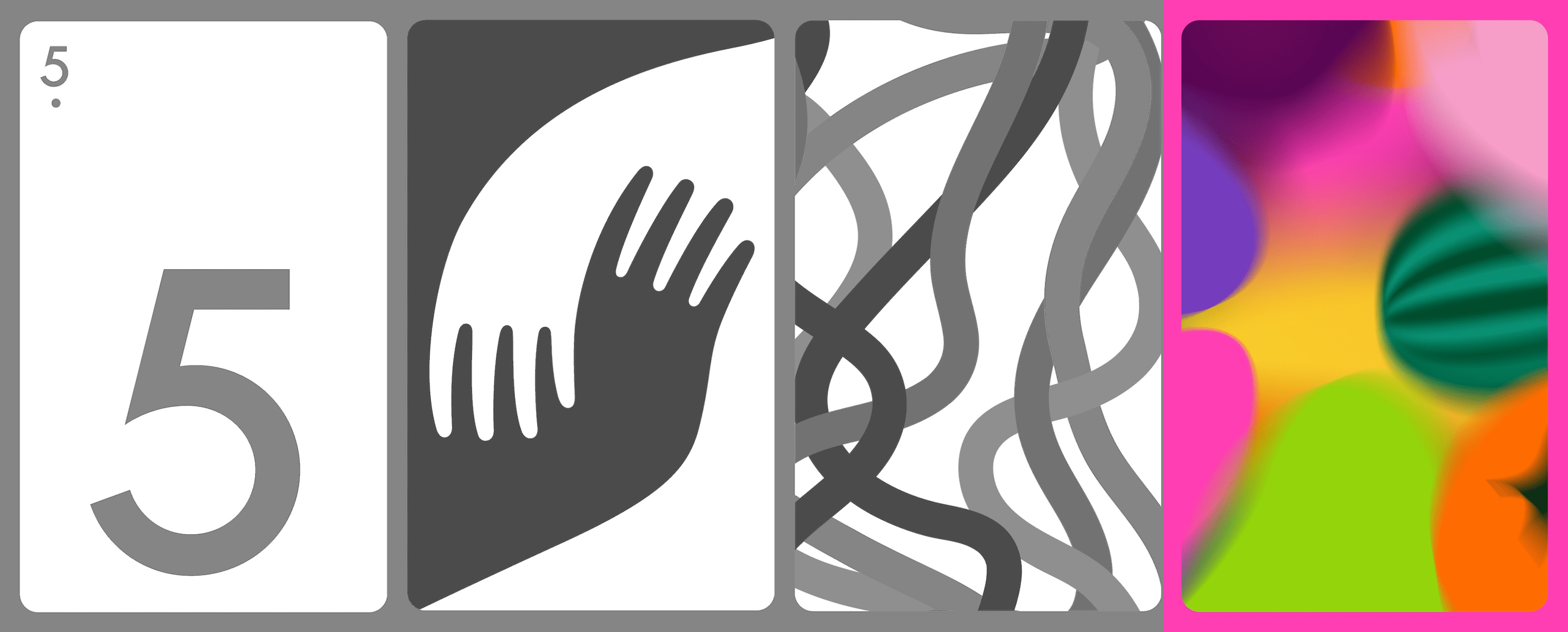
Of course, there’s a Knizia. Fruit Fight is the final entry in CMYK’s Magenta, a series of four brightly-colored card games that each introduce a new concept. It’s also perhaps the most storied of the bunch, with multiple reissues over the years, masquerading as Hit!, No Mercy, and Cheeky Monkey. This time around, you’re apparently chucking fruit at each other, complete with blurred images of foodstuffs sailing through the air. As with the rest of this set, the aesthetic is downright charming.
The game itself? Eh. It’s fine.
Let Me Die Surrounded By Machines

Moon Colony Bloodbath is a board game out of time, and not entirely in the good sense. It owes its evocative title to the Mountain Goats / John Vanderslice collaborative EP of the same name, but the comparisons end there. Donald X. Vaccarino liked the name, liked the idea of a moon colony going extinct, and, well, that’s what prospective moon colonists are going to get. It’s not quite a joke — there is some gameplay here — but its punchline is right there on the cover.
Space-Cast! #44. Enlightened

The Illuminati! Aside from being a cabal of lizard-people who rule the world through the United Nations, they are now also the topic of a board game, Pax Illuminaten. On today’s Space-Cast!, we’re joined by designer Oliver Kiley to discuss three very different histories of this secret society.
Listen here or download here. Timestamps can be found after the jump.
Adolescent Archipelago

Over the past few months, we’ve taken a look at a number of small-batch games that were designed for sale at indie markets. One forthcoming example is Juven Isle, a tile-placement and terrain-blocking game by Gary Kacmarcik, which should be available at this weekend’s Game Market Vegas.
Mostly, it’s an excuse to pore over maps and puns at the same time. Two of my favorite things!
Magenta Three: Figment

Another week, another Magenta! After Fives and Duos, I thought I had a handle on CMYK’s approach. These are fresh spins on familiar card games, simple enough to appeal to the masses, but dimpled enough that you, a time-tested veteran, won’t grumble when it hits the table.
Until Figment. Figment is the weird one of the bunch.
Climbing Three Ladders

Is ladder-climbing and deck-shedding the next phase of our hobby’s obsession with trick-taking? It may well be. I’ve covered plenty of trick-takers from New Mill Industries over the past year or so. Now the small-box publisher has released a trio of shedder-climbers. Let’s take a look at each in turn, shall we?
RETXXIIIRN

Remember how last year all those RETVRN bros couldn’t stop talking about how they meditate on the fate of Ancient Rome every single day, but when pressed it turned out they just had a big squishy for Ridley Scott’s Gladiator? Well, here’s a part of our distant heritage I think about daily: that holiday in the middle of March when we all get together and stab our nation’s self-proclaimed dictator.
23 Knives, designed by Tyler J. Brown, whisks us to that fateful day in 44 BCE when a senatorial conspiracy resulted in Julius Caesar lying dead at the feet of a statue of Pompey the Great, his onetime ally, son-in-law, and eventual rival in the preceding civil war. Those Romans sure loved their little ironies.
A Visual Tour of ProtoCon

The Wasatch Front hosts an unusual density of board game designers. I don’t know if it’s the culture, the thin air, the altitude, or the arsenic billowing from the withering lakebed of the Great Salt Lake, but there you have it. Beginning in 2019 just in time for ‘rona, a handful of local publishers started an annual convention for board game prototypes. They named their baby ProtoCon, which I believe is short for “Protolithic Confluence.”
Last month, I spent an afternoon at ProtoCon. Hosted in the conference rooms of the architectural marvel that is the West Valley Megaplex, this was an opportunity for dozens of designers and playtesters to show off their games, get feedback, and polish their playthings. Wait, don’t cite that last part.
As ever, I would love to share some of the best sights, sounds, and scents of the convention. Take my hand as I lead you on a visual tour. No, the other hand.
Magenta Two: Duos

Last week, I called Fives, the first entry in CMYK’s Magenta, the least intriguing of these four releases. Duos, on the other hand, is probably the best in terms of raw gameplay. Designed by Johannes Schmidauer-König, this is a remake of his 2015 title Team Play. And let me tell you, for a thirty-minute partner game, it’s as tight as they come.

 SPACE-BIFF!