Category Archives: Reviews
Runewars: But How Does It Play?
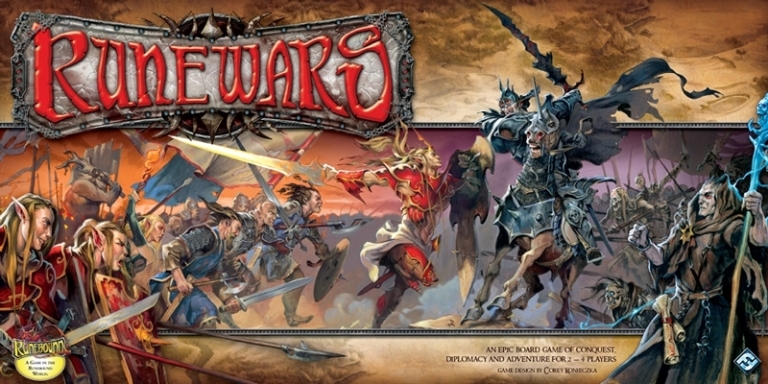
The box. About two times too big until you get the expansion.
I recently wrote a series of articles on a recent gaming session (well, sessions) of Runewars and its expansion, Banners of War. It was humbly entitled Runewars Mega (Part 1 here, and Index here), and I wrote it as a story—a retelling of the narrative that four friends created together. The reaction to this series was encouraging, but I kept getting the same question from readers: “But how does it play?”
In writing about the story of our game, I entirely neglected to explain much about the game mechanics themselves. In so doing, the only applied information I seem to have imparted was that Runewars is incredibly complicated—which, sure, it can be. So now I’m writing this as a sort of formal apology: this is how the game plays, and why I believe it to be one of the best games on my shelf.
Conquest of Elysium 3 is…

A picture of Conquest of Elysium 3. Look at all the scary data. What does it mean? Does anyone know?
I’ve been playing and talking a lot about Conquest of Elysium 3 from Illwinter Game Design, the two-man band responsible for Dominions 3. My review? It’s great: simple to learn, plenty of depth, and lots of options for customization so you can play the game you’re in the mood for.
However, it hasn’t been widely reviewed, and lots of folks seem confused about what it is—one review so completely that I couldn’t help but poke some fun at it. I understand this response—its visual style requires some acclimatizing, and it looks like it could be one of those impenetrable stats-based games that you once bought as a kid because you heard you could do anything but then it turned out you couldn’t even figure out how to build a cavalry regiment.
Have no fear! CoE3 is not one of those games. But rather than define what it isn’t, I’ve made a handy list of four things that sum up what Conquest of Elysium 3 is all about. If that doesn’t interest you, you can make like an IGN reader and skip to the end for the final score.
Long Walks on the Beach: Dear Esther
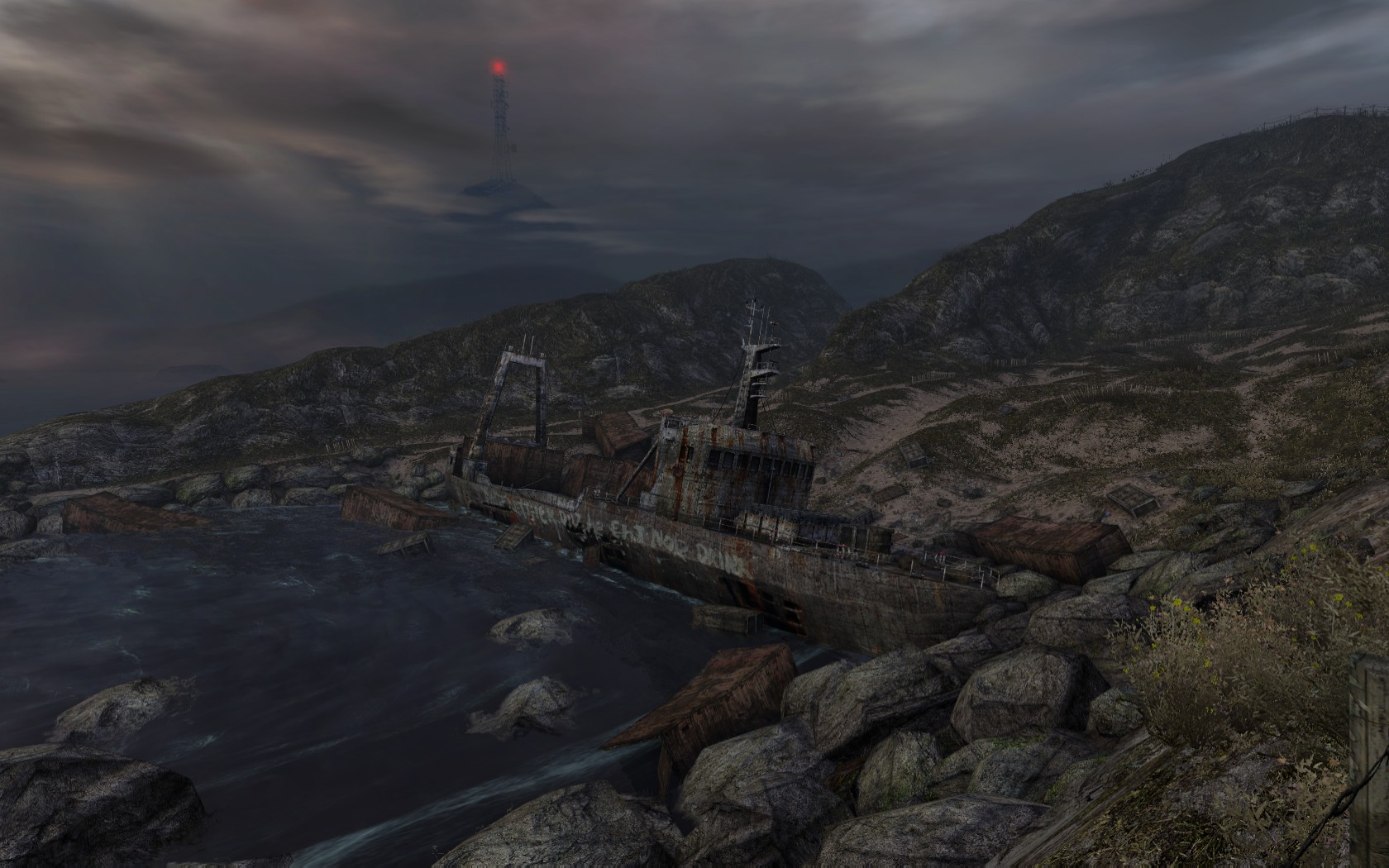
One of the many poignant images from Dear Esther.
I’m having a hard time pinning down Dear Esther. After reading a few other opinion pieces, reviews, and theories, I think the feeling is mutual. Which is fine, since I suspect that’s exactly what creator Dan Pinchbeck was going for.
So I’ll put it this way: what does a fatal car crash, a syphilitic goatherd, a blinking radio aerial, a navy of paper boats, and a stunning cave create when combined? Answer: I have no idea. But it’s interesting all the same.
La Piña de La Muerte: Pineapple Smash Crew
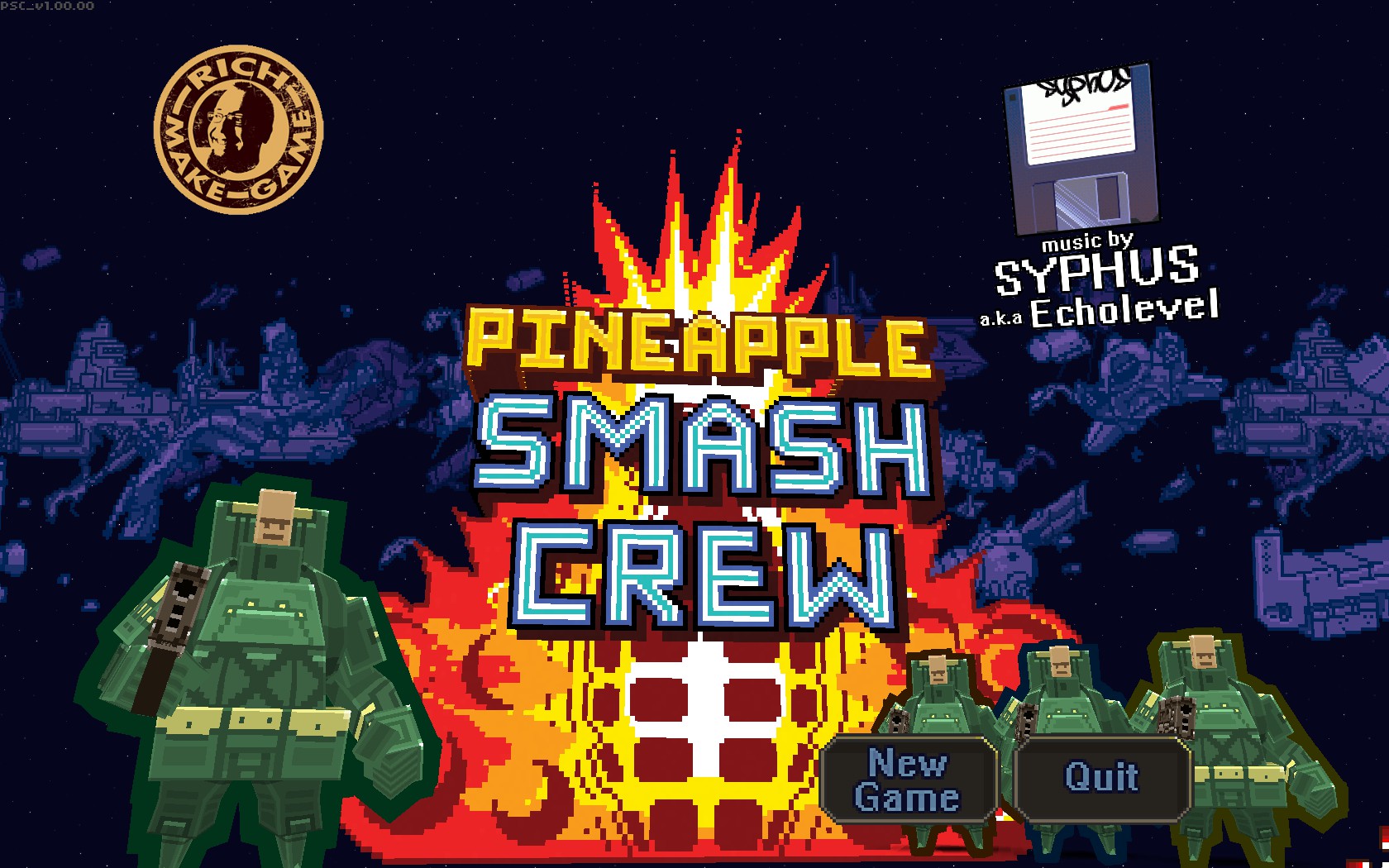
The opening screen of Pineapple Smash Crew, which leaves little doubt about the type of pineapples being smashed.
The world’s fastest man can run about 12 meters per second. The world’s slowest explosion travels about 1800. What can we learn from this? That we can do a way better job of motivating Olympic runners.
Pineapple Smash Crew from Rich Make Game (Rich Edwards making games) is all about Outrunning the Fireball. Also pineapples. You know, to cause the fireballs.
I’m sure there isn’t a person on earth who wouldn’t get a buzz from escaping an explosion. But in a game where you’ll be doing exactly that at least a couple times every minute, can the thrill last?
Gears of War: The Board Game: The Review (Part 2)
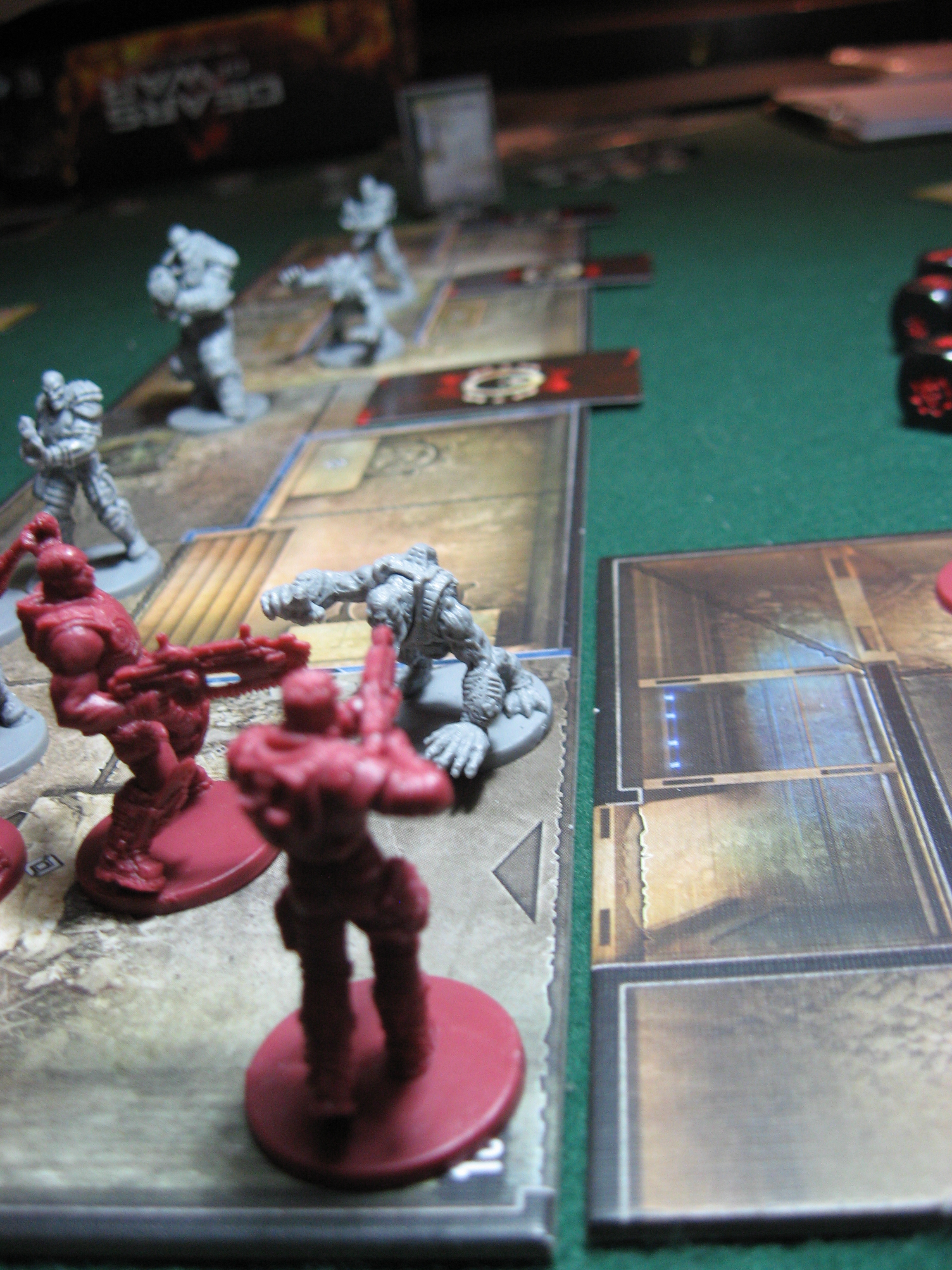
Our attempt at an over-the-shoulder shot, just like from the PC game. This is, incidentally, the one moment where weenie-man Damon Baird attempts something heroic. I'm sure he missed the shot.
“C’mon Baird! A little bit of this is good for you! Builds your immune system.”
—Augustus “Cole Train” Cole, Gears of War
In part 1, I outlined the three things that stand out to me as the advantages of Gears of War: The Board Game, the latest from Corey Konieczka and Fantasy Flight Games. I’d recommend reading that first, because this is the segment where I talk about the game’s three disadvantages. Now, before I get into that, I’d like to say that for some folks these might be totally negligible. I enjoyed the game, and thought a few of the mechanics were especially smart. However, I wouldn’t recommend a purchase without a prospective buyer knowing a few things.
So here we go!
Gears of War: The Board Game: The Review (Part 1)

Dominic Santiago finds himself swarmed by wretches in Gears of War: The Board Game.
“Yeah! Wooo! Bring it on, sucka! This is my kinda shit!”
— Augustus “Cole Train” Cole, Gears of War
Corey Konieczka is one of only four board game designers whose names I’m capable of recognizing immediately. He’s designed some of my favorite games, such as Battlestar Galactica, Runewars, and Mansions of Madness—the last of which I’ve talked about at length here on Space-Biff! before. He’s also designed some other well-received games like Descent: Journeys in the Dark, Space Hulk: Death Angel, and Starcraft. As such, when one of my friends proposed Mr Konieczka’s recent Gears of War: The Board Game for our next game night, I didn’t require much convincing.
The verdict? Find the first half after the jump.
Darkest of Reviews

The Romans brought shields as a distraction for the gravity gun. To their dismay, it was not a gravity gun at all.
I received an unexpected gift for Christmas, courtesy of my friend J.B. / digital_pariah, who you may remember as one of the players from our RPS Ascension game of Dominions 3 (which I am terribly behind in talking about here on Space-Biff!). It was the time-traveling romp Darkest of Days, a game about anachronisms that strikes me as an anachronism itself. It’s a much-ignored gem from 2009 that, for the most part, looks as though it has arrived on your PC after an arduous time-bending adventure, in which a serviceable gaming engine from 2008 stole the discarded textures of 2005, kidnapped Harry Turtledove’s doppelganger to pen the plot, and then decided on a pit stop in 1862 to get the Battle of Antietam just right.
Any game that channels that one good part from Timecop is a game in which I’m interested, and it’s fair to say I was looking forward to Darkest of Days in the same kind of way that I used to look forward to having my modern army men gun down my pirate Legos (read: very much). I didn’t expect it to spin me around and teach me a life lesson (or at least try really, really hard to). The review, in three parts, follows.
Rage: Explaining the Plot

Well, I finished Rage last night. I liked it overall.
Overall.
Id’s latest effort has been a tricky one for me to get a handle on. So many of its components are absolutely humming with perfection and tightness. Other parts felt like waxen imitations of better games. I can say that Rage is one of the few games I’m going to play through again. Unfortunately, it’s an uneven experience.
I’ll illustrate with a conversation I had with my sister.

 SPACE-BIFF!