Blog Archives
Fantastiqa is Fantastic(a)
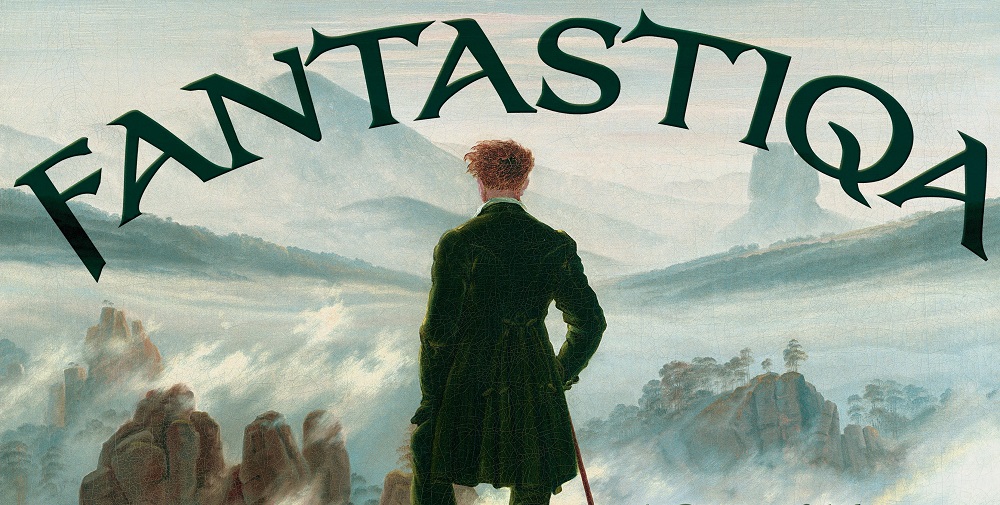
When it comes to Fantastiqa, I’m every bit as late as Lewis Carroll’s White Rabbit was back in 1865. I’m even tardy for the game’s second successful run on Kickstarter, which wrapped up about a month ago.
Now, under normal circumstances I wouldn’t bother reviewing an older game (assuming Fantastiqa’s 2012 release date qualifies as “older”) because I hate being unfashionably late. But in this case, I’m making an exception because… well, I could give any number of reasons, but really it comes down to Fantastiqa’s unique ability to make the mundane fresh again.
1775: Upstarts vs. Tax-Happy Oppressors

Last month I covered a heart-wrenching title from Academy Games called Freedom: The Underground Railroad, notable for its uncanny ability to create an emotional investment over the fates of a few wooden cubes. I think I even cried at one point. Manly tears, of course. Manly abolitionist tears.
Now I’ve had a chance to try another of the titles in Academy Games’ catalog, a simple wargame by the name of 1775: Rebellion, and… well, I’ll put this delicately: stand back, because I’m about to gush like a fry cook’s neck pimple.
Euphoria: Build a Better Worker Placement

It might surprise you to learn that I’m a huge fan of dystopian fiction. Or it might not, who knows. Maybe it’s such a critical component of my being that it bleeds into the open, and upon our first meeting, a stranger will instantly feel the tug of intuition whispering, “This guy likes dystopian fiction.”
Regardless, it was the subtitle of Euphoria: Build a Better Dystopia that first drew my attention, because I would love very much to do that. Yes indeed. For pretend, of course. Ahem.
Alone Time: Suboptimal Moves

I don’t make suboptimal moves on purpose. Okay, that’s a lie. If I’m teaching a game, or a friend seems like they need a win, or the current best move will just piss off everyone at the table, then sure, I’ll intentionally make a less-than-ideal move now and then. Just to keep things breezy. But not when I’m playing solo games, because nobody will get angry because I’m winning or store a grudge for next game or flip my handcrafted game table. When I’m playing alone, there’s simply no reason to take any move other than the best one I can see at any given moment.
That is, until I played Freedom: The Underground Railroad. Let me explain.
There’s No Escaping This Machine

What would you do differently if you knew “Swedish Furniture” would be the cause of your death? How would your life change? I don’t know about you, but I’d probably never go near an IKEA again — and that would really suck, because that’s where I spend my lunch hours.
Okay, that was an easy one. How about “Snowed In”? Or “Bad Blood”? Ooh, or what about “Goat Thong”? How in the hell are you going to avoid that?
A Study in Hodgepodge

By the year 1882, the Old Ones have already ruled the planet for seven hundred years. They sit upon the thrones that may have otherwise held human occupants, and their whims and appetites are law. All of humanity is a plaything, a subject, the victim of powers beyond their comprehension. For the foreseeable future, as with the known past, there is no hope that mankind might cast off the shackles of eldritch oppression, might seize what is theirs and awaken to a new dawn.
That is, until the invention of dynamite.
This is the bleak world of A Study in Emerald by Martin Wallace, an inverted — or rather, a perverted — take on the era of Sherlock Holmes, full of all the real-world romance of anarchism, but without all the unnecessary guilt over exploding royalty. Since they’re, y’know, aliens.
Oddball Anywhere

If you follow Space-Biff! with any degree of closeness, first of all, thank you. One day when I am Emperor, I will remember your loyalty. On an unrelated note, regular readers probably will have also noted my love of portable games, the kind that can be taken on road trips, camping, or long flights, or played in hotel rooms and restaurant booths with equal ease, all without resorting to that infernal Uno.
Uno — *Shudder*
Well, step aside pretty much everything else, because I was recently sent a copy of one of the most transportable games I’ve ever played — so portable, in fact, it doesn’t even need a playing surface. Yes, you read that right: no need for sticky airplane tray tables, awkwardly-held spiral-bound notebooks, or laps. Meet oddball Aeronauts (yes, “oddball” is lower case for some unfathomable reason) from Maverick Muse (which, like everything else on their site, I have no idea how to capitalize or punctuate). It’s pretty cool. oddball Aeronauts, I mean, not the punctuation thing.
Berserk Drives Me Berserk

You might recognize Berserk: War of the Realms as the Russian card game that was on Kickstarter a while back, the one that generated some controversy over its inclusion of scantily-clad (or not-at-all-clad) mythological ladies. You know, the project that eventually included both the original non-clothed and new tiny-bra-wearing art in order to appease both the Artistic Integrity and Nudity Is Wrong crowds.
Or maybe you don’t recognize that at all, because board game controversies are almost always silly like that. It’s one of the things I love about the hobby.
Anyway, Berserk has been out for a little while now, and I’ve been playing it ever since its first release. And while there are still quite a few things I have to explore… hm, that sounds wrong. I’ve been playing with the non-nude cards, in case you were wondering.
At Least They’ll Get Some Shade

Here’s a situation for you to puzzle through. You’re a wealthy patrician seeking to consolidate your power over a kingdom that was recently annexed by a great empire. The surest route to success is to control the spoiled heir to the puppet throne, but there are two problems. First, the boy’s childhood governess is trying to do the same; and second, you don’t actually know the brat — though you do know a Socialite who knows a Florist who knows a Monk who knows the Prince.
How do you go about influencing the Spoiled Heir?
Trust Only in Betrayal: The Agents
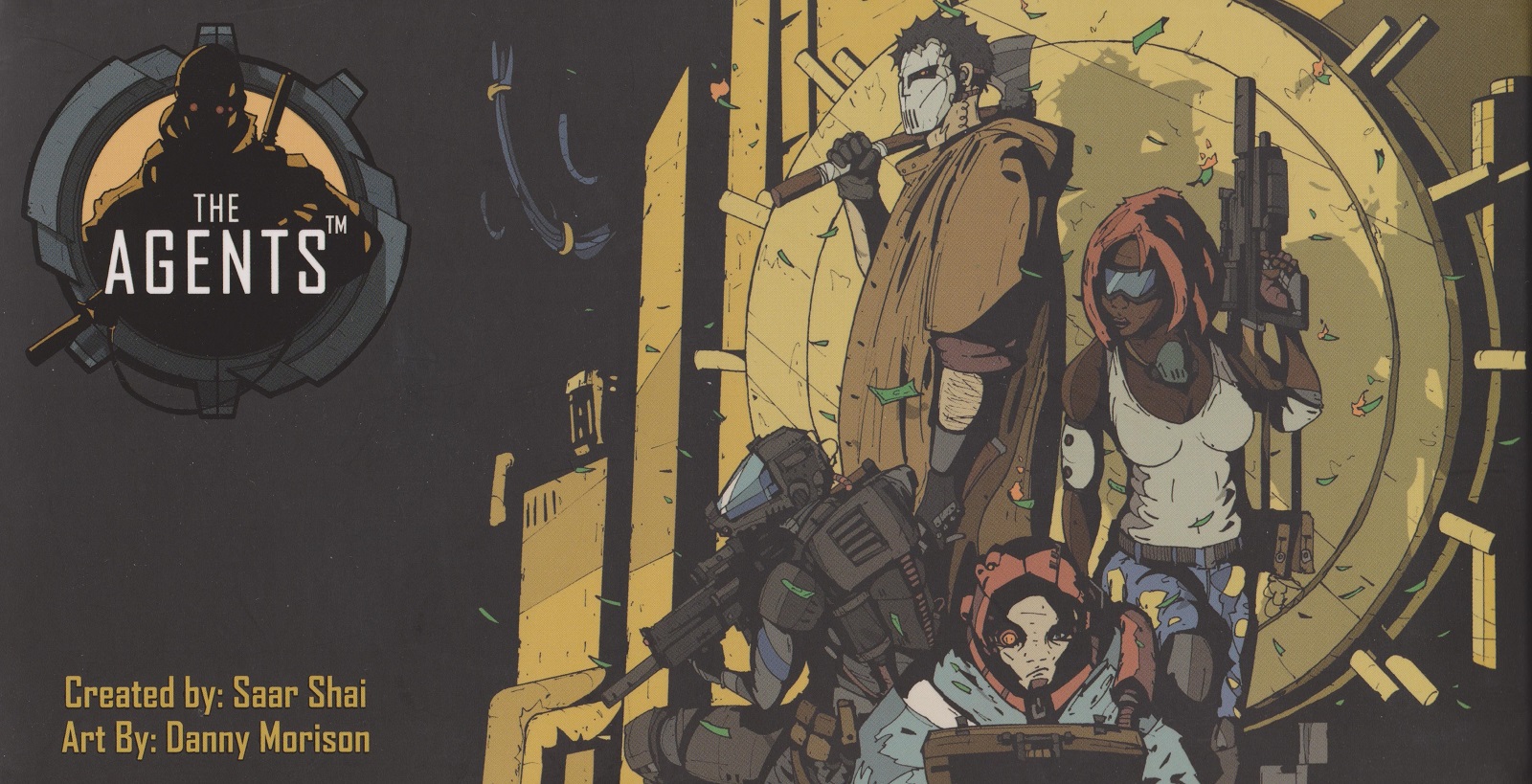
With its focus on a pack of untrustworthy super-spies set adrift by the disappearance of their organization (which indicates to me that it was an exceptionally effective secret agency), it’s almost as though Saar Shai set out to create a game that appealed directly to me. I love secret agents. I love double-crossing. I love card games. Certainly that means I’ll love The Agents?
Or were my expectations… betrayed? (duh-duh-dummm!)

 SPACE-BIFF!