Blog Archives
Two Minds about Dungeon Alliance

Every so often, Dan tosses a spare Space-Biff! key to his buddy Brock for a duel of wits they call Two Minds About. Today’s subject is the most important one yet: Dungeon Alliance. It’s got a dungeon, it’s got alliances. But has it got game? Find out below.
Brock: I considered starting this one with a long jokey paragraph, something along the lines of, “Wouldn’t it be nice if we could have board games about exploring a dungeon? What a dream world that would be!”
The thing is, designers continue to show us that there’s meat left on the dungeon crawl bones. And — more to the point — Quixotic Games’s Dungeon Alliance, despite its occasional cleverness, is guilty of worse crimes than having an unoriginal theme.
But I’m getting ahead of ourselves.
Dan, why don’t you do the thing where you tell us about Dungeon Alliance?
A Shallow Bowl of Spaghetti

Ah, the Western. I’ve waxed eloquent about it before. It’s easy to do, really. Picture sunsets and six irons at the same time, imagine breaking a horse while breaking ore, and utter silly swears like “goldarn” and “skinny as a sack of deer horns.” For such an iconic genre, there are hardly any games set in the Old West. Fewer good ones.
Western Legends hopes to make up for that deficit. All of it, in fact. How? Well, none other than by featuring a dozen dusty-trails tales rolled into one. And the biggest surprise of all is that it does a decent job of it.
Fast Math: A Look at Lovelace & Babbage
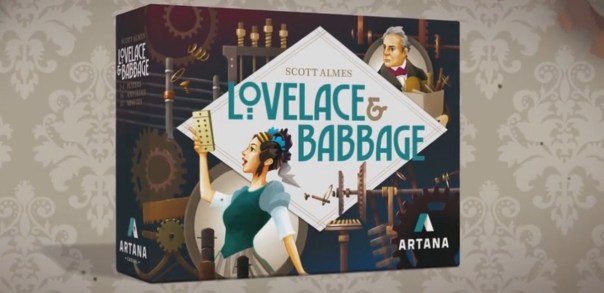
Despite being terrible at theoretical math, one of my favorite classtime activities was to take a large number — probably something like 55378008, since I was a hormone-addled thirteen-year-old — and divide it mentally into the smallest possible quantity. Dividing by two or five was easy; three was tougher, but there were tricks. Sevens or other primes usually left me stumped.
Lovelace & Babbage, on Kickstarter right this very minute, is all about the joys of simple arithmetic — with the caveat that it must be done fast.
Static Realms

Disclaimer: No realms are shifted in the process of playing Shifting Realms.
And that’s honestly a shame, because relocatable fantasy dimensions could have added something wonderful to this competent but by-the-numbers take on the gather’n’build genre.
Alone on the Computer

Now that Netrunner is dead, I’ve been thinking more about those first few months of its existence, before the pro scene and a steady march of upgrades left me standing on the highway watching the dust kicked up by its tires as it left me behind. It was one of those games that briefly captured me, gave me a rough shaking, and then departed forever. Years later I would happen across its obituary and stare, unsure whether I was feeling regret at not playing more or relief that I didn’t stick around until the end.
It’s Renegade that brings back those memories. Not because both games feature body-modded individualists peeling away an oppressive system’s layers of defense, though there is that. But rather because they’re both far cleverer than they first appear.
Oh, and because they both positively drown you in terminology. As in, hands around the throat, bathtub of ice water, drowning you.
Hopeless

Oh no! It’s the far future, humanity has spread to the distant corners of the universe, yet an evil black monolith is consuming entire solar systems! Panic in the streets! Science confounded! The only solution is the colonization of planets that happen to match a hand full of cards!
Okay, fine, I can’t confess to having any idea of what’s going on in HOPE. Why are we colonizing planets again? Why do solar systems inhabit three dimensions at once? And what’s with that tacked-on betrayer mode? Do the bad guys really call themselves NOPE? In terms of fluff, it’s no Sol.
Instead, it’s exactly the reason I play lesser-known games.
Another Land War in Asia

“For once, you should fight a land war in Asia.”
That’s how I concluded my review of the first edition of Pax Pamir, Cole Wehrle’s razor-loaded take on imperialism and the Great Game. It promoted Phil Eklund’s Pax Porfiriana into the Pax Series, boggled a fair number of minds with its interlocking spheres of influence and enigmatic victory conditions, and — at the forefront of everybody’s minds, surely — was my top game of 2015.
Now Wehrle is crafting a second edition, one he hopes will be more accessible without becoming divisive the way, say, the second edition of A Study in Emerald was. Little hope of that, I’m afraid. This new edition is indeed more approachable, while recapturing much of the bite, intelligence, and adventure of the original. But fans of the first edition may not want to sell their copies just yet.
Ancient Artifice

I’ve always liked dice games. Loved them, in fact. So why can’t I muster any enthusiasm for Ancient Artifacts?
Going Medieval on Medieval

Ralph Shelton’s Medieval, a reimplementation of Richard Berg’s Medieval, knows enough about Medieval life to understand that it was crummy, capricious, and lasted at least three centuries too long.
What neither Medieval understands is that none of these attributes are desirable in a game.
Putting Down Roots (Again)

Root is mighty cool. I wrote as much last week. But that was before trying my hand at everything offered by its first expansion, Riverfolk. What follows are my thoughts on every last additional ingredient it tosses into Root’s already-potent stew of factions. Like so:
Card Holders: These are card holders. If you don’t know how you feel about card holders, then you don’t know anything at all.
Got it? Great. Let’s do this.

 SPACE-BIFF!