Blog Archives
Alone Time: Not Jackson’s Hobbit

Although it’s highlighted some pretty exciting adventure games, today Alone Time is going to outdo itself — and not only by talking about itself in the third person; rather, by introducing you to The Lord of the Rings: The Card Game from Fantasy Flight Games! More than being merely a great two-player game (and theoretically more, though more than two makes it as boggy as the Dead Marshes in late April — pardon me, Thrimidge by Shire reckoning), TLotR:TCG is also an absolutely fantastic solo game. What’s more, it’s so expansive that it blurs the line between game and hobby.
Three Zettabytes for Infiltration

There are all sorts of clever games coming out right about now. Some blend previously-disparate mechanics, others just refine them till they crackle. But today, I want to talk about something different, a game that has exactly three things going for it: a razor-sharp theme, a simple but effective risk-vs-reward system, and the potential for awful hilarious wonderful villainy. This is Infiltration, and although it isn’t pushing any envelopes or redefining its genre, it’s one of the best times I’ve had with a board game this year. It’s also affordable and easy to get your hands on to boot.
The Ladies of Andor
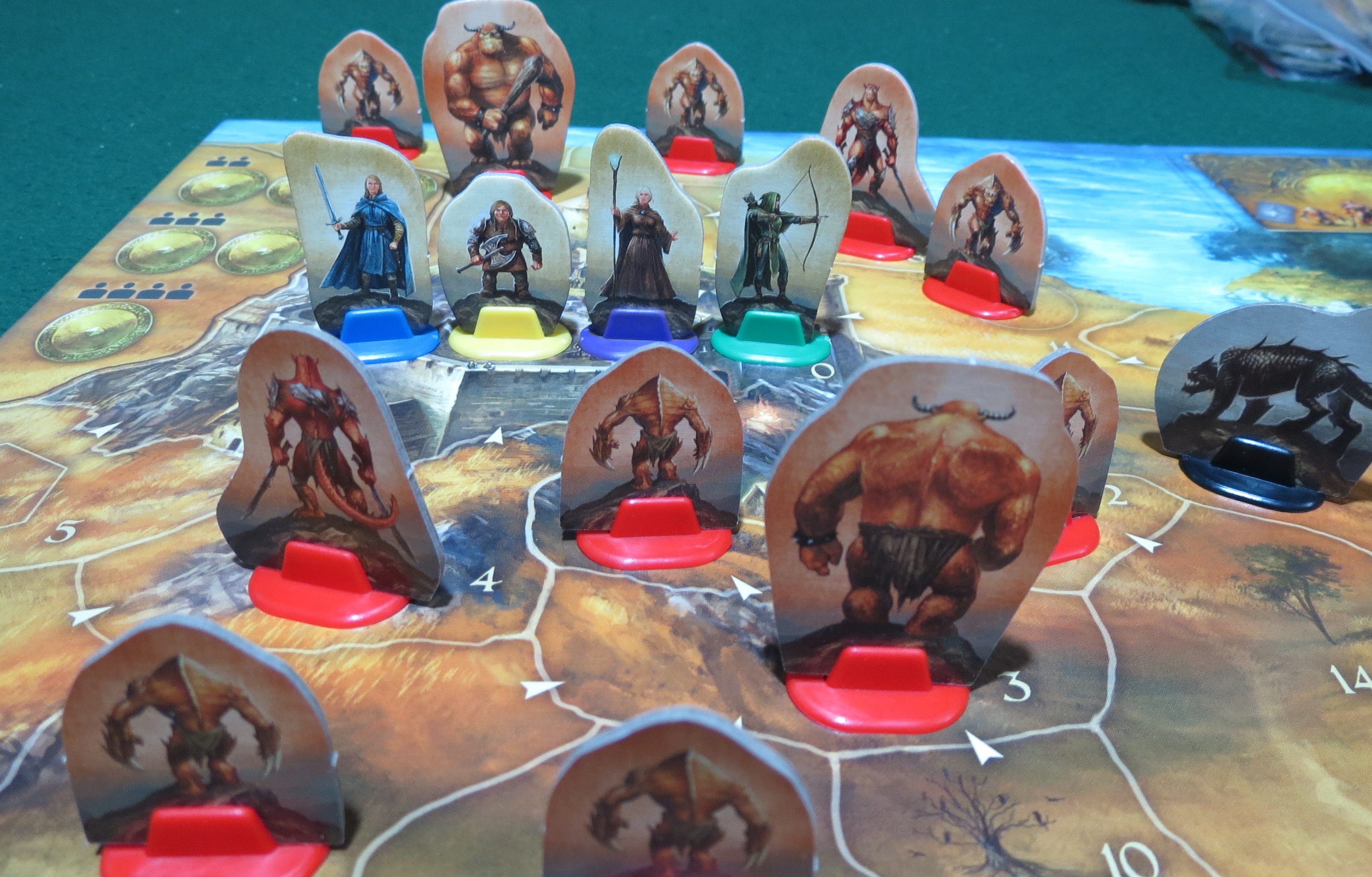
The Ladies of Andor prepare to defend, er, Andor.
This last Christmas was probably my best haul yet in terms of excellent board games. Not only was I given Clash of Cultures, which has proven one of my favorite games in recent memory (and which I wrote about here), my darling mother also acquired Legends of Andor, a beautiful and exciting four-player cooperative adventure game from Michael Menzel and brought into the English-speaking world by Fantasy Flight Games. At first glance it might look like a generic fantasy, but below the jump I’ve compiled four reasons why it’s one of the cleverest and most surprising co-op games of 2012.
Being Tzeentch: Chaos in the Old World
Chaos in the Old World. Box art.
Hypothetical time! What would happen if you sat your deity of choice (if you’re an atheist, plug a lightning-empowered Christopher Hitchens in there) at a table with a handful of opposing deities, placed the world in the middle, and fired a starter pistol into the air?
And that’s basically what Chaos in the Old World proposes, except its deities are probably meaner than yours—they worked hard to earn that “Ruinous Powers” nickname, after all. It’s a superb game that lets you be the worst of bad guys, and it oozes theme like a pus from a wound.
The Curious Incident of the Tyrrhenian Steamer

A steamer, carrying Count Dracula among its cargo, embarked from Genoa.
Well, everyone knows Count Dracula died at Borgo Pass. What Fury of Dracula presupposes is: Maybe he didn’t?
The riddle of the vampire’s reappearance was not the one plaguing our heroes tonight, however. Rather, they (Lord Godalming, Dr. Seward, Professor Van Helsing, and Mina Harker) were preoccupied with a mystery of an algebraic nature: If a steamship sets sail from Genoa, fixes the setting sun to starboard, and ends its voyage into the Tyrrhenian after but a short distance, where but Cagliari, Naples, and Rome could its passengers have disembarked?
Runewars Mega: The Index
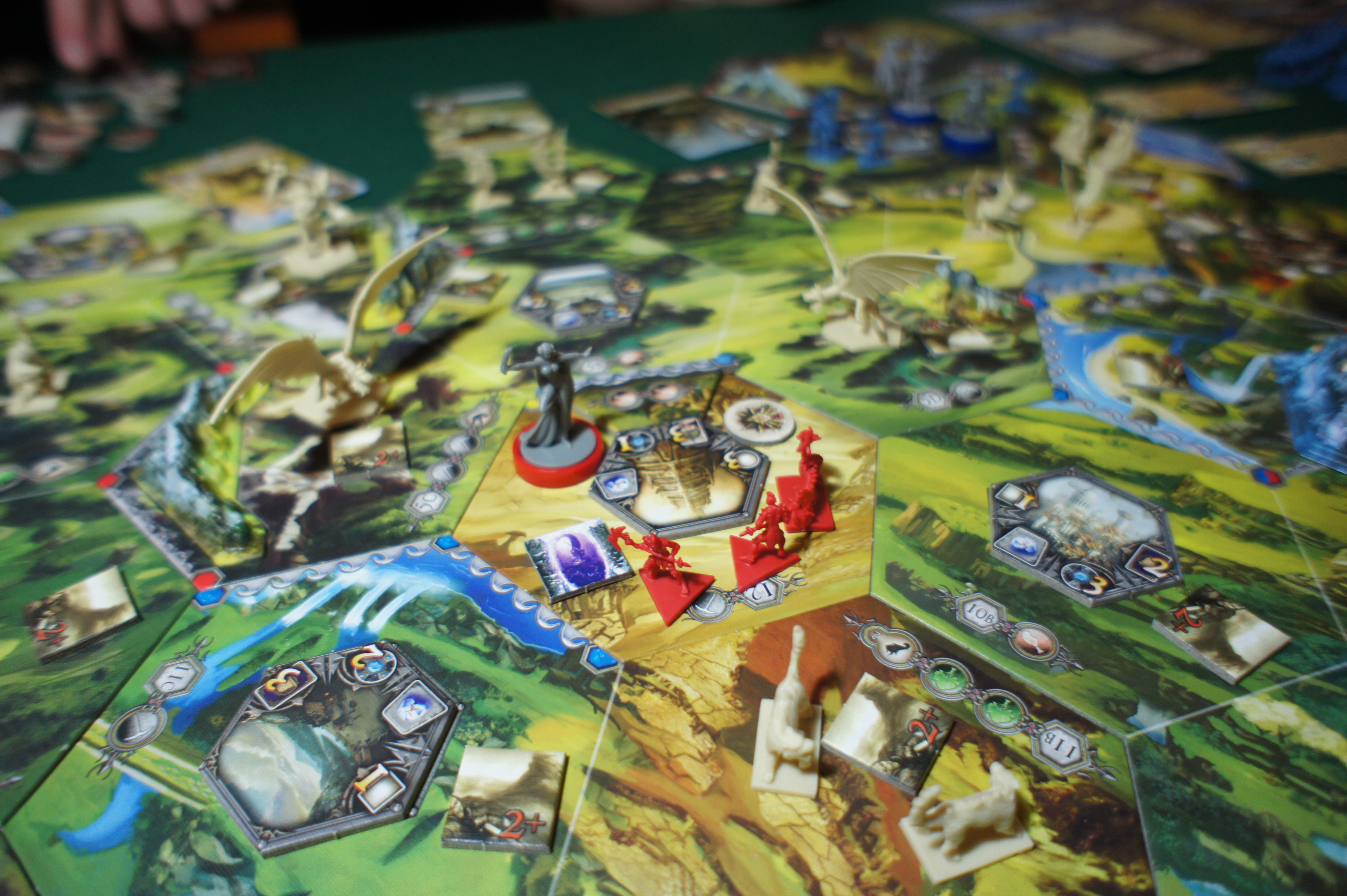
Red Scorpion raises the Lost City, beginning the War for the Dragon Throne.
It is with tremendous relief that I compile the index of everything I’ve written—or will write, I hope—about Runewars. Our game of Runewars took about 15 hours to complete—much longer than average—and over four times as long to write up. So without further ado (though with one further “read more” click), I present the index:
Runewars: But How Does It Play?
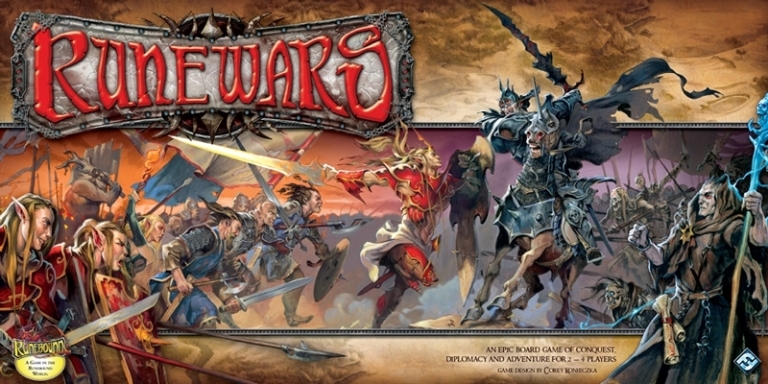
The box. About two times too big until you get the expansion.
I recently wrote a series of articles on a recent gaming session (well, sessions) of Runewars and its expansion, Banners of War. It was humbly entitled Runewars Mega (Part 1 here, and Index here), and I wrote it as a story—a retelling of the narrative that four friends created together. The reaction to this series was encouraging, but I kept getting the same question from readers: “But how does it play?”
In writing about the story of our game, I entirely neglected to explain much about the game mechanics themselves. In so doing, the only applied information I seem to have imparted was that Runewars is incredibly complicated—which, sure, it can be. So now I’m writing this as a sort of formal apology: this is how the game plays, and why I believe it to be one of the best games on my shelf.
Runewars Mega, Year 8: Race for the Dragon Throne
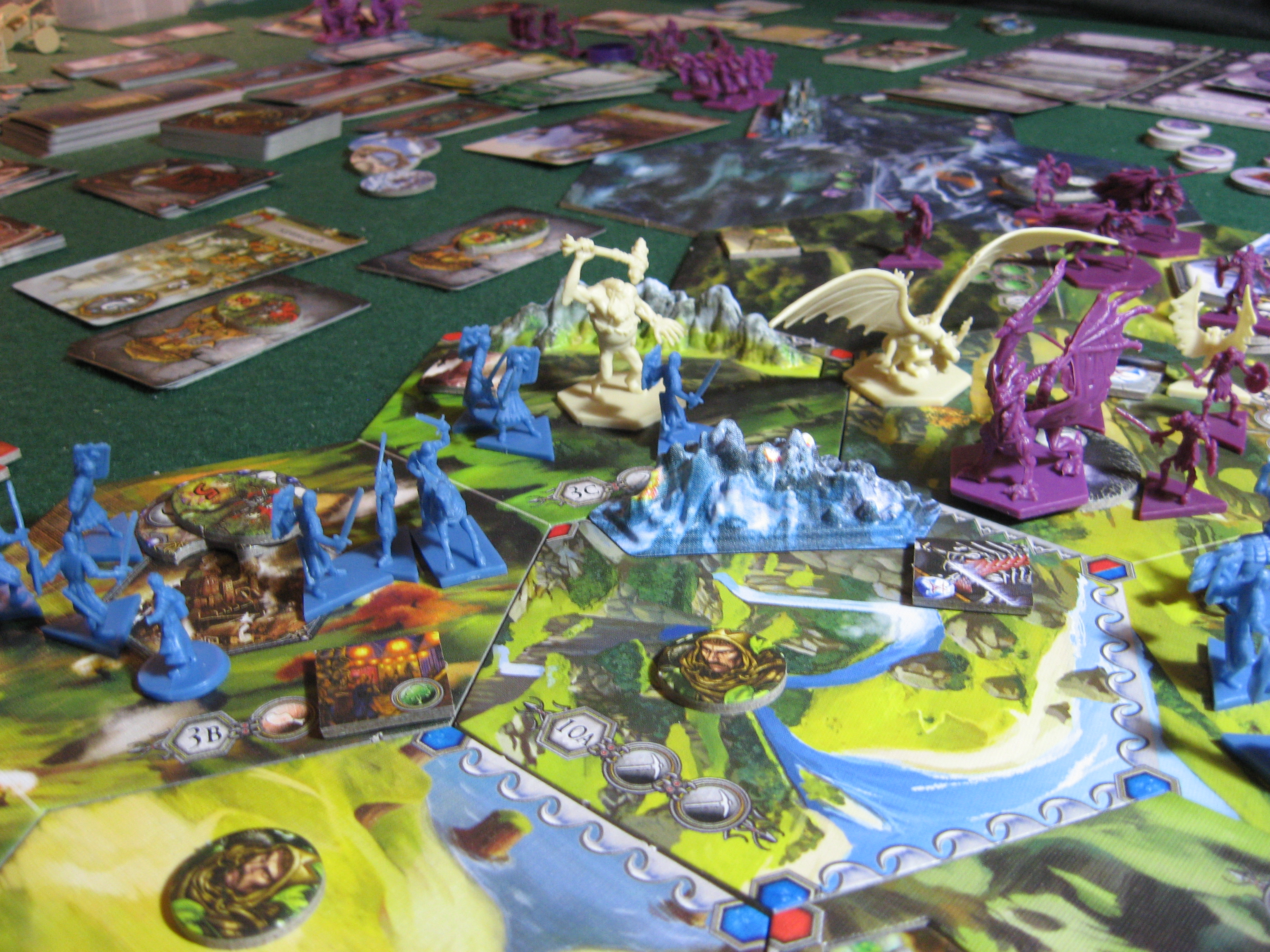
As everyone races to the Lost City and the Dragon Throne, the Daqan head the opposite direction.
Well, our story is drawing to a close. By the end of this year, one of the four nations will have gathered the necessary eight dragon runes and put themselves onto the Dragon Throne—that’s right, both.
At the beginning of the eighth year of the War, it really could have swayed in one of three directions. Waiqar the Undying had taken a few lumps, but his dark empire still spanned quite the distance, and his ranks had swollen fat from a combination of seven years of war and the efforts of his necromancers. The Daqan Lords had a small military, but their alliance with the Uthuk Y’llan barbarians meant that they could focus on expanding without having to protect their flanks—and they had the plans of Andira Runehand to guide them. And the Latari Elves were in possession of nearly half of the entire continent of Terrinoth. Each of the four nations were well-aware of the many prophecies floating around, and it seemed that all the peoples of Terrinoth held their breath at once, eyes fixed on the Lost City.
Runewars Mega, Year 7: Uncommon Kinship
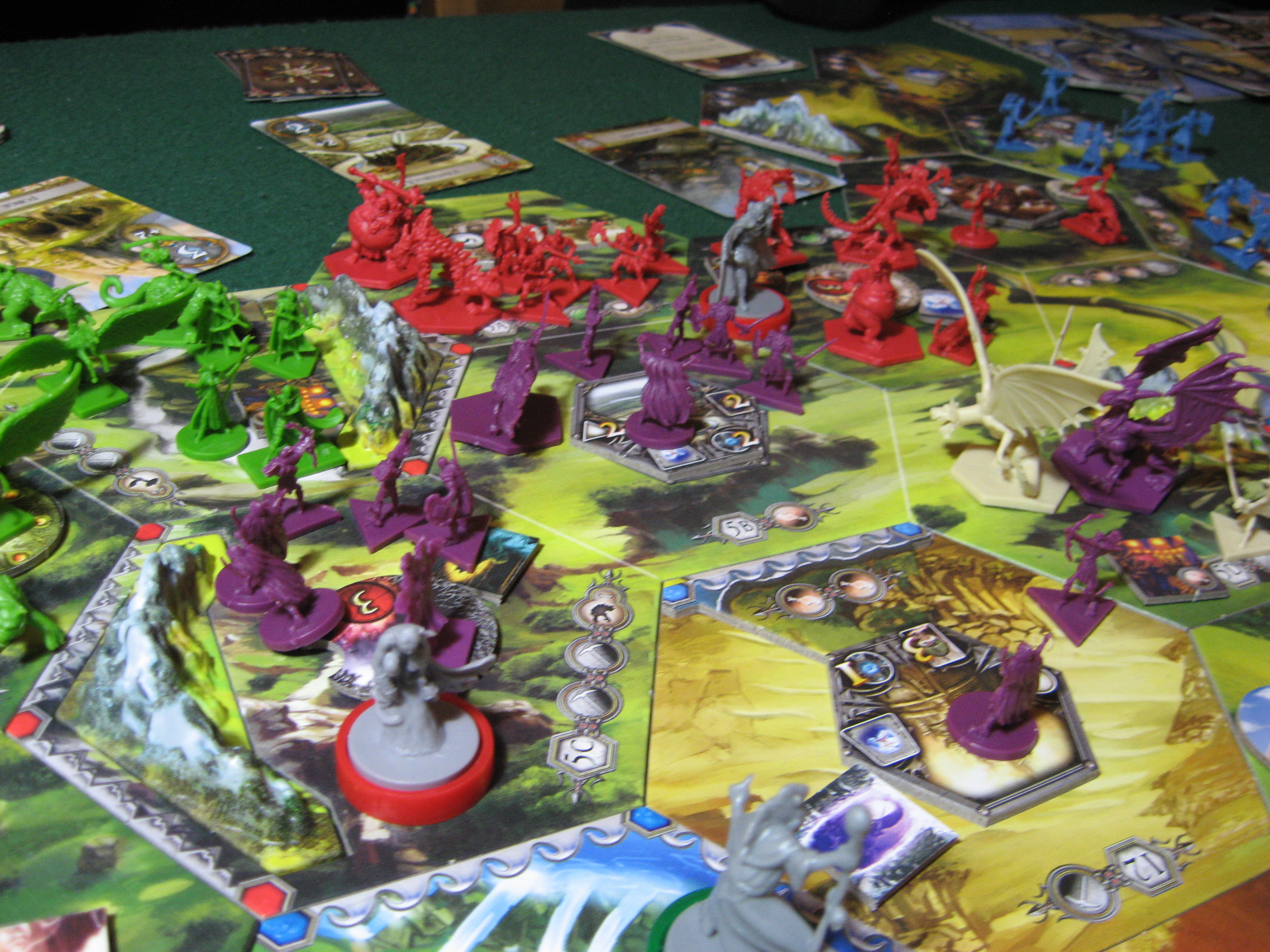
The four nations of Terrinoth stand on the brink of total war.
As the slow sixth year of the War came to an end, each of the four nations found their ranks swelling with volunteers (well, “volunteers” is a loaded term in Waiqar’s army). Hedge-prophets and scrying witches claimed that the coming conflict would dwarf the combined bloodshed of the last six years, and that as winter fell on the eighth year, a new lord would be seated on the Dragon Throne and Terrinoth would have its king.
Runewars Mega, Year 6: The Gathering Storm
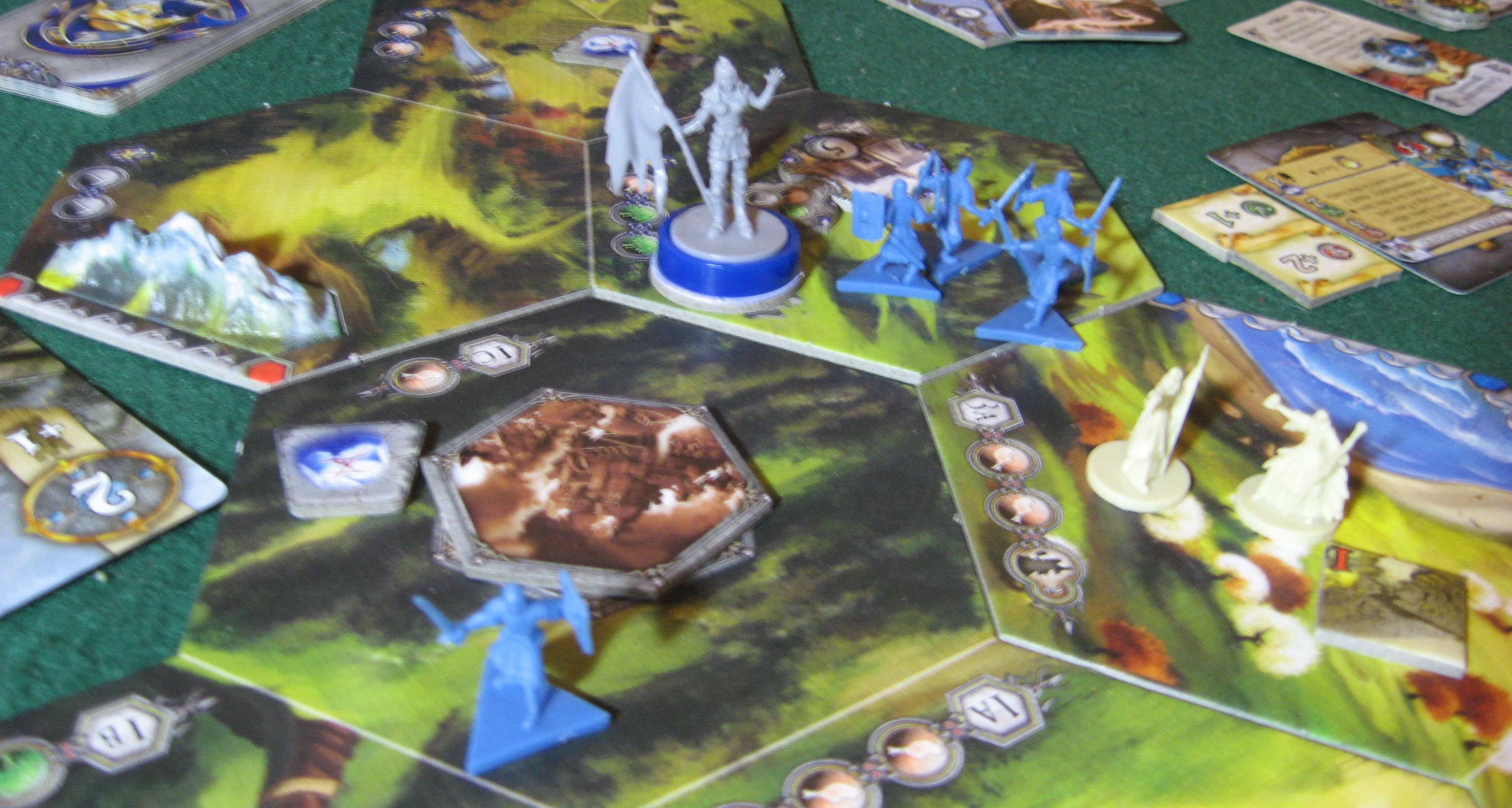
Five years of war have left the nations of Terrinoth exhausted.
There are no invigorating wars, and the War for the Dragon Throne was no different. As it entered its sixth year and third act, the nations of Terrinoth were exhausted. Two of the Seven Cities had been thrown down, and two of the four nations were all but beaten. But even though the Latari public was declaring their mission accomplished, and though the Daqan Lords were on the cusp of surrender, the war’s resolution was yet a long ways off.

 SPACE-BIFF!