Blog Archives
Love and Heartbreak in Georgian London
As a second-grader, I despised recess. Not because I enjoyed class — it was boring and tedious, hemmed in by schedules and busywork — but rather because I was lonely. Some people don’t understand loneliness. They can’t. It wears the soul to a grainy powder. I had recently changed schools, bidding farewell to my friends and those familiar halls. Now I spent those interminable minutes wandering the lawns, balancing on the rocks, avoiding the bullies I half-knew from church.
And then, like the sun warming my face after a chill, there they were. Two friends. Adam and Adam. They invited me to play make-believe with them. We soared across the grass, scraped our knees together, became soldiers and explorers, scared ourselves silly at sleepovers, told our first dirty jokes. Once, afraid that I had done something that would make them abandon me, I burst into tears, only for both Adams to enfold me in a gangly, childlike hug, reassuring me that all was okay.
Everything was bright. For a time.
Space-Cast! #39. Arcing

Ever heard of Arcs? Cole Wehrle has! Today on the Space-Cast!, we’re joined by the little-known indie designer himself to discuss Arcs from a few unusual angles: the debt it owes to trick-taking, the many literary inspirations behind the game, and its unusual development process. Also of note, some comparisons between Arcs and Brian Boru, a sidebar book recommendation, and Wehrle’s wariness of Balatro. Truly, we’re covering everything!
Listen here or download here. Timestamps can be found after the jump.
Arcs Supra Arcs
Arcs is the most lucid title Cole Wehrle has created — and that’s speaking for someone whose ludography is packed with crisp thesis statements. It’s come such a long way in the two years since I previewed the prototype that there’s really no point drawing comparisons. The obvious lodestar is Oath; like that game, Arcs exhibits the long, ahem, arc of history, the way identities and meanings weather or buckle under the weight of time. But Arcs is the more resolute of the two, a game built as much on hindsight as with the benefit of additional years of experience.
It is sublime. It’s also a difficult game to pin down, arrayed like a blossom. Let’s start with the stem.
Our House Is a Very Very Very Molly House

I often joke that I’m a class-four prude. Like many jokes, this one hides a kernel of truthfulness. For reasons that are far beyond the purposes of today’s discussion, sexuality is not something I discuss easily or often. When I do, it’s often behind a veil of playfulness. In laughter and mirth, the untouchable is momentarily set free.
Although the comparison is an imperfect one, that also seems true of molly houses, gathering places such as coffee houses or taverns where homosexual men in 18th-century England could socialize freely, veiled from the gaze of polite society. In some ways, their idea of queerness was different from ours. Indeed, they lacked terms like “queerness” at all. The laws of the time lumped homosexuality and bestiality together, and those who were arrested could be pilloried or even hanged.
Despite these penalties, men risked shame and death to create places where they could become more fully themselves. That’s the topic of Molly House by Jo Kelly and Cole Wehrle. Molly House was one of the finalists of the first Zenobia Award. Now it’s nearly here, and I can safely say there’s nothing quite like it.
The Anarchy Comes Home

The thesis for John Company is drawn right onto the lid of the second edition box. Two worlds, starkly divided, seemingly incongruent. The first, drawn with affrontive rotundity, features genteel Englishmen and Englishwomen drinking and flirting, debauched in their plumpness, as without care as people ever were. The second, illustrated as angularly as the first image was curvaceous, reveals a fortified seaside factory, sternly defended and given scale only by the many ships gathering beneath the hem of its skirts. Despite their dissimilarity, it’s like the meme says: they are the same picture.
The first time I wrote about Cole Wehrle’s most ambitious title I called it his magnum opus. Later I discussed how it and its sister volume An Infamous Traffic put two dueling economic systems on trial. The third was a preview for this second edition, but the final product hasn’t changed enough to invalidate any of the praise I heaped on it at the time.
But a few things remains to be stated. What follows is less of a review than a statement on why games like John Company are the most essential ludic texts of our day.
Foucault in the Woodland, Part Five: Parasites in the Panopticon
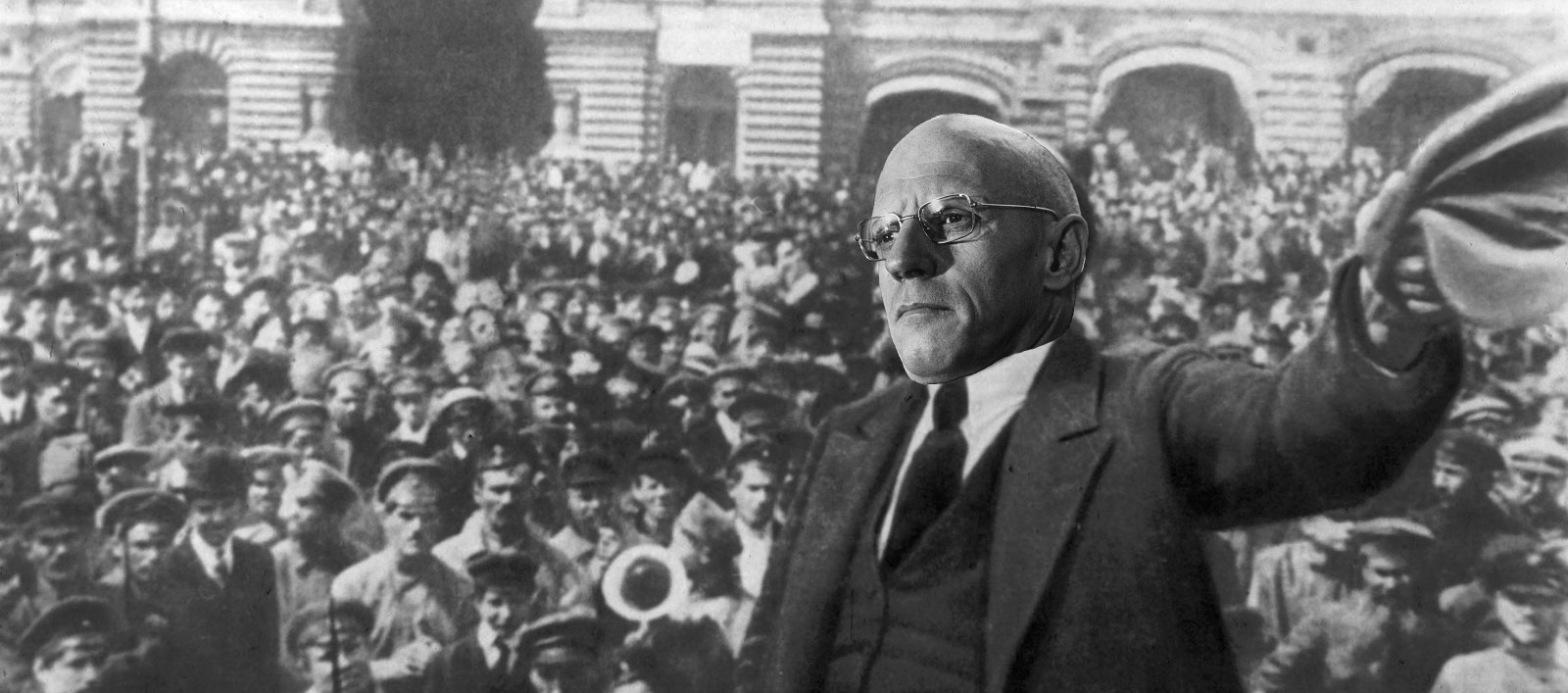
Recap: Across the past four installments, we’ve been talking about power. Specifically, how Cole Wehrle’s Root demonstrates an understanding of power in line with the writings of Michel Foucault.
Except I’ve been making a significant omission. Because Foucault didn’t write only about power. That would have been too clear-cut. He always rendered it as “power-knowledge.” Two intertwined concepts that, once assembled, approximate what he meant when he talked about power. Pardon me, power-knowledge.
Today, we’re delving into why that distinction matters.
Arcs Avec Arc

Where last week’s examination of Arcs, the upcoming title from Cole Wehrle and Leder Games, focused on Arcs as an experience meant to be completed within a single session, today we’re delving into the “arcs” of Arcs. That’s right: I’ve completed two full campaigns. That’s six plays, a few branching narratives, and two galaxies brought under the reign of a single power.
I have some thoughts.
Arcs Sans Arc
Whenever I mention Arcs, the upcoming four-letter title from Cole Wehrle and Leder Games, everybody wants to know about the campaign, the three-session “arc” that will chart the ascent of four players amid the decline of a stellar empire. It’s a fascinating premise, and not only because it formalizes the playful and open-ended concept of a non-legacy board game that rolls over from one session to the next that Wehrle introduced in Oath.
This preview is not about that. At some point in development, Arcs was split in two. To mitigate costs and the danger of tossing a gaming group out the airlock before they’ve had a chance to suit up, the campaign is now a day-one expansion. Arcs, the core game anyway, is now a single-session board game. Which up until very recently was just called “a board game.”
How is Arcs sans arc? Let’s take a look.
Foucault in the Woodland, Part Four: DTR or DTF?
May I never repeat the awkwardness of my first DTR.
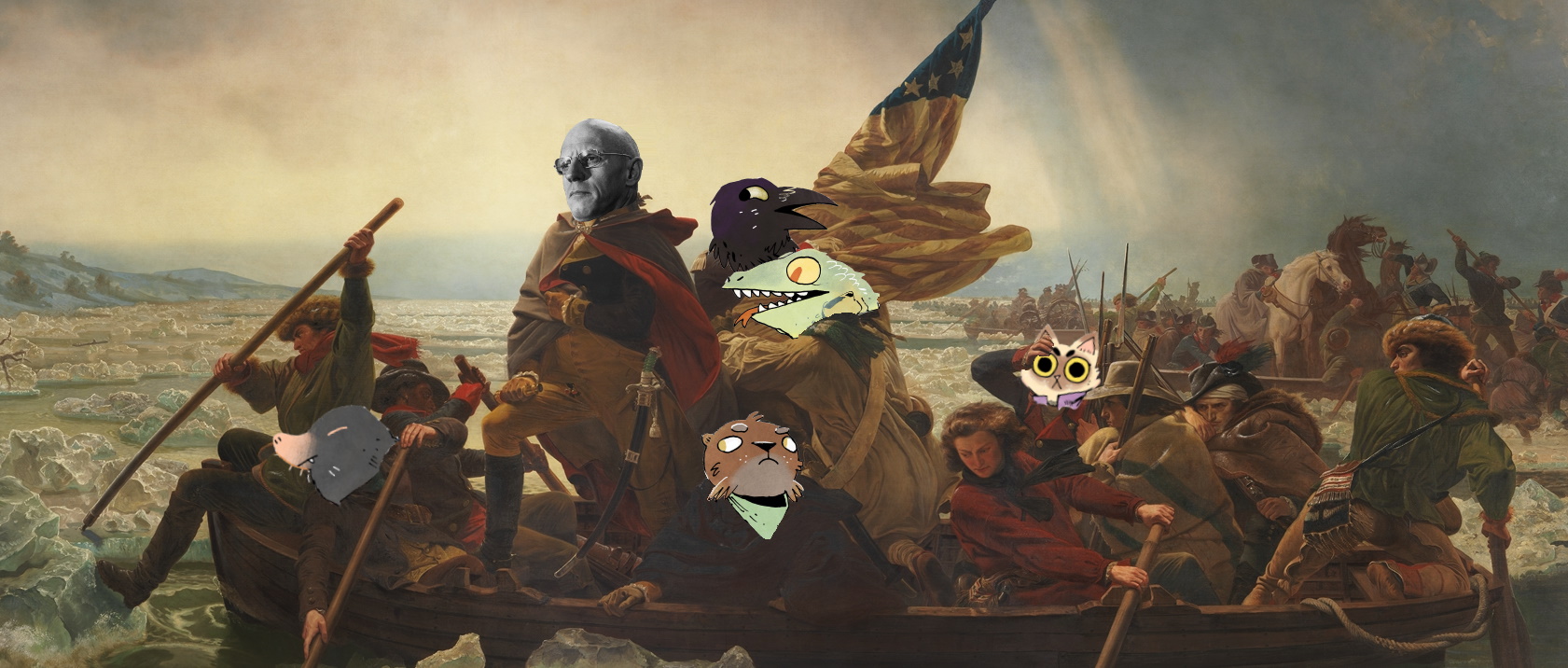
DTR. “Define the Relationship.” My friends, most of whom were older and more experienced, spoke the acronym in ominous tones. It was an essential step of middle school dating, as serious as your first hand-holding or first footsies or first furtive kiss. To a ninth-grader, it was the equivalent of proposing marriage without knowing the answer beforehand. We’d gone on a few dates. School dances. Group hikes. Now we crouched together in a treehouse (oh no), as good a time as any to pop the question: “Are you my girlfriend?”
Over the past three parts of this series, we’ve examined how Root reflects a Foucauldian understanding of power and politics. Today, we’re looking at how that extends into the realm of sex and relationships — and how governments transform sexuality into an extended DTR that will not end no matter how vigorously we try to flee the treehouse.
Foucault in the Woodland, Part Three: Devouring Your Children
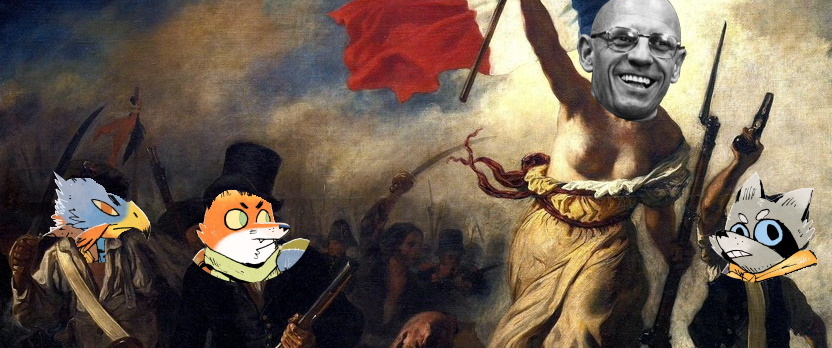
It was the Genevan journalist Jacques Mallet du Pan who wrote the famous phrase, “Like Saturn, the Revolution devours its children.” Writing in 1793, the year of King Louis XVI’s execution and the establishment of the First French Republic, du Pan was a proponent of the juste milieu, a “middle way” between autocratic and republican impulses. Considered both hopelessly naïve and tragically Cassandran, he died in exile in 1800, having watched his adoptive country pass through the Reign of Terror and into the hands of Napoleon Bonaparte.
Over the past two installments, we’ve investigated how Cole Wehrle’s Root leverages the philosophies of Michel Foucault to tell a fable about power and control. Today, we’re putting those tools to use.

 SPACE-BIFF!