Blog Archives
The Little Crunch
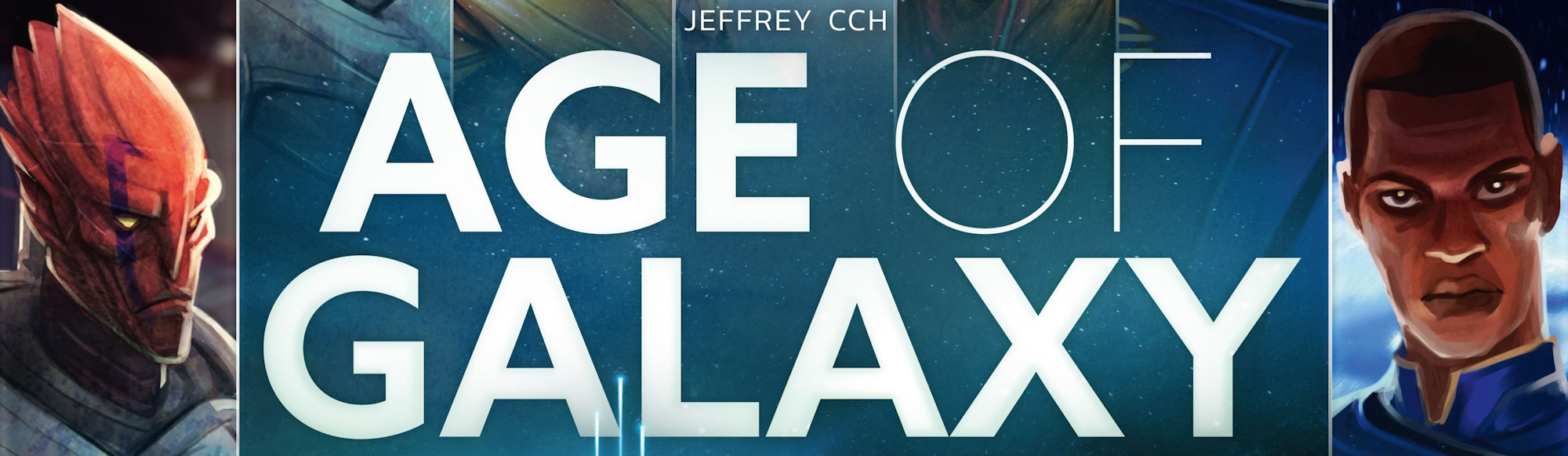
Ah, the “small civgame,” the brass ring of tabletop design. If Age of Galaxy sounds familiar, that’s because this is the second edition of the tinier-than-you’d expect title from a couple years back. Now, in a somewhat ironic turn, it’s been blown outward.
Some dead space in the box notwithstanding, it’s a suitable alteration. The cards are full-sized! The map and action board feel less like gimmicks! The discs can actually stack on top of each other! This is the very same Age of Galaxy I reviewed positively two years ago, transformed so that it’s much easier to read across the table, with all the upsides and downsides vacuum-sealed for a fresh audience.
How to Train Your Fledgling
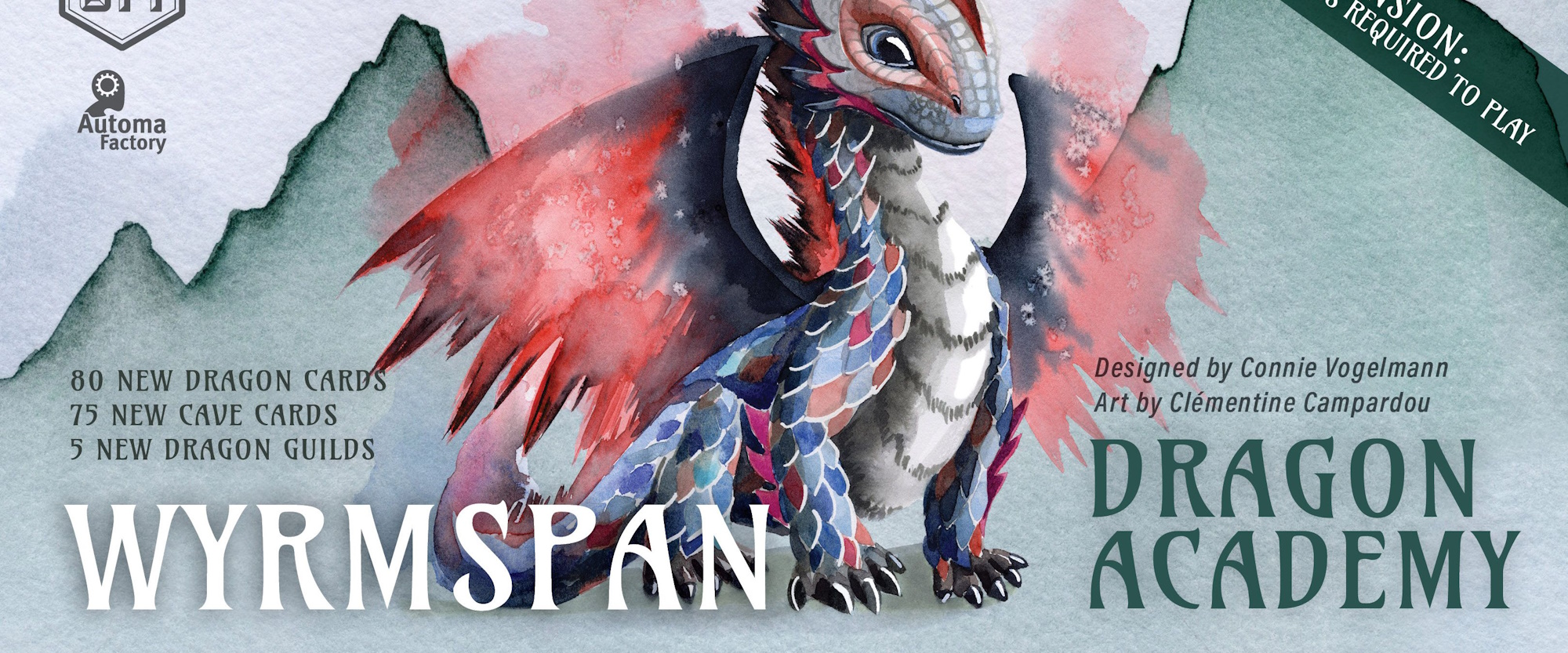
I don’t know why dragons are so popular all of a sudden, but as a parent I’m genetically predisposed to be invested in the same things as my eleven-year-old… so bring on the dragons. Dragon Academy is the first expansion to Connie Vogelmann’s Wyrmspan, the heftier and more draconic alternative to Wingspan and Finspan, and it understands the fad even more intimately than the base game.
When the Bell Breaks
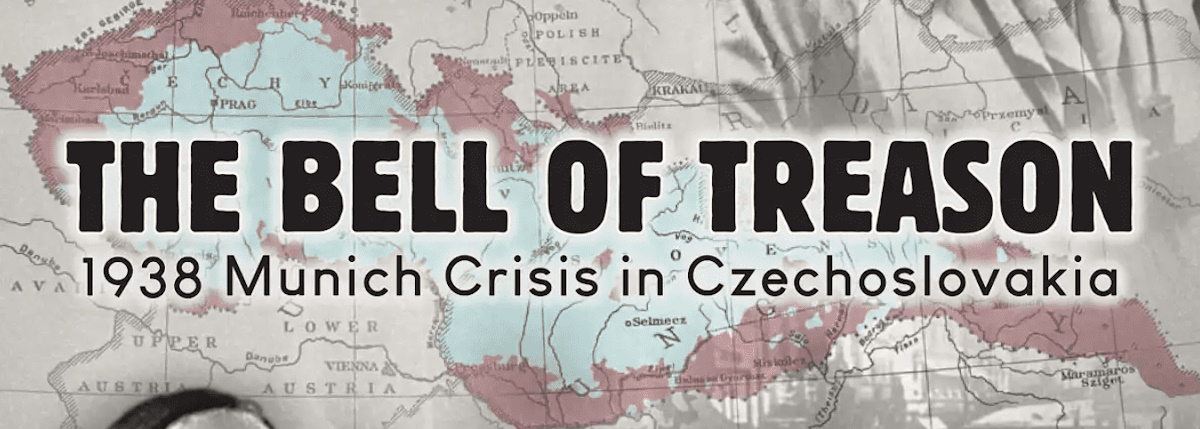
It wouldn’t be fair to call the Munich Crisis “small.” Certainly it wasn’t small to the almost fifteen million inhabitants of Czechoslovakia. But time and history, especially the history of World War II, have a way of making the betrayal of an entire nation seem tiny. In 1938, Czechoslovakia was twenty years young, guaranteed safety and autonomy by France, and remained the sole functioning democracy in Central Europe. Within a few short months, it became the latest target of Germany’s rolling territorial acquisitions and, after the Sudetenland was traded away to appease Hitler, was carved up between neighbors. The peace purchased with the First Czechoslovak Republic’s dissolution held less than a year.
This is the topic of Petr Mojžíš’s The Bell of Treason, an improbable but evocative title, not to mention a despondent one in an era of renewed imperial aggression against states that have been promised security by feckless global powers. Riffing on Mark Herman’s system from Fort Sumter and Frédéric Serval’s developments from Red Flag Over Paris, it’s also comparatively diminutive for a wargame, with short rules, a compact profile, and a sharp eye for the crisis’s framing. All the better to make its players feel like minnows among sharks.
Tick Tick Toe

If there’s anything that tickles the pleasure center of my brain, it’s seeing a designer put their own spin on a classic. Even better when that classic is soggier than bread that’s been tossed into a duck pond. Robert Hovakimyan isn’t the first person to tackle Tic Tac Toe this year. But compared to Brett J. Gilbert and Trevor Benjamin’s Tic Tac Trek, Bombastic is the straighter adaptation, right down to the nine-square grid and make-three gameplay. The big distinction is that everything has already been played to the board. Face-down.
Oh. And there’s a bomb.
Not a Blackthorne in Sight
Hard to believe it’s been two years since General Orders: World War II. The brainchild of Trevor Benjamin and David Thompson — and distinct from Undaunted, their other shared WWII series — the inaugural General Orders was an ultralight wargame blended with worker placement. I liked that opening salvo well enough, and despite some hangups there wasn’t any reason to not take a gander at the system’s second outing.
I’m glad I did. General Orders: Sengoku Jidai turns back the calendar to the warring states of 15th century Japan, swapping airplanes and artillery for ashigaru and… well, still artillery, but it’s somewhat less efficacious. More importantly, every detail of Sengoku Jidai, from the game’s more coherent visual direction to its fluctuating battle lines, is punchier and more confident than before. The result is a near-perfect small-box title that packs thunderous drama into a slender half hour.
Simps All the Way Down

Gastby. You know Gatsby, right? Throws fancy parties. In love with a woman who couldn’t care less whether he lives or dies. Always staring at that green light.
When it was announced that Bruno Cathala and Ludovic Maublanc were doing a board game version of F. Scott Fitzgerald’s The Great Gatsby, the response was mostly derisive. I get it. We’re tired of this multiverse crap. And who are these new characters anyway? Everybody knows you can’t go disrupting fans’ headcanon by adding characters to a century-old book.
In this case, though, it works. What’s a better homage to Jay Gatsby than inventing two new characters who were presumably hovering in the wings the entire time, only he never noticed? Unsuccessfully simping for somebody’s attention is as Gatsby as it gets.
Too bad about the rest of the game, though.
Kinfire Homeowners Association

Kinfire Council is full of jolting moments where I can’t tell whether Kevin Wilson wants to Say Something or I’m just suffering from a momentary case of pareidolia. As councilmembers of the once-great city of Din’Lux, we’re treading water while the world goes to hell. Magical climate change has led to sweeping food insecurity. Cultists are tearing down the very safeguards that have seen them prosper. Our politicians are feckless cowards who will swap sides the instant it seems expedient. Oh no. Is this the United States of Din’Lux?
More like the Homeowners Association of Din’Lux. After the events of Kinfire Chronicles and Kinfire Delve (all three of them), we’re patching the city back together one brick at a time. Most of our activities are suitable to such a task: gathering taxes, delivering food, deploying seekers with magical lanterns to kill the monsters in the sewers. Others make less sense. Can we censure the councilwoman who regularly visits the pub to court the evil cult’s loyalties? No? Hmph. Semi-cooperative once again proves the shakiest mode for any designer, even one as experienced as Wilson.
Calimala Olives

Sometimes I assume that everybody around me knows the same things that I know. To wit: when I began teaching the second edition of Calimala — the first edition of which was published in 2017 and launched Fabio Lopiano’s career as a game designer — everyone at the table started talking about Kalamata olives, and not, you know, the Arte di Calimala, the cloth finishers guild that was the economic backbone of Florence for two centuries.
Why would I assume that everybody knows about the Arte di Calimala? Don’t ask me. I’m in the assumptions business, not the understanding my assumptions business. At any rate, Calimala isn’t a game that requires much historical knowledge. Sure, Lopiano includes a number of nods to Florentine business practices and even city governance, but it’s too razor-toothed to matter. This one is sharp. But it may, perhaps, contain the seeds that would lead Lopiano to clutter his later designs with interlocking systems.
Distant Rumble Train

Despite all outward appearances, Lightning Train doesn’t include any magic. Which is something of a double statement. I went in expecting locomotives propelled by atmospheric violence; instead, we got a rare Paul Dennen miss. It isn’t that I wanted another Empyreal: Spells & Steam, exactly. Just something with spark. Even a little zap from the light switch after walking on the rug with my socks would have done.
PHANTO

So you’ve died. Only, rather than disappearing into the inky black, the way any sensible modern atheist would anticipate, you have been relegated to an eternity as a ghost trying to communicate nouns to lexically obsessed mediums. Dang it. Your mother was right all along.
That’s kinda-sorta the premise behind Phantom Ink, the word game by Mary Flanagan and Max Seidman. Phantom Ink has been kicking around for a few years now, one of those sturdy team games one can count on to make an appearance at gatherings once everyone is too tired for anything more taxing. It’s an unassuming plaything, redolent of any number of parlor games. That’s its greatest strength. Despite its simplicity, even despite its sleepy-eyed coziness, it’s the sort of game you can rely on.

 SPACE-BIFF!