Blog Archives
Another Imperium

With a few years behind us, returning to Imperium is like catching up with an old friend. A messy friend, one who hasn’t ever gotten their life together, but a good friend who’s never given me reason to regret their acquaintance. When Nigel Buckle and Dávid Turczi first unveiled their hybrid deck-builder / civilization game, there was so much material that it had to be split across two separate boxes, Classics and Legends. Horizons adds half as much again to the collection, and shows these designers once again at their most creative.
Ode to the Depot

Here’s a question for you. What do Oltréé, The Plum Island Horror, The Struggle for Zorn, Earthborne Rangers, Sleeping Gods: Distant Skies, Striking Flint, The Mandalorian: Adventures, Mass Effect: The Board Game: Priority: Hagalaz: Subtitle, and The Lucky Seven all have in common?
That’s right: they’re all solitaire or cooperative games from the past year that I broadly enjoyed that are too easy to win. Time and time again, I sit down at the table spoiling for a fight, thinking I’m about to get thrashed by the approaching tsunami, that it will take all my guts and endurance just to keep my head above water, and instead I roll the storm like a steamroller over a kiddie pool. Sure, in the past I may have groused about Antoine Bauza’s Ghost Stories being too rough on my delicate sensibilities, but this is an over-correction. Sometimes I want to be punished. Give me Slay the Spire. Give me Halls of Hegra.
Or give me the depot. This is a one-card expansion for The Lucky Seven, included in copies of the second printing, that Zach Barth sent over along with a copy of his next game, Chemistry Set. Too bad for Chemistry Set, because this singular addition has gotten me playing The Lucky Seven more obsessively than the first time around.
I’ve never reviewed just one card. Roll out, squad.
Float or Flounder
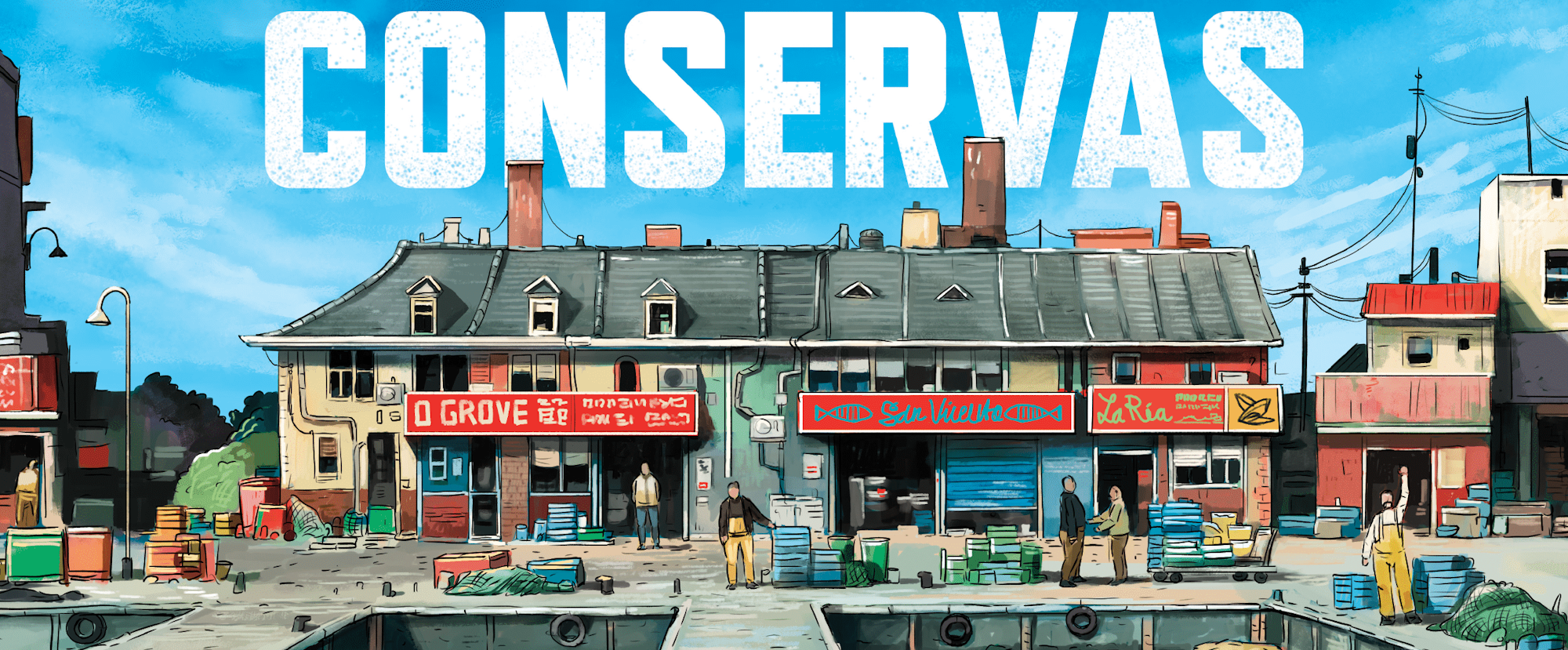
Tinned fish! Potted pulpo! I know so little about conservas that I can’t tell whether it’s a staple or a delicacy. In Scott Almes’ hands, it’s more of a double-edged pun, both a commercial enterprise and a matter of survival. In this solitaire game, you take on the role of a tinning factory. Your goal is to land and sell conservas — but not so much that you overfish the sea and leave yourself unable to operate next season. As such, there’s a delicate balance to be struck between your needs right now and the promise that tomorrow can be just as rich as today.
Breaking Mythwind
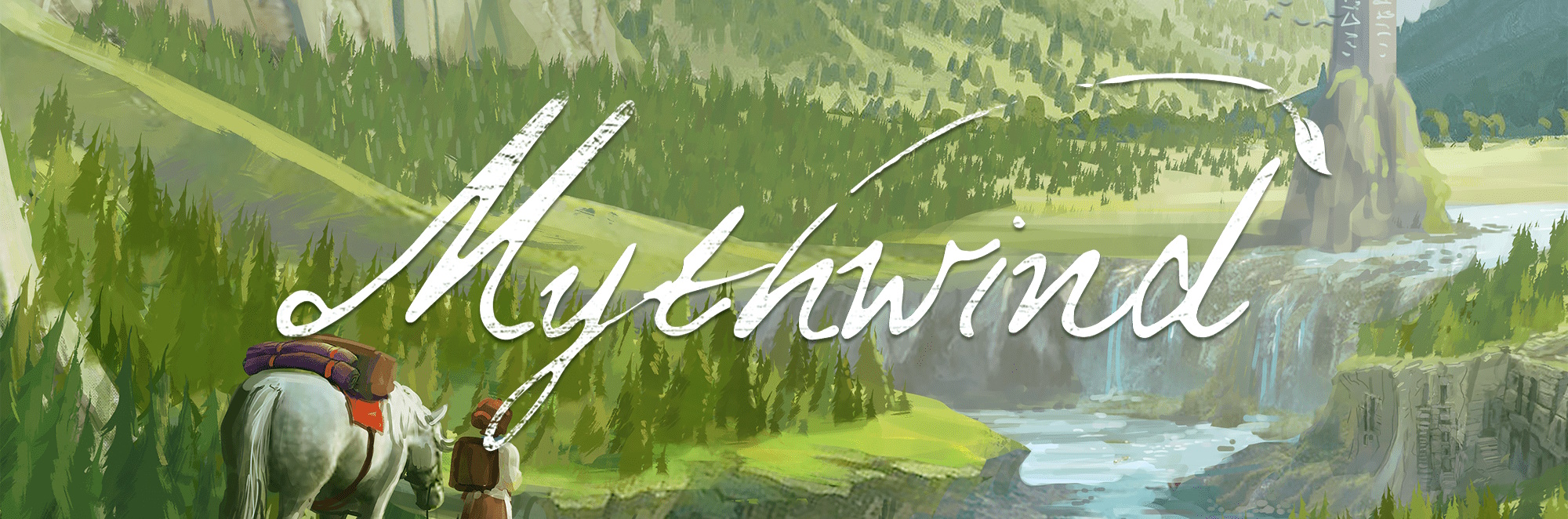
I like an ambitious game. Maybe it’s my abiding soft spot for Teddy Roosevelt’s Man in the Arena, despite some of the worst people you’ve ever met quoting the thing to deflect criticism, or maybe it’s my never-ending hunger for novelty. Either way, a board game that tries something different is bound to attract my attention. Even when that board game decides to get dressed by looping its underpants around its shoulders.
Mythwind, designed by Nathan Lige and Brendan McCaskell, certainly fulfills in the ambition department. To various degrees, it also does the underpants-as-pauldrons thing.
I’ve Got Callouses on My Fingers

After the first two sets in Kevin Wilson’s Kinfire Delve, Vainglory’s Grotto and Scorn’s Stockade, it remained to be seen whether there was much reason to return for a third (and final?) outing.
The short version? Callous’ Lab offers more of the same, with the anticipated adjustments and extras that aficionados may want to pick up. But it would be a lie to say I wasn’t getting a little strained at the prospect of any further quests.
Pugna Quin Percutias
One of my favorite things about board games is their ability to shine a spotlight on the undusted corners of history. Take Brad Smith’s Comet, a solitaire game about the titular resistance group and underground escape route that crossed from Belgium to Spain and helped over 700 Allied airmen escape back to Britain over the course of the war. It’s one of those tidbits I had an inkling of, but hadn’t given much consideration until I sat down at a table to reenact the smallest fraction of the hazards they faced.
Make no mistake, these were monumental acts of heroism, performed by civilian safe-house keepers and trail guides, under threat of arrest and execution, and conducted without firing a shot. Indeed, that was the Comet Line’s motto: Pugna Quin Percutias. To fight without arms. In many respects, an even more courageous proposition than taking up the rifle.
Friends Don’t Let Friends Slay Alone
Cards on the table: I prefer Monster Train.
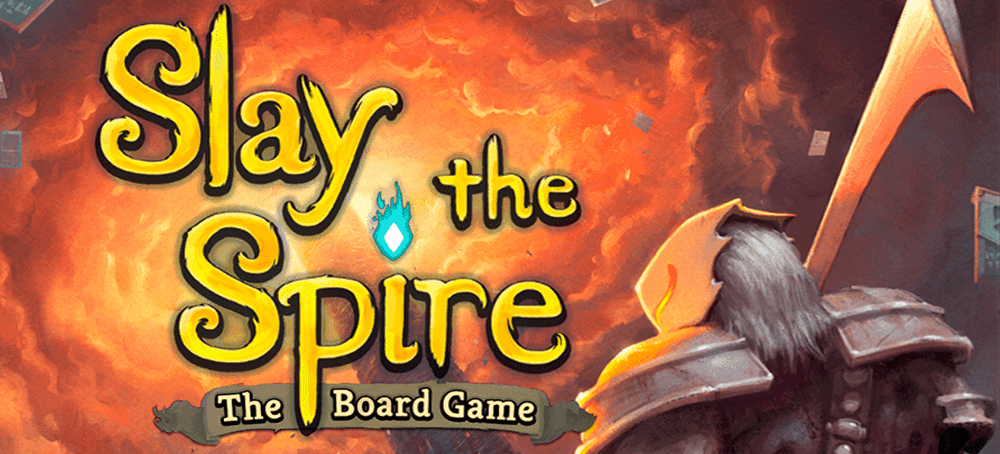
But it would be folly to deny that MegaCrit’s Slay the Spire has wielded massive influence over the digital deck-building sphere. Without Slay the Spire, an entire cohort of excellent successors would never have strode forward to claim the throne. Still, despite the odds, Slay the Spire remains unbeaten, a modern classic that’s less a game and more akin to a digital addiction.
How Gary Dworetsky got the go-ahead to adapt it for tabletop is beyond me. Don’t get me wrong, Dworetsky is a talented designer, and his previous game, Imperium: The Contention, as unfortunately titled as it may be, was fantastic. But it was also his only previous game. There’s probably some insider baseball we’re not privy to.
Not that it matters. Whatever its provenance, Slay the Spire: The Board Game is here. And it’s good. Every bit as good as the video game. Which isn’t the same as saying it’s an essential title.
Legends of a Dog System

Remember Xia: Legends of a Drift System, that sandboxy romp through outer space that didn’t really cotton to skilled play, but felt great anyway? Dog Star Shippers, the diminutive title by Sam Pugh, operates like a downscaled version of that game. It’s chancy, silly, and offers a pleasant way to pass an hour.
Cute as a Button

In video games there’s the concept of the “demake,” in which a particular title is reimagined according to the limitations of earlier hardware. If there’s an equivalent in analog games, it might be the impulse to miniaturize. If so, there may not have ever been as extreme an example as Gloomhaven: Buttons & Bugs.
The original Gloomhaven, designed by Isaac Childres, is famously enormous. I would list a sampling of the contents (seventeen heroes, ninety-plus scenarios, etc.), but even that’s an exhausting endeavor. By contrast, Buttons & Bugs fits in the palm of one’s hand. Not comfortably, mind you. It’s a rather big miniature box. You could probably deal some damage to an intruder if you pitched it with enough force. But compared to Gloomhaven, the shrink ray has done its job.
Here’s the thing. Just as a demake can prove clarifying of the core elements of a video game, so too does this miniaturization. By stripping out the many many many things contained in that big box, it zeroes in on what makes Gloomhaven so interesting — and to some degree, so limiting.
Chewing the Scenery

There’s no hiding it: Earthborne Rangers feels like a gigantic leap forward for a particular niche of card game, a quiet revolution of contextualization and setting that effectively relegates its predecessors to the nursing home. Those predecessors, adventure card titles defined by the release model of Fantasy Flight Games — The Lord of the Rings: The Card Game and Arkham Horror: The Card Game, to name the most durable examples — have been defrocked, shown to possess creaking knees and prosthetic hips.
But while it would be possible to write a thousand words bemoaning the business model that trickled out those games one expansion pack at a time, it’s far more interesting to highlight what Earthborne Rangers gets right.

 SPACE-BIFF!