The Greatest Graveyard of Empires

Pax Pamir is one of those historical games that doesn’t demand you perfectly understand its context before you play. The broad strokes will do. Here’s Afghanistan, its dynasty peeling at the edges. There’s Britain, looking to unite local warlords into a buffer state against its rivals. Speaking of which, here comes Russia: expanding rapidly, voraciously hungry, hoping to consolidate their frontier. Three sides, three agendas, one tract of land standing at their intersection.
The twist is that none of those competing agendas are your own. Instead, you’re a tribal chieftain, the local hotshot these empires must rely upon to achieve their aims. Scouting, navigation of local customs and courtly procedure, information and advice — the lay of the land, both literally and figuratively. But you have aspirations of your own. Perhaps even aspirations that might be realized by aiding the right empire at the right moment.
The Great Game, in other words, except played by its middlemen rather than its kings and queens. And although I’ve written about Pax Pamir three times before, Cole Wehrle’s official second edition is different enough that it warrants an entirely new treatment.
Welcome to the Cleanup

Somebody made a booboo.
That’s the sad tale that opens John Clair’s Downfall. When the nukes dropped, everything was lost. History, medical knowledge, fourth-wave feminism, a reliable source of pineapple — all gone. Where once stood civilization, now scavengers roam the wastes, dredging up resources with their exosuits, airships, and fallout-mitigating environmental reconstruction technology. With perks like that, it’s almost tempting to go full prepper.
But don’t pour the concrete for that bunker quite yet, because Downfall has some… let’s call them radiation lesions.
I Whip My Hara Back and Forth

Ask me what my favorite thing is about Champions of Hara, and you aren’t going to like the answer. It’s far too twee. Too sickly sweet. Too basic.
Why don’t I tell you my second and third favorite things instead?
The Lonely Rhodes Scholar

The word “wargame,” like most board game genre definitions, is a nebulous thing. Do political sims count? What about games about the weeks and months leading up to war? What about wars by other means? It’s this conundrum that makes me propose an alternative: a wargame is that which contains a rulebook that’s alternately impenetrable, opinionated, and insightful.
Ben Madison’s solo wargame The White Tribe fits at least the last two descriptors. In one sense, it operates in the same headspace as Tom Russell’s This Guilty Land — politically charged, critical of racism and the systems that support it, and deeply conscious of how legislation is passed, employed, and sometimes abused. But if it’s a mirror, it’s an inverted one. Where Russell’s approach was pessimistic, casting the U.S. Civil War as inevitable and compromise as poisonous — a view Russell supports quite well, as I wrote last year — Madison charts a careful course between terrible extremes and concludes that, sometimes, collaboration is the only way to keep from plummeting into the abyss.
The Surprising Tension of Res Arcana
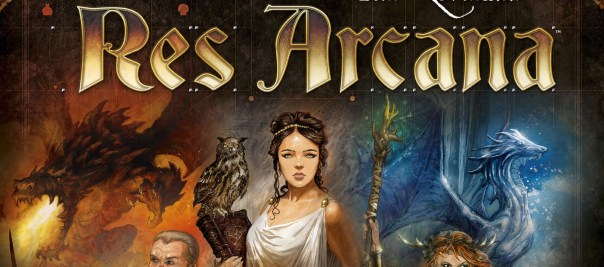
Res Arcana is a deceptive little thing. Its first chime gives the impression of a ditty: thirty minutes long, very much about converting resources into other resources into points, and leafed with a thin veneer of, “oh, y’know, magic.”
Don’t let that fool you. Tom Lehmann may have solidified his reputation with Race for the Galaxy, but Res Arcana proves he can pull off a symphony with only a few chords.
Book-Space! #10: The Collapsing Empire

Go with the Flow and join Brock, Summer, and Dan as we discuss how to browbeat supporting characters into divulging information, why all space ships should be named after Elton John songs, and whether The Collapsing Empire by John Scalzi espouses a proper pronunciation for “emperox.” Listen here or download here.
Next month, we’re reading Trail of Lightning by Rebecca Roanhorse.
Brave Little Borby
Brave Little Belgium, about the violation of Belgian neutrality by Germany at the outset of World War I, positions itself as an entry-level wargame, perfect for teaching newcomers the ropes of this rich — and often intimidating — sublevel of the board games basement. Beginners can expect to learn:
- The basics of point-to-point army movement and the value of scouting.
- How chit-pull activation works.
- That more seasoned wargamers will laugh when you complain about paper maps.
- Precisely what qualifies as “solitaire suitability” among grognards.
Not bad! Let’s evaluate how well it succeeds.
The Emergence of Shy Space Base

For a dice game, Space Base doesn’t arrive with very many dice. You’ll find no chunky handfuls here. Two dinky dice is all you get. And those two are cursed, I’m certain of it, prompting my group to pull out the dice bowl so that we can roll something other than 4s and 5s for once. Guess we’re rolling chunky handfuls after all.
But curses aside, Space Base knows how to put its dice to good use. How to get crazy with them. How to make rolling 2d6 more exciting than they have any right to be.
False Messiah
In one sense, True Messiah is the poster boy for why Kickstarter exists. It was funded independently of any major publisher, it’s a little oddball, it stands well beyond the usual circles, and happens to be designed by a newcomer with some digital game design experience but no name in tabletop. A passion project, in other words, and one that likely wouldn’t have been birthed without crowdfunding. This is the very reason Kickstarter was lauded as a platform in the first place.
In another sense, however, it’s also a poster boy for why crowdfunded passion projects that stand well beyond the usual circles aren’t always everything they’re cracked up to be.
Teensy Towns
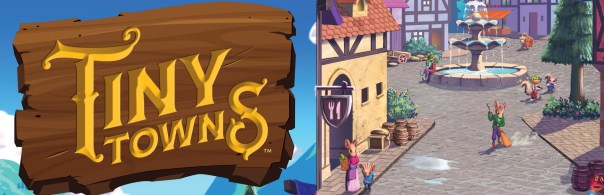
I’m not sure there’s a title that makes my eyelids droop more than Tiny Towns. The back of the box only deepens my fatigue. Colorful cubes, check. Little woodcut buildings, cute. A blank 4×4 grid for each player, groan. Pastoral scenes of golden farms and thatched granaries and unkempt almshouses — credit where it’s due, there’s a cure for insomnia here.
But as Socrates said, “Don’t judge a scroll by the gross animal veins in its parchment.” So too it is with Tiny Towns. Although this isn’t the sort of game that gets my heart pounding, it’s no soporific.

 SPACE-BIFF!