If Books Could Kill

It’s hard to go even one minute in the presence of Paperback Adventures, the latest word game by Skye Larsen and Tim Fowers, without drawing comparisons to Slay the Spire — specifically, the original digital game by Anthony Giovannetti and Casey Yano, not the forthcoming cardboard adaptation by Gary Dworetsky. At this point, a Mormon genealogy project would struggle to detangle its heritage. Slay the Spire spawned entire crowds of imitators, but it was also a successor in its own right, drawing on both roguelikes and the tabletop deck-building craze. It’s been almost a decade since Fowers’ original Paperback, itself a deck-builder. Now it’s back after some liberal cribbing from Slay the Spire. Trace that lineage and you get a time paradox.
Here’s the crazy part: Paperback Adventures is possibly the finest title Fowers has produced. It might even be superior to Slay the Spire. Hear me out.
Space-Cast! #28. Land and Conversation

The politics of the Spanish Civil War are complicated — which only makes it all the more impressive that Alex Knight’s Land and Freedom distills them so elegantly into a three-player scrum for control of the Second Republic. Today, Alex joins us to discuss the genesis of his game, including how he solved the semi-cooperative problem with a silk bag, evolving the card-driven formula so popular in wargames, and the factional politics behind the gameplay.
Listen here or download here. Timestamps can be found after the jump.
The Jaunty Mattanza
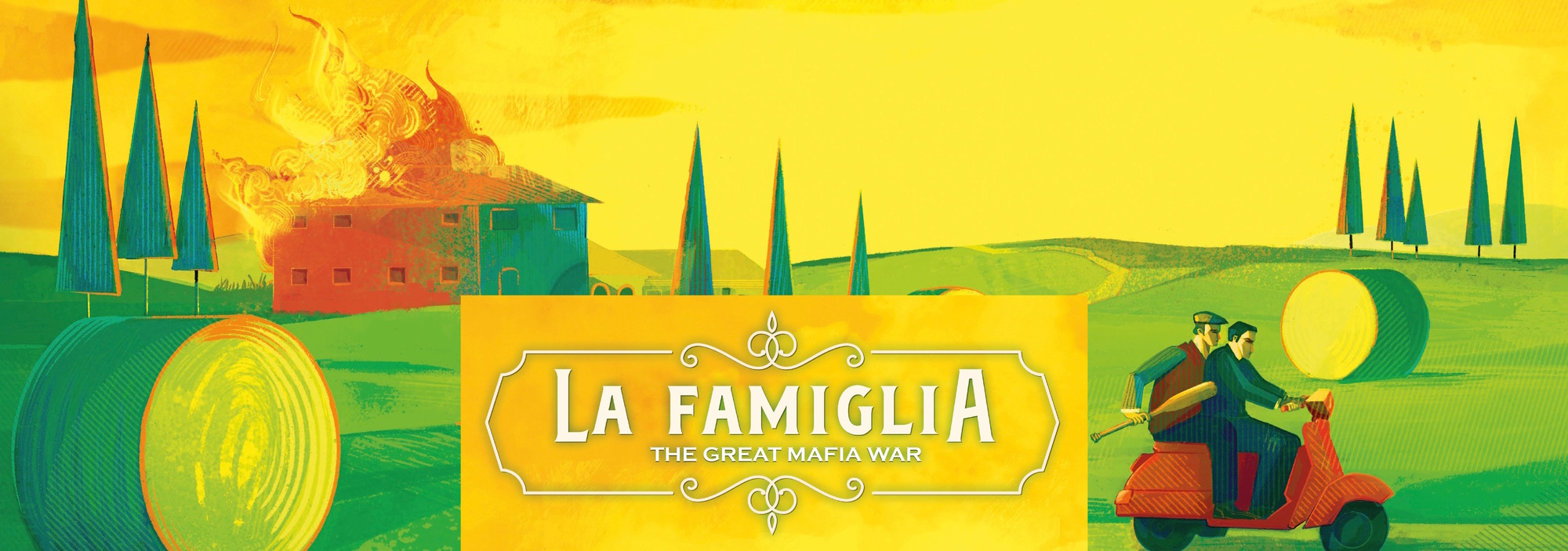
La Famiglia: The Great Mafia War, the latest design by Maximilian Maria Thiel, has caused a minor stir thanks to its subject matter, the Sicilian mafia wars of the 1980s. Sometimes called the Mattanza — the slaughter — this conflict claimed thousands of victims, including bystanders, police officers, and civil servants, and included acts of violence that crossed borders and oceans.
When it comes to board games, it’s hard to find a setting that will unsettle me. I’m less interested in a game’s proposition than its execution. Playing La Famiglia, however, it’s hard to escape the niggling feeling that this isn’t the most canny handling of a sensitive topic.
13xx

My favorite thing about Nick Case’s Pilgrim is how it seems to be winking at you. That’s saying a lot, given how many things it does well, but there it is: this is a game about a topic that could have been unbearably dry, yet it carries itself with a sparkle of irreverence that calls to mind the games of Alf Seegert.
The topic in question is a ring of abbeys in 14th-century England. Students of history will immediately recognize the period. Set anything in the 14th century and there’s a good chance the tone will hover somewhere between dismal and outright mortal crisis. There’s a plague on, and a war, and indulgences, and ecclesiastical abuses, and all the other things you were probably taught about in school as being symptoms of the wider Middle Ages.
Spinning Stories

At this level of saturation, I can’t help but wonder if trick-taking games aren’t a little bit like pursuing a graduate degree — to prove your bona fides, you’ve got to make an original contribution to the field. It’s a good thing, then, that the genre sources from an inexhaustible wellspring of creativity. I’ve played well over twenty new trick-takers over the past few months, all of them visibly kin, and it’s a sublime joy to sit down for a session, the basics already sketched out in your mind thanks to a hundred previous titles, and still have no idea what a treat you’re in for.
That’s certainly the case with Tall Tales, an unassuming little trick-taker that joins a long tradition of upending the status quo in exactly the right ways.
Klaus Teuber Saved My Life
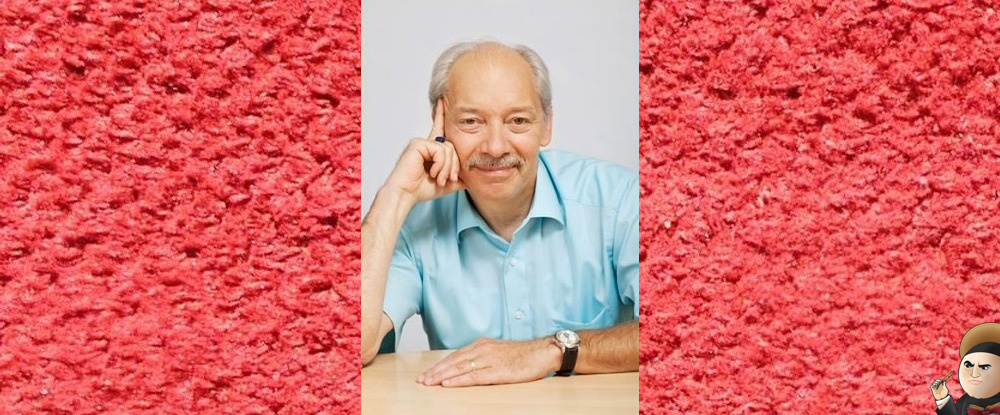
By now you’ve likely heard of the passing of Klaus Teuber at 70 from a “brief and severe illness.” Even though his Google return defaults to identifying him as a “German former dental technician,” it isn’t an overstatement to say he may be the figure who’s had the single greatest impact on modern board gaming. His 1995 Spiel des Jahres game of the year win for Settlers of Catan was his fourth and final time bringing home that award.
I never had the pleasure of meeting Teuber, but his designs are written into my gaming DNA. Maybe that’s why the news of his passing has hit me so hard. I can’t recall feeling this saddened by any other celebrity death. Then again, no other creator gave me a relationship with my father or helped me survive the bleakest two years of my life.
How Space-Biff! Will Be Using A.I.

As the world’s premier board game critic, the question I receive most is “So, are your parents, like, verbally disappointed, or are they more of silent letdown people?” Number two is “Do you intend to use A.I. generated text and images so you can focus on the important stuff, such as getting your family back to work at the steel mill?”
A luddite at heart, I’ve spent my fair share of time kicking against the future. No more. Today, I’m ready to unveil the steps I’m taking to embrace artificial intelligence art.
Space-Cast! #27. No Rethemes
Dan Bullock is one of a handful of up-and-coming wargame designers determined to do things a little differently. A few months back, we down to chat about some of his games, including No Motherland Without, 1979: Revolution in Iran, and the yet-unpublished Blood & Treasure. Sadly, this was recorded before I’d played Bowie. Although maybe that’s a good thing, since otherwise that’s all we would have talked about.
Listen here or download here. Timestamps can be found after the jump.
Non Plus Ultra

As fascist forces encircled Madrid in 1936, Dolores Ibárruri delivered a string of speeches meant to rally those loyal to the Second Republic to its defense. Nicknamed la Pasionaria, the “passion flower,” Ibárruri had only been elected earlier that year as a deputy in the Cortes Generales for the Popular Front, a coalition of leftists, communists, socialists, anarchists, and regional nationalists. Her first act had been to empty the local prison of its political detainees, throwing open the cells with her own hands before the Cortes could waffle over drafting the order. Now, with a military coup threatening to seize the country by force, one of her broadcasts inflamed the city’s defenders. “¡No pasarán!” she declared. The fascists shall not pass.
But they did pass. After a siege of two and a half years, General Francisco Franco entered Madrid. “Hemos pasado,” he is reported to have said. We have passed.
Almoster Famous
I was somewhat cool on Chad DeShon’s On Tour, a roll- and flip-and-write about transiting either the United States or Europe and very likely getting stuck in a corner somewhere. It was a perfectly inoffensive but also perfectly inoffensive game, fifteen minutes long and not one of them too cerebral.
For the system’s second outing, Allplay has handed the reins to guest designer Alban Viard. The basics remain intact. The quality, however, has shot through the roof.

 SPACE-BIFF!