Author Archives: Dan Thurot
RETXXIIIRN

Remember how last year all those RETVRN bros couldn’t stop talking about how they meditate on the fate of Ancient Rome every single day, but when pressed it turned out they just had a big squishy for Ridley Scott’s Gladiator? Well, here’s a part of our distant heritage I think about daily: that holiday in the middle of March when we all get together and stab our nation’s self-proclaimed dictator.
23 Knives, designed by Tyler J. Brown, whisks us to that fateful day in 44 BCE when a senatorial conspiracy resulted in Julius Caesar lying dead at the feet of a statue of Pompey the Great, his onetime ally, son-in-law, and eventual rival in the preceding civil war. Those Romans sure loved their little ironies.
A Visual Tour of ProtoCon

The Wasatch Front hosts an unusual density of board game designers. I don’t know if it’s the culture, the thin air, the altitude, or the arsenic billowing from the withering lakebed of the Great Salt Lake, but there you have it. Beginning in 2019 just in time for ‘rona, a handful of local publishers started an annual convention for board game prototypes. They named their baby ProtoCon, which I believe is short for “Protolithic Confluence.”
Last month, I spent an afternoon at ProtoCon. Hosted in the conference rooms of the architectural marvel that is the West Valley Megaplex, this was an opportunity for dozens of designers and playtesters to show off their games, get feedback, and polish their playthings. Wait, don’t cite that last part.
As ever, I would love to share some of the best sights, sounds, and scents of the convention. Take my hand as I lead you on a visual tour. No, the other hand.
Magenta Two: Duos

Last week, I called Fives, the first entry in CMYK’s Magenta, the least intriguing of these four releases. Duos, on the other hand, is probably the best in terms of raw gameplay. Designed by Johannes Schmidauer-König, this is a remake of his 2015 title Team Play. And let me tell you, for a thirty-minute partner game, it’s as tight as they come.
Conclave: The Board Game
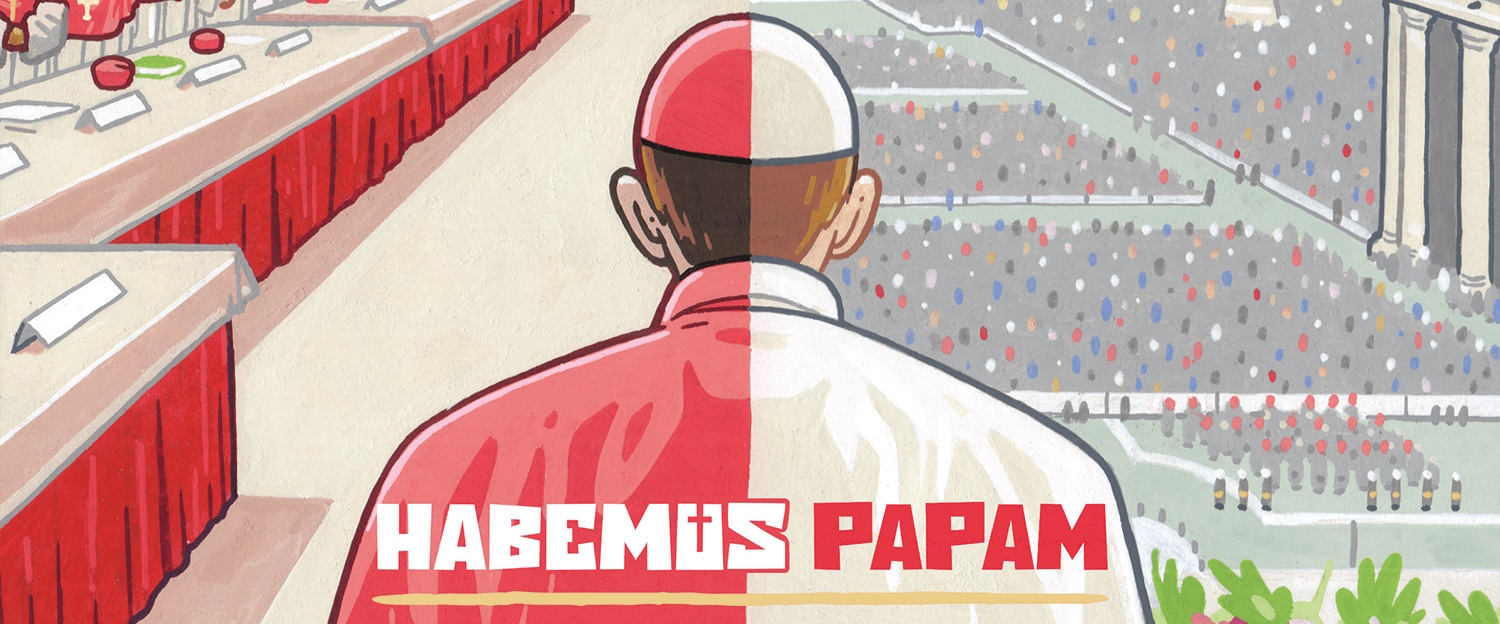
It’s wild that Conclave, the award-nominated movie about papal electioneering, Vatican secrets, and Ralph Fiennes’ preference of regnal epithets has only been out for a few months and already it’s getting a board-game tie-in.
Okay, okay. I swear I won’t turn this into a review of Conclave.
Habemus Papam is the work of Pako Gradaille, whose forthcoming Onoda fascinated me with its solitary gameplay and ethically sticky protagonist. Unlike that game’s antisocial tendencies, Habemus Papam is strictly communal, casting players as members of the Roman Curia tasked with selecting the next pope. It’s an intriguing, if sometimes wobbly, little thing.
Space-Cast! #43. Unstuck in Time

In 1956, not-yet-famous author Kurt Vonnegut unsuccessfully attempted to publish a board game. That game, GHQ, was then stored in a box for decades until designer Geoff Engelstein read about it in a biography and began the long process of restoring this historical artifact. On today’s Space-Cast!, we sit down with Geoff to discuss how GHQ traveled across time, its surprising innovations, and what it might say about Vonnegut’s efforts to contextualize his wartime experiences.
Listen here or download here. Timestamps can be found after the jump.
Witness My Exhaust Pipe, Sucka

There’s something refreshing about Thunder Road: Vendetta. In a bygone era we would have called it Ameritrash, although there’s an elegance under the hood that belies its spots of rust. Designed by a whole committee at Restoration Games, it’s a reimagining of the 1986 Milton Bradley Thunder Road, albeit with all the advantages of nearly four decades of intervening design and component upgrades.
Super Glue on Cotton

Super glue, when applied to cotton, can cause sudden and significant increases in temperature. The internet would have you believe this can spark fires. I’m not so sure about that, but wisps of smoke aren’t uncommon, and my daughter has a burn mark on her arm from when she accidentally set her sleeve against wet super glue.
This is one of my favorite random factoids. I plan to deploy it as soon as somebody hands me a “favorite random factoids” category in My Favourite Things, a blend of trick-taker and party deduction game by Japanese designers Daiki Aoyama and Pepe_R.
Magenta One: Fives
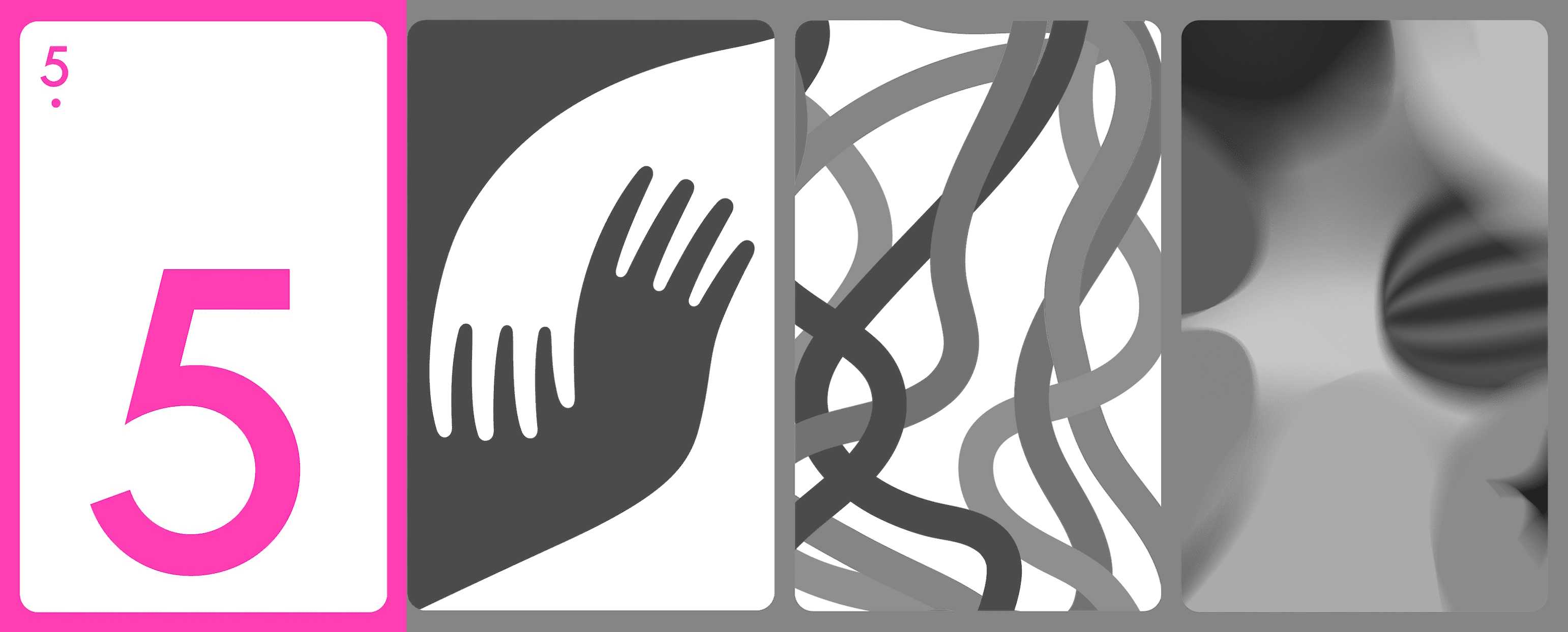
After the unbroken killstreak of Spots, Lacuna, Daybreak, and Wilmot’s Warehouse, I was as surprised as anyone by CMYK’s announcement that their next big release would be Magenta, a series of four garish reissues of older card games. Although in the case of the first entry, “older” only hearkens back to 2022.
That first title, Fives, is a remake of trick-taking wunderkind Taiki Shinzawa’s The Green Fivura. We’ve looked at a number of Shinzawa’s trick-takers in the past, including (deep breath) American Bookshop, 9 Lives and Ghosts of Christmas, and Inflation! and Charms. Also in the non-card category, Tower Chess.
Compared to some of those offerings, Fives plays things relatively straight. You know. Relatively.
Love and Heartbreak in Georgian London
As a second-grader, I despised recess. Not because I enjoyed class — it was boring and tedious, hemmed in by schedules and busywork — but rather because I was lonely. Some people don’t understand loneliness. They can’t. It wears the soul to a grainy powder. I had recently changed schools, bidding farewell to my friends and those familiar halls. Now I spent those interminable minutes wandering the lawns, balancing on the rocks, avoiding the bullies I half-knew from church.
And then, like the sun warming my face after a chill, there they were. Two friends. Adam and Adam. They invited me to play make-believe with them. We soared across the grass, scraped our knees together, became soldiers and explorers, scared ourselves silly at sleepovers, told our first dirty jokes. Once, afraid that I had done something that would make them abandon me, I burst into tears, only for both Adams to enfold me in a gangly, childlike hug, reassuring me that all was okay.
Everything was bright. For a time.
I Love Night

Isle of Night isn’t here to blow your hair back. It also isn’t here to reinvent the wheel, make your day, or even dress to impress. Designed by Dustin Dowdle and illustrated by Ryan Laukat — right, that’s why it looks so familiar — this is a set collection game with a few good ideas rattling around its head. Unfortunately, they largely aren’t capitalized on.

 SPACE-BIFF!