Author Archives: Dan Thurot
Two Minds in the Wild

Brock: What’s that noise from the woods? Is it the call of a rare bird?
“Coo. Coo.”
No, that’s not quite what I’m hearing…
“Two. Two.” Yes, that’s it! “Two… Minds!” Once again, I have lured Dan into the mountains to talk about a board game.
Dan: I can’t believe I agreed to let you write the intro.
Sharkboy vs. Octoboss

Carl Robinson is onto something with Kelp: Shark vs. Octopus. Hidden movement games have always been asymmetrical; there’s no hide-and-seek without both hiders and seekers. But in Kelp, that asymmetry is pushed in exciting new directions.
The concept will make sense to anybody who’s so much as glimpsed a nature documentary. One player becomes the Shark, a sleek killing machine running on pure reflex. The other is the Octopus, doing its darnedest to rustle up some snacks without becoming one. It’s a battle of muscle versus wits, one evolutionary path pitted against another to determine which is the more viable.
Strategic Prayer

Faith. On a few occasions, I’ve written about the prospect of board games as expressions of belief. More than one designer has made the attempt, usually by offering some perspective on history, as in The Acts of the Evangelists, The Mission, and Nicaea, but not so often by reflecting on individual devotion. I suppose Ierusalem: Anno Domini is the closest I’ve seen, with its sacramental closeness, but that one was so burdened by its gamier elements that any deeper relationship was washed out with the flotsam.
Imagine my surprise when such a game appeared on my table, not born of my native Judeo-Christian education or background, but courtesy of the third branch of our shared family tree. Designed by Ahmad Salahuddin, Usolli is about performing salah, the five daily prayers of Islam, amid the hustle and bustle of modern life. It’s lighthearted but earnest, sweet and funny and focused wholly on personal action. And although I have a few hangups about Usolli as a game, I appreciate what Salahuddin is trying to do here.
Kinfire. That One.

Here’s a funny thing: playing Kinfire Delve, the three small boxes spun off of Kevin Wilson’s much grander Kinfire Chronicles: Night’s Fall, I figured they must be runty versions of the larger thing. Those side quests feature the same cast of heroes as Chronicles, albeit parceled out two per box, with a card system that sees them either using cards for their principal effects or to boost their fellow heroes. Surely, I assumed, the massive slab that was Kinfire Chronicles would be deeper, smarter, more compelling?
If anything, it’s the other way around. I’ve been playing Kinfire Chronicles: Night’s Fall for some months now, picking through its storybook, slaying its monsters, and scouring the lighthouse-protected city of Din’Lux for its coziest inn. And I have to say — I prefer the little ones. By a lot.
Magenta Four: Fruit Fight
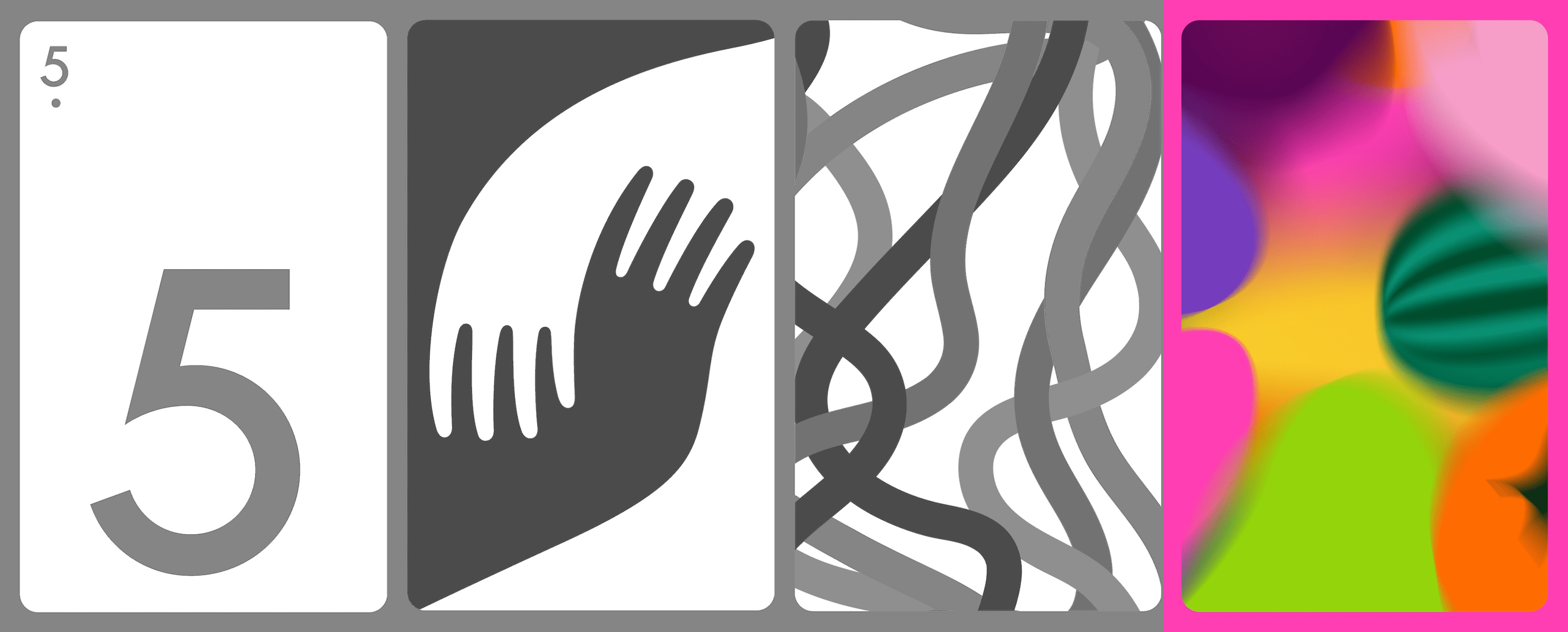
Of course, there’s a Knizia. Fruit Fight is the final entry in CMYK’s Magenta, a series of four brightly-colored card games that each introduce a new concept. It’s also perhaps the most storied of the bunch, with multiple reissues over the years, masquerading as Hit!, No Mercy, and Cheeky Monkey. This time around, you’re apparently chucking fruit at each other, complete with blurred images of foodstuffs sailing through the air. As with the rest of this set, the aesthetic is downright charming.
The game itself? Eh. It’s fine.
Let Me Die Surrounded By Machines

Moon Colony Bloodbath is a board game out of time, and not entirely in the good sense. It owes its evocative title to the Mountain Goats / John Vanderslice collaborative EP of the same name, but the comparisons end there. Donald X. Vaccarino liked the name, liked the idea of a moon colony going extinct, and, well, that’s what prospective moon colonists are going to get. It’s not quite a joke — there is some gameplay here — but its punchline is right there on the cover.
Space-Cast! #44. Enlightened

The Illuminati! Aside from being a cabal of lizard-people who rule the world through the United Nations, they are now also the topic of a board game, Pax Illuminaten. On today’s Space-Cast!, we’re joined by designer Oliver Kiley to discuss three very different histories of this secret society.
Listen here or download here. Timestamps can be found after the jump.
Adolescent Archipelago

Over the past few months, we’ve taken a look at a number of small-batch games that were designed for sale at indie markets. One forthcoming example is Juven Isle, a tile-placement and terrain-blocking game by Gary Kacmarcik, which should be available at this weekend’s Game Market Vegas.
Mostly, it’s an excuse to pore over maps and puns at the same time. Two of my favorite things!
Magenta Three: Figment

Another week, another Magenta! After Fives and Duos, I thought I had a handle on CMYK’s approach. These are fresh spins on familiar card games, simple enough to appeal to the masses, but dimpled enough that you, a time-tested veteran, won’t grumble when it hits the table.
Until Figment. Figment is the weird one of the bunch.
Climbing Three Ladders

Is ladder-climbing and deck-shedding the next phase of our hobby’s obsession with trick-taking? It may well be. I’ve covered plenty of trick-takers from New Mill Industries over the past year or so. Now the small-box publisher has released a trio of shedder-climbers. Let’s take a look at each in turn, shall we?

 SPACE-BIFF!