Blog Archives
A Study in Personal Pickiness
I adore Martin Wallace’s A Study in Emerald. The first edition most of all, although even the second edition, with its overly pruned foliage, will do in a pinch. I’ve talked about these games, and their spiritual sequel, multiple times. In some ways, the original Study was one of my first glimpses into the strength of board gaming as fable, as serious historical examination made easier to stomach thanks to its drapery. Like clothes over a mannequin; like speculative fiction describing theory of mind.
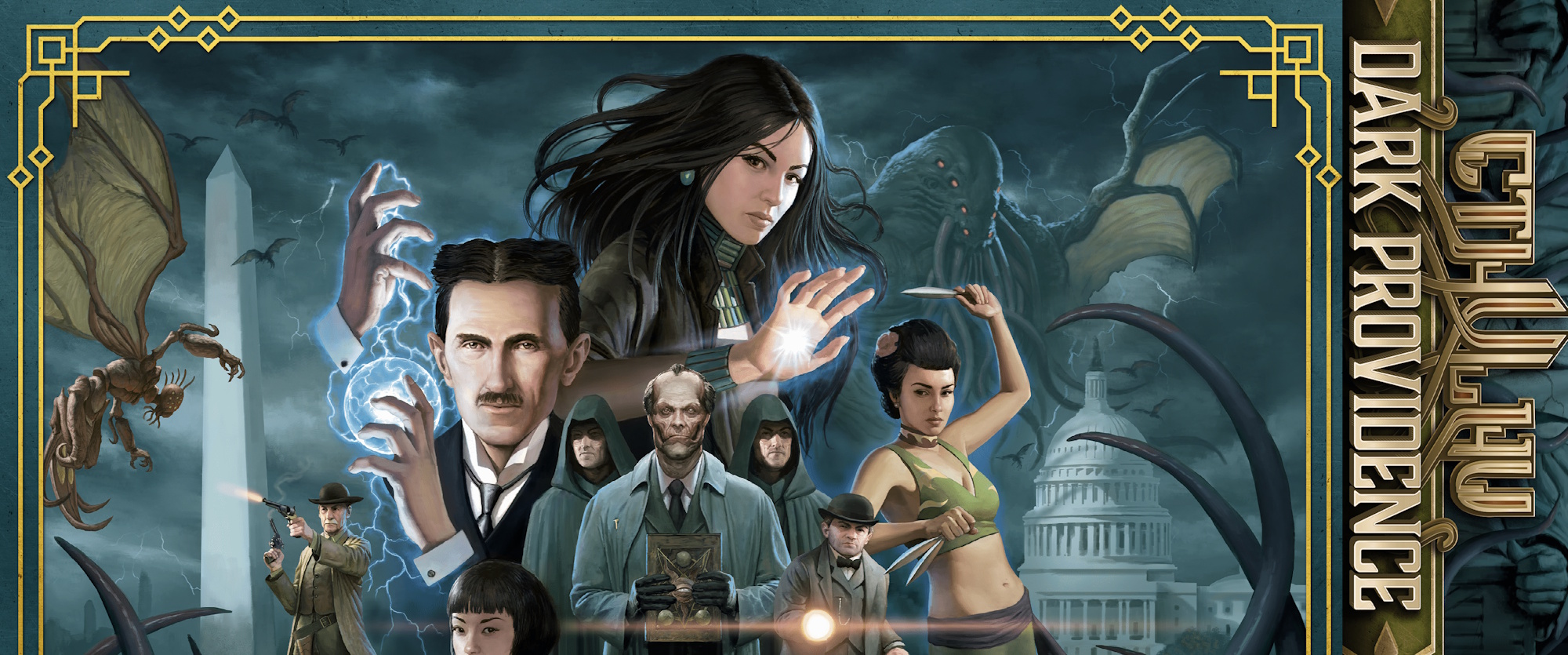
Cthulhu: Dark Providence, co-designed by Wallace and Travis R. Chance, is a remake of Study’s first edition. It’s a very good game. An excellent game. As a design artifact, it improves upon Study in fascinating and crucial ways. I’d be happy to introduce it to anyone who wants a glimpse into what board games can accomplish.
And yet, I can’t help but miss the original. There’s some rosy nostalgia at play. Of course there is. But I’m also longing for that original game’s fangs. And no, I’m not talking about how this edition swaps out the vampires for red-eyed knockoffs.
The Sun Also Rises

I’ve always been suspicious of that oxymoron called “big minis games.” You know, specimens like Cthulhu Wars and Assault of the Giants, wherein the little people’s gentlemanly war is interrupted by beasts twice their size and quadruple their strength, slammed onto the table with a diminutive rumble that could ripple water or quiver jello. With all that mass lumbering around, who’s going to work up the nerve to say that your game is too small in the areas that count?
It was Eric Lang’s Blood Rage that persuaded me that such a game could exist, and be worthwhile as a game, without leaning all its weight on its toy factor. Big monsters and cool sculpts, yes, but also a solid sense of what made for a good time. Brawny and brainy in equal measure. Big monsters who land heavily and earn their place.
And now Lang has crafted a spiritual sequel in Rising Sun. Brace yourself, because this one’s got some sharp edges.
An Old Game About the New Thing

Modern Art is about so much more than just modern art. Oh, it’s about that too, and CMON’s latest edition of Reiner Knizia’s 1992 classic is lavishly produced with work by genuine artists, each with their own distinctive style that makes the identifying colors on each piece’s header almost unnecessary. Does it matter that Rafael Silveira is the orange artist when his portraiture is so unsettling? Or that Ramon Martins is designated by green when he has such a slick take on Asian traditionalism?
Maybe. Especially when Martins defies his oeuvre with something from left field. That’s the thing about Modern Art. It’s a game about maybes and could-have-beens and taste-making and guessing the value of a thing before it’s a Thing.
It also happens to be a sublime merger of play and theme.
Ethnos-centrism
Paolo Mori has put together some wonderful stuff, ranging from the shipshape Libertalia to the behatted Dogs of War. Both were exceptionally muscular for their size, flexing their wiry ruleset so that even reluctant friends could join in and still feel brilliant after a couple rounds. What’s the one thing better than staffing a snarling pirate den? Fighting on both sides of a mercenary battle, that’s what.
Ethnos joins that brawny pair as possibly Mori’s most sinewy game yet, and not just because it features trolls beating up orcs. Come take a look.

 SPACE-BIFF!