Blog Archives
Kinfire. Not That One.

Every time I mention I’m playing Kevin Wilson’s Kinfire, somebody asks if it’s really as big and intimidating as they’ve heard. This sparks a clarification: the Kinfire in question is Kinfire Delve, which is considerably smaller than Kinfire Chronicles, the latter of which is so sprawling and so expensive that it would probably be compromising for me to even glance at the thing.
No, Kinfire Delve — specifically Vainglory’s Grotto, the first of three proposed releases in the Delve line — is neither big nor intimidating. To the contrary, it’s compact and easy. Both solitaire and with two players, it’s as smooth as they come. Maybe too smooth. But only by a scooch.
The Plum Island Park Stroll

One of the finest solitaire games of all time is Dawn of the Zeds, Hermann Luttmann’s masterful riff on the States of Siege model. Not that it should be taken lightly. It presents a vicious struggle for survival that might end in calamity faster than the game can actually be set up. It doesn’t help that further editions and expansions cluttered the table with so many optional modules that even veterans of the zed wars might pause before breaking it out. At least this veteran has.
So it was with no small measure of excitement that I approached The Plum Island Horror, a spiritual successor to Dawn of the Zeds, and a perfectly schlocky reimagining of the small town under siege by reanimated horrors.
The Suns of Malvios

The suns of Malvios are dying.
I haven’t a clue what that means. Evocative, though. I wouldn’t expect any less of Peter C. Hayward. He created That Time You Killed Me, which featured some of my favorite writing in any board game to date. Give me one good sentence over a languid storybook any day.
Converge is the card game equivalent of one good sentence. Maybe four good sentences. This is a Button Shy production, and like all Button Shy productions it’s an 18-card wallet microgame. Except there are three wallets plus a solo mode, and they can be mixed and matched. Purists might argue that this pushes it past some self-imposed boundary of microgamedom. Good thing I’m no purist, because Converge is possibly the best microgame I’ve had the pleasure of playing.
The Better Part of Valor

The Battle of Hegra Fortress saw 250 Norwegian volunteers holding off a Wehrmacht battalion for the better part of a month. It was a comparatively minor engagement in the grand scheme of the Second World War, but the unexpected success of the defenders against overwhelming numbers, artillery and air bombardments, and the weather itself became a symbolic victory for Norway.
Petter Schanke Olsen’s version of the battle, Halls of Hegra, turns to modern mechanisms and systems to immortalize the battle. The result is exceptional craftsmanship, a depictin of warfare that goes far beyond the customary in its portrayal of courage under fire.
Flippin’ Heck

Round these parts, we mostly know Steven Aramini for his 18-card wallet microgames, fare like Circle the Wagons, Sprawlopolis, and Ancient Realm. Now he’s set up his own imprint, Write Stuff Games. While its inaugural title is rather compact, it’s downright massive compared to a wallet game. It’s also one of the best flip-and-write games I’ve played. Ever.
Now I Know My ABDECs
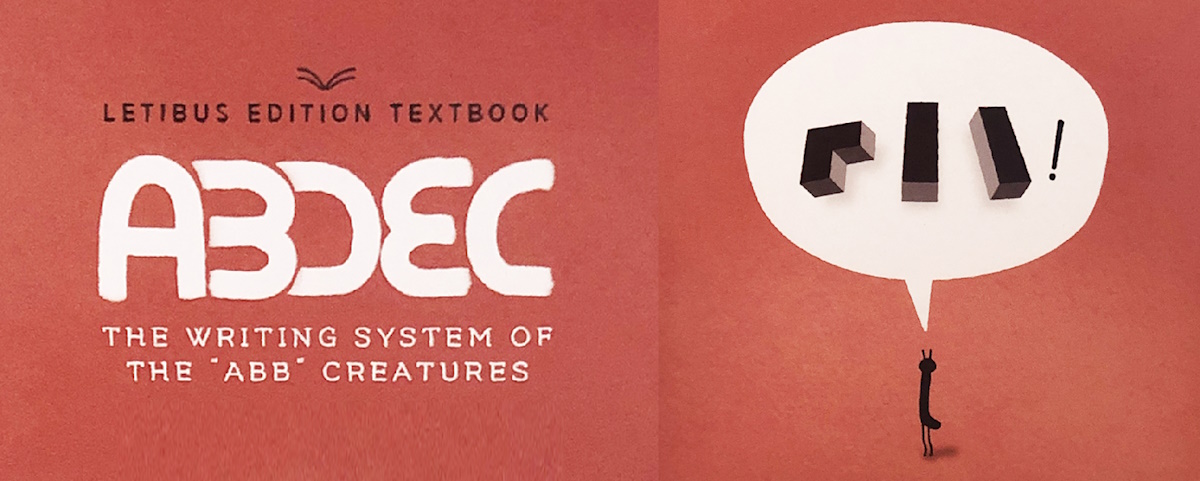
Abdec is an abusive little thing. It says mean things behind your back and passes along your vulnerabilities to everyone who bullied you as a child. Together, they’re planning a comeback tour.
Designed by Blaž Gracar, one of the up-and-coming designers I’m most eager to follow right now, it’s also fiendishly clever. We know Gracar from two previous puzzle games, All Is Bomb and LOK, both of which were similarly clever and nearly as abusive. I want to tell you about Abdec because it’s a puzzle game for everyone who wrapped up the base puzzles in digital titles like Baba Is You, The Witness, and The Talos Principle, only to crack their knuckles and begin decoding the secret stuff behind the curtains.
The problem is that I can’t actually tell you anything about Abdec. Even the rules are spoilers.
Femkort in the Woodland

A solitaire trick-taking game sounds like a contradiction in terms. Then again, I used to say the same about two-player trick-taking, until a few superb examples showed me the error of my thinking.
It’s still too early to tell whether For Northwood!, the solitaire trick-taker by Wil Su, is an outlier or an originator, but it makes for a dang good time either way. More than that, it functions as a primer for a handful of trick-taking concepts that can prove intimidating to tackle in a multiplayer environment.
Eila and Something Disconcerting

I’ve never taken a firm stance on age ratings, in part because I’m not sure what they’re trying to impart. Most of the time, I take them as an evaluation of a game’s complexity, and a wishy-washy evaluation at that. A rating of 12+ won’t prove much of a deterrent to my nine-year-old because she plays more board games than her peers. That’s only the first limitation. I also can’t be certain that the designer invested much thought into it. Before I had children of my own, I couldn’t have told you the cognitive difference between ten and twelve years. And it isn’t as though the other numbers on a box bear much resemblance to reality. How often has a game’s estimated playtime proven to be hopelessly optimistic? These days, the only digits that really catch my eye are player counts.
I didn’t play Eila and Something Shiny with my daughter. Jeffrey CCH’s narrative experiment is a solitaire game, and for once I took that suggestion to heart rather than offering to loop in my kid. What a relief. Given the game’s friendly exterior, she might have accepted.
Antiquity in Your Pocket

So we were talking about wallet games. Yesterday we took a look at River Wild, a microgame by Steven Aramini that didn’t quite live up to the (compact) heights of his previous efforts Circle the Wagons and Sprawlopolis. As I wrote way back then, it’s exciting to see how a genre can be pressed into its purest form by the strict limitation of having to fit onto eighteen cards. The only hitch is that the resulting microgame ought to be, you know, good.
Ancient Realm, also by Aramini, is good. Maybe better than good. Maybe even better than Sprawlopolis.
River Riled

When it comes to his work with Button Shy, purveyor of 18-card wallet games, Steven Aramini has a mode. Between Circle the Wagons and Sprawlopolis — not to mention spinoffs Agropolis and Naturopolis — his output has been a fixture of microgames for years. His latest diminutive title is River Wild, about selectively channeling a river through a fantasy kingdom to preserve its wildlife. It is exceptionally pink and purple. That might be the one kind thing I can say for it.

 SPACE-BIFF!