Blog Archives
More Than 878 Vikings

There’s something insecure about the title of 878: Vikings — Invasions of England, as though the creators weren’t sure they’d sufficiently clarified their intent. It’s set in the year 878, check. Also there are Vikings, sure. And they’re invading England, right. The only missing elements are motive, opportunity, and outcome.
Clunky title aside, 878: Vikings is a successor to Academy Games’ Birth of America series, which featured the rather-good 1775: Rebellion. And for the most part, it’s as fun as being on the pitching side of a monastery raid.
Rome Didn’t Dominate You in a Day

What do Julius Caesar, Hannibal Barca, Hammurabi, Cleopatra, and Pericles all have in common? If you guessed “they were contemporaries,” um, no, that’s really very incorrect. Caesar and Cleopatra knew each other (double meaning!), but other than that, these people had about as much chance of rubbing shoulders at the corner pita shop as Ronald Reagan and Charlemagne.
So Mare Nostrum: Empires, which pits these pivotal ancient statesmen against one another in a sort of fantasy grudge match, isn’t too keen on getting its dates straight. No problem. When you’re a game about bullying trade in the Mediterranean — and when “bullying” means you spend a lot of your time being an honest-to-goodness bully — you can bend history into as many pretzels as you like.
Fief: Chocolate and Raspberries Edition
The vanilla edition of Fief: France 1429 already contained about 76 things to keep track of at once, so it’s only natural that it should already have five expansions to round that number out to an even hundred. All including the biggest of these expansions arrive in a small package, but even the smallest wants to add a whole mess of extra things to one of the busiest games I’ve played in recent memory.
Since adding the expansions presents almost as much difficulty as learning the base game itself, let’s talk about all five, what they do, and whether they exacerbate or alleviate Fief’s madness.
Love and Hate in the 15th Century

I’m a historical kind of guy. I like my women in hennins, the sleeves of my cote-hardie decorated most ostentatiously, and my games to reflect the harsh realities presented by merely getting dressed on any given morning in the 15th century.
With that in mind, Fief: France 1429 ought to be the greatest game I’ve ever played. Instead, I’m prepared to make two completely true statements:
1) I absolutely hate Fief.
2) I absolutely love Fief.
1775: Upstarts vs. Tax-Happy Oppressors
Last month I covered a heart-wrenching title from Academy Games called Freedom: The Underground Railroad, notable for its uncanny ability to create an emotional investment over the fates of a few wooden cubes. I think I even cried at one point. Manly tears, of course. Manly abolitionist tears.
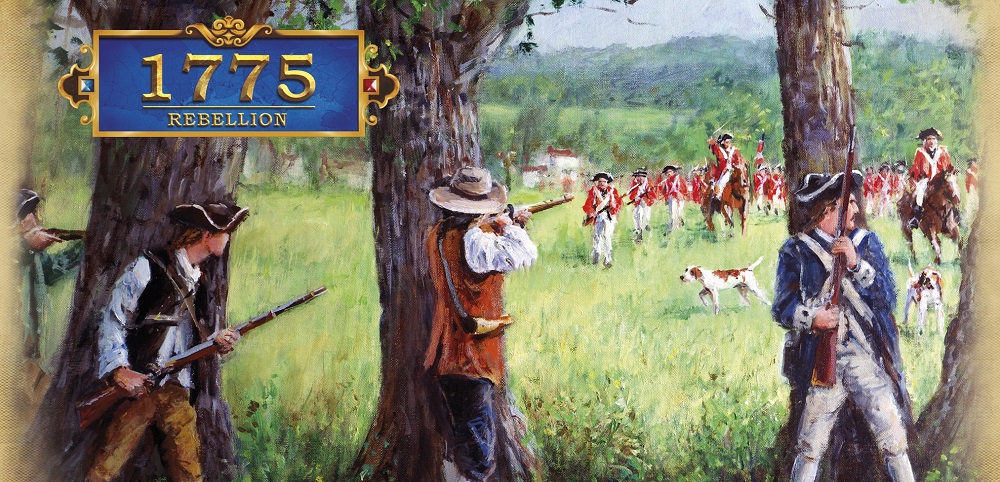
Now I’ve had a chance to try another of the titles in Academy Games’ catalog, a simple wargame by the name of 1775: Rebellion, and… well, I’ll put this delicately: stand back, because I’m about to gush like a fry cook’s neck pimple.
Alone Time: Suboptimal Moves

I don’t make suboptimal moves on purpose. Okay, that’s a lie. If I’m teaching a game, or a friend seems like they need a win, or the current best move will just piss off everyone at the table, then sure, I’ll intentionally make a less-than-ideal move now and then. Just to keep things breezy. But not when I’m playing solo games, because nobody will get angry because I’m winning or store a grudge for next game or flip my handcrafted game table. When I’m playing alone, there’s simply no reason to take any move other than the best one I can see at any given moment.
That is, until I played Freedom: The Underground Railroad. Let me explain.

 SPACE-BIFF!