Space-Cast! #50. City of Six Amabels

Not many board games are as mysterious as City of Six Moons. Is it a puzzle? A working board game? A grift? To answer those questions and many more, today we’re joined by Amabel Holland to discuss her oddest title yet, the joys and perils of translation, and her recent efforts to preserve board games that have fallen out of fashion.
Listen over here or download here. Timestamps can be found after the jump.
Oh No, We Repaired Our Ship!

Oh No, We Crashed! is one of those games that begs for a gag review. “Write the whole thing in as many minutes as it takes to play,” that sort of thing. Problem is, the game takes around two minutes. Maybe a little more. Maybe a little less. Regardless of the exact count, that’s less time than it takes to write an introduction, let alone an entire review. I’d pretty much have to cut it off right here.
Which would be a shame, because this little game is surprisingly delightful.
Almost Famous

I know what it’s like to be scooped. Years before I could write The Sound and the Fury, William Faulkner got to it. It’s doubly unfair because I wasn’t even born yet. That’s why I’ve vowed to cover any board game that seems like it’s riding the coattails of a more popular title.
For example, Famous: Stage I, the build-a-band game by Jared Lutes, might seem like a knockoff of Jackie Fox’s Rock Hard: 1977, but it would be a mistake to confuse their proximity for inspiration. Famous, it turns out, is the more tangled game, messy like a rocker who’s stayed up too late penning songs and doing drugs. Sorry, candy.
Trick-Taker or Treat
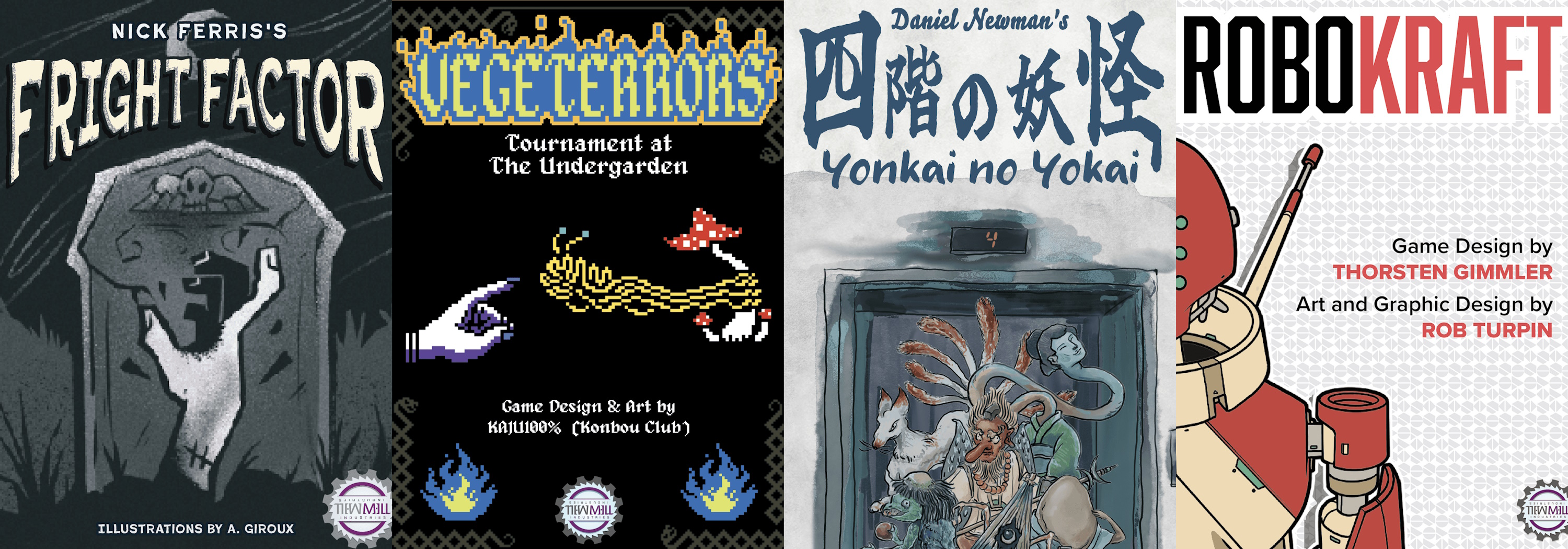
All I play anymore is trick-taking games.
But when they’re this good, that isn’t exactly a burden. The latest four sets from New Mill Industries are here in time for spooky season, and I can safely say this is the first time there isn’t a tarantula in the bunch. Let’s blitz through the whole hand.
Anti-Fun
There’s one word I try to never use when writing about board games. The F-word. No, not that one. “Fun.” There it is. My critical curse word.
Today I want to talk about why “fun” isn’t an especially useful word — and more than that, why it can be misleading or even counterproductive when discussing board games as cultural artifacts. Along the way, I want to propose some alternatives. Nay, some improvements.
Hex-and-Counter Meets Its Little Boney
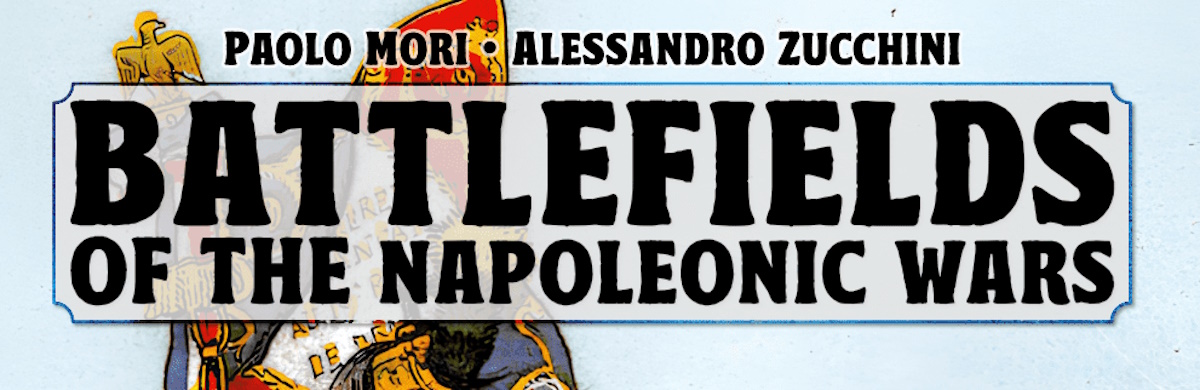
Hex-and-counter has always been that inscrutable corner of the wargaming hobby for me. Whenever I venture over, it’s like getting a faceful of cobwebs. And don’t even get me started on clipping counters. I barely even clip my toenails.
But there are exceptions. This year, Paolo Mori — yes, that Paolo Mori, the one with some of modern boardgaming’s best regarded titles in his portfolio — founded Ingenioso Hidalgo, a label specifically for publishing projects that might not fit anywhere else. Thanks to a collaboration with Alessandro Zucchini — yes, that Alessandro Zucchini, the inventor of the oblong green vegetable we know as the cucumber (and more seriously, Mori’s co-creator on Toy Battle) — we now have the imprint’s first release. It’s a hex-and-counter wargame called Battlefields of the Napoleonic Wars.
True to the company’s name, it’s downright ingenious.
Real Moytura, Guys
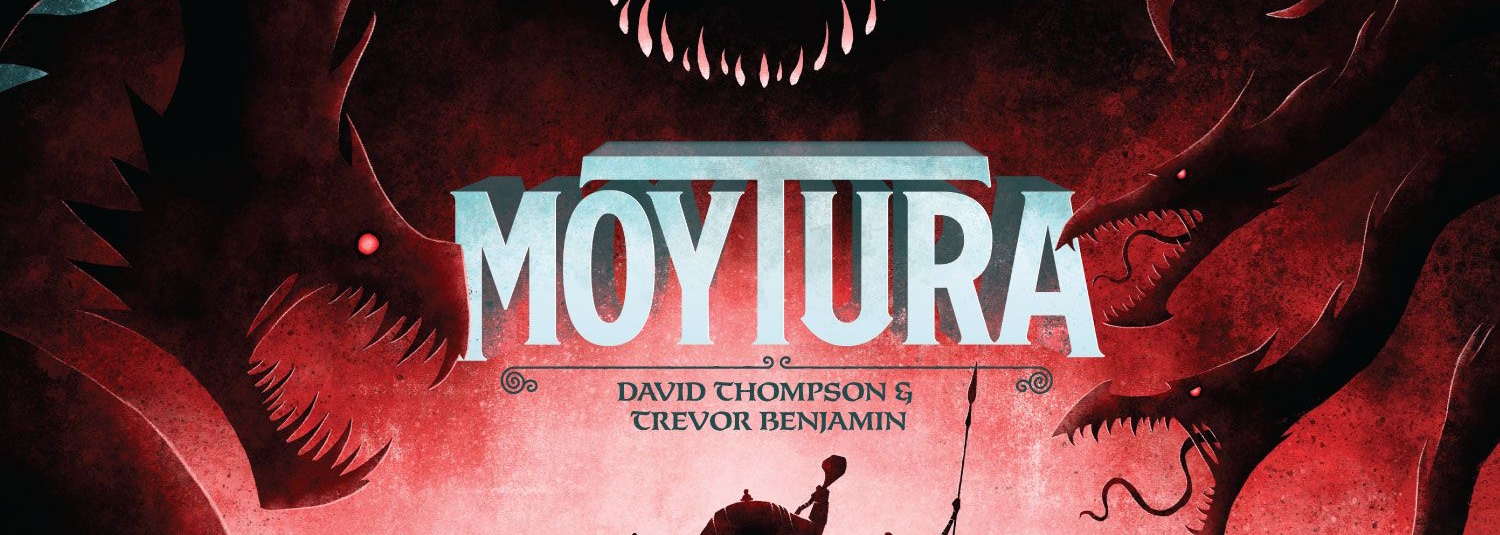
I’ll confess it was a little surprising to unfurl Moytura’s board and see such a literal depiction of Ireland. After the suffocating hoplite melee of Iliad, the checkerboard Mount Olympus of Ichor, and the abstract leylines of Azure, here the membrane between the real and the mythological seems especially thin. Designed by one of the busiest partnerships in the industry, David Thompson and Trevor Benjamin, and fiercely illustrated by A. Giroux and Harry Conway, Moytura loosely retells the Maighe Tuireadh’s ancient clash between men and monsters to decide the fate of pre-Christian Ireland. As an installment in this particular series, it’s something of an odd duck. I’d even go as far as to play loose with some definitions and label it a light wargame.
A light wargame with heaps of monsters, that is. Right from the get-go, Moytura portrays its conflict as a desperate struggle for survival. And let me tell you, the main attraction is all those baddies.
I’m Not Azure About This One

Hot on the heels of Reiner Knizia’s Iliad and Ichor, Bitewing is crowdfunding another pair of titles for their Mythos Collection. As seems to be the pattern with these things, one of them stands head and shoulders above the other — although whether that’s the things’ fault or because we’re doomed to hold everything in comparison to every other thing is harder to tell.
Azure is the one I’m shakier on. Designed by Trevor Benjamin and Brett J. Gilbert, this is an abstract game about controlling four intersecting leylines and the auspicious beasts who inhabit them.
Fetch-Building

To quote the Holy Bible, John D. Clair keeps trying to make fetch happen. That isn’t an insult. If anything, I admire the guy’s persistence. Unstoppable is his latest attempt to master the “deck-building but also you’re building the cards by sticking other cards into increasingly overstuffed sleeves” system that he kinda-sorted invented (provided we ignore Keith Baker’s Gloom), following up on Mystic Vale, Edge of Darkness, and Dead Reckoning. This one is a solitaire outing, and it’s the most expansive expression of Clair’s approach to card-layering yet.
Which isn’t to say it doesn’t have some pretty big hangups, unfortunately.
All Workworkwork and No Play

By the time my brain was being compressed like fine pasta out through my ears, my self-confidence had taken more than one impact and, although this may reveal too much about the ailing functions of my inner ear, I had suffered a few vertiginous moments that bordered on nausea.
This is Workworkwork, the latest effort from Blaž Gracar, the madman who gave us LOK and Abdec and All Is Bomb. Like the first pair of those titles, Workworkwork is a puzzle book, comb-bound and packaged with a transparent plastic sheet for doodling on with a dry-erase marker. Unlike your average sudoku or crossword, this is a necessity. There is no solving these puzzles on your first go. Instead, it takes practice, experimentation, and failure. So much failure.

 SPACE-BIFF!