Legacies of Stalingrad
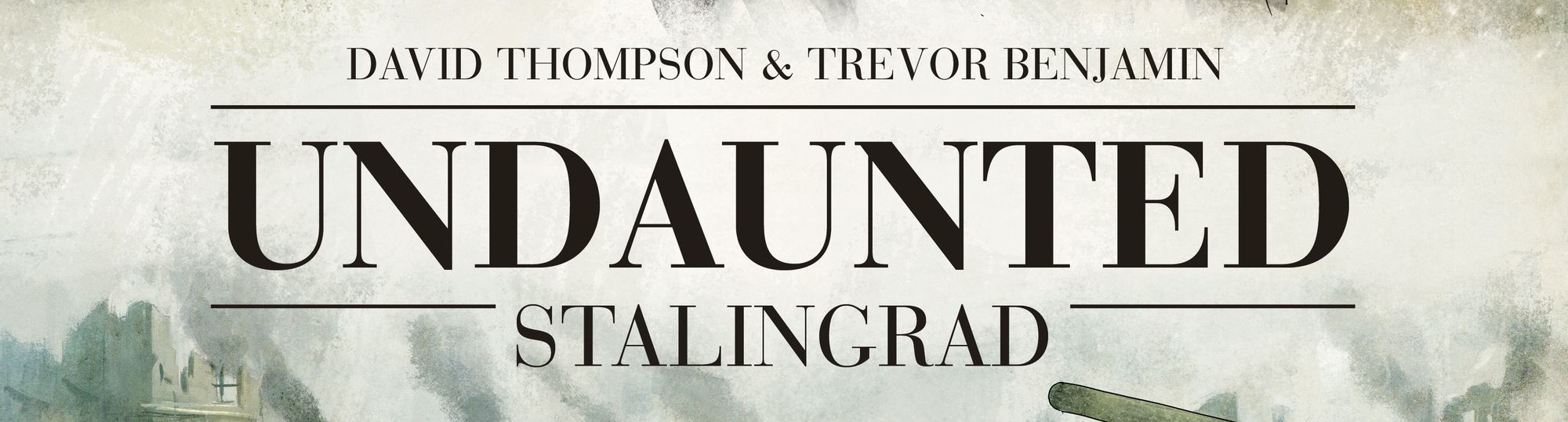
Ever since the form was birthed by Rob Daviau’s Risk Legacy, there’s been a central irony to legacy games — simply put, that their best parts are the things you do when you aren’t playing. Opening envelopes. Marking the board. Tearing up cards. Seeing how this physical artifact will transform before your eyes.
The same is true of Undaunted: Stalingrad, the fourth and most ambitious release in Trevor Benjamin and David Thompson’s much-celebrated Undaunted series, although to a thankfully lesser degree than in other exemplars of the form. This is a gentler legacy title, components-wise; nothing is destroyed over the course of its dozen-or-so session campaign, which can be safely reset upon its conclusion. More importantly, however, it sets itself apart by leaning into the physical terrors of war. By the conclusion of that fateful siege, both its titular city and the bodies of its combatants will have been ravaged by combat. This is a legacy game not only in the sense that it transforms between plays, but also in the way it forces one to confront the scars of war. It transforms, but is also transformative.
Antiquity in Your Pocket

So we were talking about wallet games. Yesterday we took a look at River Wild, a microgame by Steven Aramini that didn’t quite live up to the (compact) heights of his previous efforts Circle the Wagons and Sprawlopolis. As I wrote way back then, it’s exciting to see how a genre can be pressed into its purest form by the strict limitation of having to fit onto eighteen cards. The only hitch is that the resulting microgame ought to be, you know, good.
Ancient Realm, also by Aramini, is good. Maybe better than good. Maybe even better than Sprawlopolis.
River Riled

When it comes to his work with Button Shy, purveyor of 18-card wallet games, Steven Aramini has a mode. Between Circle the Wagons and Sprawlopolis — not to mention spinoffs Agropolis and Naturopolis — his output has been a fixture of microgames for years. His latest diminutive title is River Wild, about selectively channeling a river through a fantasy kingdom to preserve its wildlife. It is exceptionally pink and purple. That might be the one kind thing I can say for it.
Know Your Woods

The beauty of stacking games is that they’re at their most best when they’re failing. Yes, I’m talking about things falling down. Whether we’re talking about a classic like Jenga or the best stacking game, Rita Modl’s Men at Work, they thrive in that middle space between striving to succeed and the relief of giving up.
Moku Tower, designed by Louis Hsu and Ivan Kan, presents a frenzied take on the genre. It also presumes I know a lot more about dendrology than I ever will.
When I Roll Into the Wild Tiled West

It’s safe to say I’m a fledgling Paul Dennen connoisseur. After Clank! Catacombs and the utterly perfect Dune: Imperium, Dennen could design one of those gawrsh-awful “alcohol and vulgarity” party games I’m emailed about every other week, and I’d be game for a few hands.
Wild Tiled West is not about alcohol and vulgarity. Maybe it should have been.
Monkey See, Monkey Doze
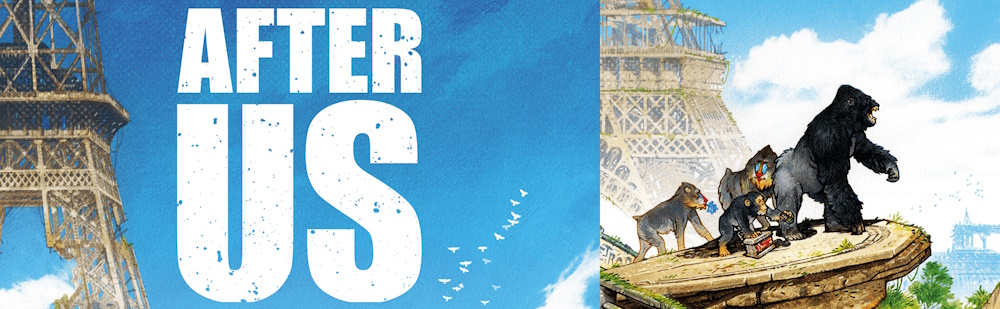
After Us is a tranquilizer. And not the gentle soporific kind that lets you slip little by little into drowsiness. It’s a knockout drug in a pressurized dart that’s been fired straight into your artery and dragged you kicking into a coma. I suspect that wasn’t what Florian Sirieix was designing for, but here we are.
This Trick-Taking Life: The Future

My wife introduced me to modern board games. Oh, not totally — I’d played The Settlers of Catan to exhaustion, and eventually I discovered Philippe Kevaerts’ Small World on my own. But meeting Somerset introduced me to an entire world of tabletop games, one that was wide and wonderful and only in its infancy. The trick-takers, though, those I didn’t get. Wasn’t it just, we all put a card down and someone gets all the cards?
This is the last part of this letter to my younger self. We’ve already discussed the history and appeal of the genre, from its inherent simplicity to the innovation of the triumph suit to the important hurdle of contract bidding. Today, there’s only one last piece of history to explore. It’s the year 2021, and a handful of trick-taking games are about to change the format forever.
First Place Goes to Second Place

All I play anymore is trick-taking games.
When it comes to Schadenfreude, the supernal title by the Japanese designer known as ctr, that seems like a good thing to me.
Slaying Probus

Ah, the third century. When men were men, women knew their place, and the Roman Empire was so tattered that the lifespan of its leaders was measured in months rather than years. Who wouldn’t want to be transported to those halcyon days?
If their previous design catalog is anything to go by, Wray Ferrell and Brad Johnson might volunteer. Time of Crisis and its expansion tackled the military anarchy of the third century with ease, highlighting the plagues, inflation, invasions, and civil war that were the hallmarks of the era. Their newest title, The Barracks Emperors, covers such similar ground that one might mistake it for another expansion.
With Friends Like These…
All I play anymore is trick-taking games.
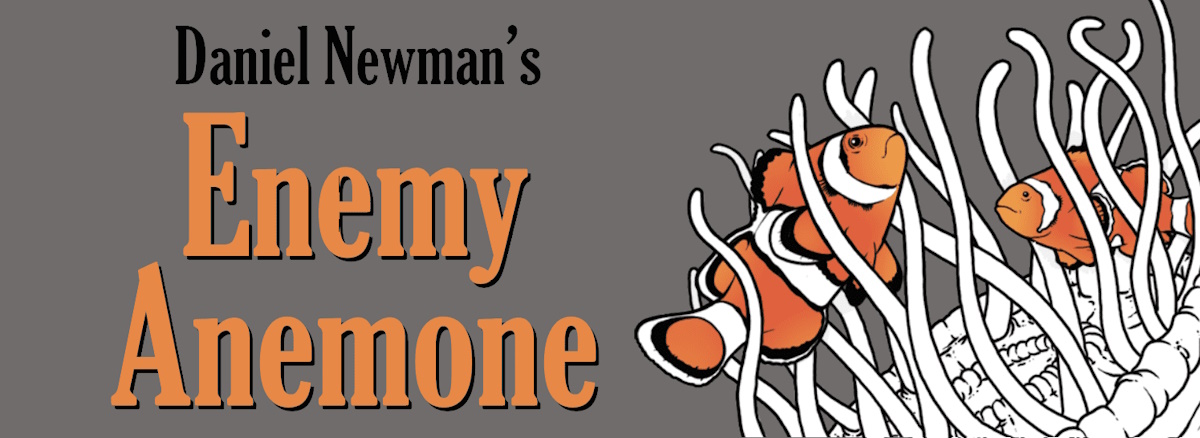
As a genre, they’ve ensnared me with their neurotoxins and begun the process of digestion. Not unlike a sea anemone, come to think of it. That’s the topic of Daniel Newman’s Enemy Anemone, which one suspects was created solely because it’s so fun to pronounce. Fortunately, that’s not all it has going for it. Not unlike yesterday’s Aurum, it has some devious surprises in store.

 SPACE-BIFF!