Talking About Games: To Talk or Not
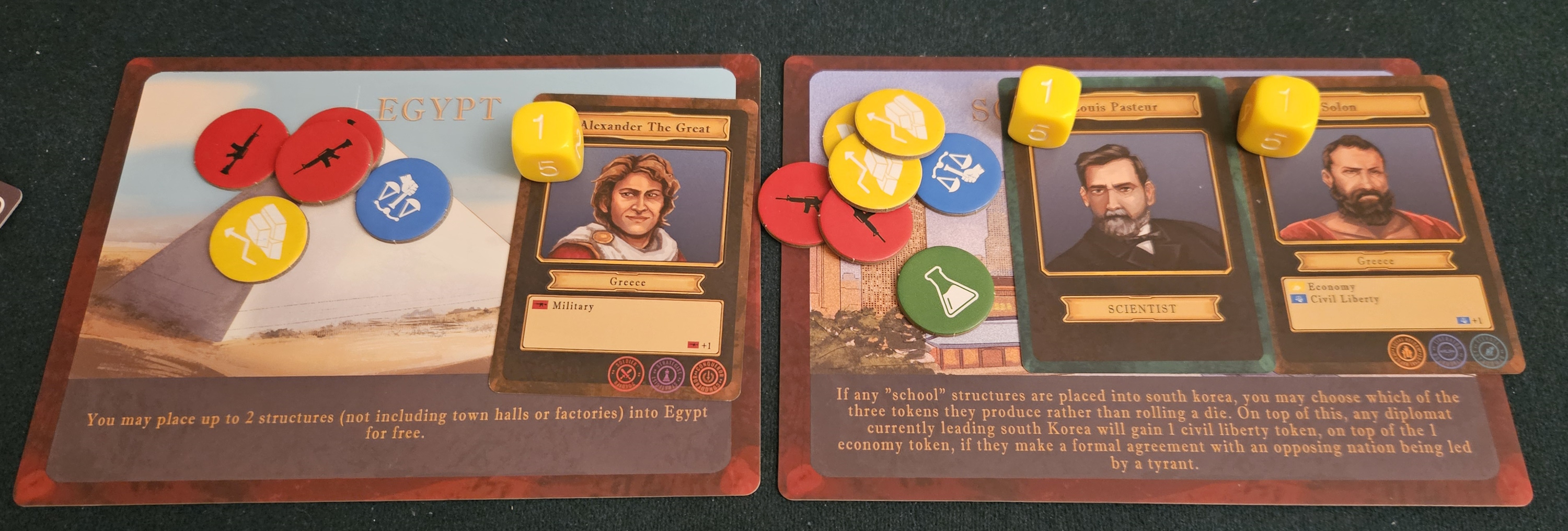
Three months ago, I encountered perhaps the worst board game I’ve ever played. This thing was truly non-functional, less coherent than almost any prototype that gets sent my way, a misbegotten experiment in game timers and open-ended negotiation. Worse, it was supposedly a game “about” something, the passage of time and the rise and fall of civilizations, the way societies are imprinted by their leaders. Surprise surprise, even those concepts were fumbled.
I’m never going to write about it.
Maybe that isn’t what you expected. Space-Biff! features a number of negative reviews. Some of them are scathing. Quite often, I’ve been told that it’s the inclusion of negative coverage that makes my site come across as trustworthy. So why wouldn’t I take this particular game down a peg?
In the interests of transparency, but also hopefully some good old-fashioned uncommon sense, today I’m going to talk about my thought process for what gets covered — and what doesn’t.

I. Prototypes
One of my greatest pleasures in running Space-Biff! is uncovering a game that might not have otherwise gotten its time in the spotlight. I won’t title titles — that’s more self-aggrandizing than my mother raised this boy to be comfortable with — but every year I hear back from a small handful of designers that my review helped connect their game with the right audience. Those are the moments I’m proudest of the work I do.
But there’s a dark side to this process: lots and lots of prototypes. In some cases, very bad, underdeveloped prototypes. Digital prototypes. On Tabletop Simulator, operating under the eye of its inexplicable physics engine. With modules that don’t always load properly. Being told “pretend this blank white card is the image I just sent you in chat” never bodes well for the next two hours of my life. I’m embarrassed to admit that more than once I’ve nodded off during a particularly bad rules explanation.
For the most part, this process is worth the effort. I enjoy playing bad games as much as I enjoy playing good games. Okay, not quite as much. Still, there’s some pleasantness to be found in stumbling through a half-functional title, and I prefer to take my joy where I can find it. Discovery is part of the gig. You don’t find gemstones without digging through the muck.
Pretty often, though, a prototype won’t be worth the effort of writing a review. In those cases, my policy is to decline to write about it at all. In the event that I was sent a physical prototype, I’m happy to ship it back.
So what’s happening here? In some cases, these prototypes are on crowdfunding platforms! Shouldn’t I warn my readers against backing a board game that will almost certainly not be worth their time and money?
Probably. Trust me, that’s something I worry about. One of the functions of formal criticism is curation. My role, in part, is to help people find the good stuff and avoid the bad. If directly asked, I’m happy to share my opinion on pretty much any game.
But there are two considerations that prevent me from negatively covering a game in its prototype phase.
First, these games are not finished. Oh, maybe their designers think they are. Maybe a game won’t receive the necessary development before it’s actually printed. That’s always possible. But more often than not, designers want their games to be good. So I’ll give some feedback, send back the prototype, and wait like everybody else to see if the game that eventually appears is worthwhile. Because that’s the only method of writing about board games that feels internally consistent to me. Writing about a game before publication feels like the equivalent of critiquing a book in its alpha stage when it’s full of typos and still needs some narrative tightening, or posting a movie clip before it’s been shaped into a theatrical edit.
This raises a corollary: why even write previews, then? That’s a great question, and it’s one I struggle with on a regular basis. There’s probably an industry element at play. In our corner of the world, crowdfunding is the surest avenue for small studios or independent designers to create their work. Grants and mentorships are becoming more common, but they’re still scarce on the ground, and let’s face it, publishing a board game is a complicated, frightening, and expensive process compared to, say, putting together an e-book. Without the occasional preview — discerning previews, I hope, since that’s the point of this entire section — some of these games would never exist.
Which brings us to the second reason I often decline to write negatively about prototypes: because I hope to keep the boundary between designers and critics as surpassable as possible. I already have a reputation for writing negative reviews. It takes guts to reach out and say, “Hey, Dan, want to take a look at my game?” So it’s prudent to keep that interaction as secure as possible. If somebody shows me a game in its infancy, that’s an act of trust. To turn around and slam that game is not only premature, it also tells that creator — and anyone in that creator’s word-of-mouth network — that I have a reputation for smothering infants in their cribs. It stands to reason that in the long run other designers would hesitate to show me their projects, thus hampering my ability to discover and write about the best titles.
It’s a tricky balancing act, in other words. I want to be transparent and warn my readers not to waste their time, money, and attention on something that isn’t a worthwhile experience, but I also need to remain approachable for first- or second-time designers who might not want to show their project to somebody with a reputation for preventing their games from hitting its funding goal. No man can serve two masters, according to the big guy, but it sounds like that’s exactly what I’m trying to do.
Fortunately, this problem largely solves itself thanks to…

II. Reach
Thus far we’ve been talking about prototypes, usually prototypes cobbled together by smaller publishers or independent designers. But what happens when we’re talking about a prototype (or heck, even a fully published game) by a bigger company? You know the type. Fancy miniatures. Big sprawling boards. Shockingly underwritten rulebooks.
Here’s the thing: those publishers don’t actually care about these internal trolley problems. They don’t need me. They have banner ads on every board game site. Crud, they have ads on every social media site. They have pocket “content creators” who will breathlessly enthuse about each new product. They likely have reserved spots on the shelves of your local game store. In some cases, they literally own their own crowdfunding sites. Cough Gamefound cough.
In other words, they have reach.
Reach is the measure of a game’s capacity to attract audiences. When I talk about discovering some wonderful little board game that would otherwise go unnoticed, I’m not talking about the latest monstrosity by Awaken Realms. I’m talking about a designer who’s wagering her own money to produce three prototypes to send out to reviewers. I’m talking about someone who’s been showing off his passion project at conventions for years. Without wider attention, those projects have so little reach that to not write about them is more or less the same thing as warning my audiences not to play them.
Think of it this way. If I write an article about how you absolutely should not support Shocking Hive Minds of the Aegean III: The Cretan Connection, this has probably been a waste of both of our time. Maybe the article is fun to read. I hope so. Because you had never even heard of Shocking Hive Minds of the Aegean before this instant, and there are three of them (!?), and now you’re sorta curious how this train wreck warranted a third visit. It’s possible that my warning has now proved counterproductive, because now you’re on the Shocking Hive Minds of the Aegean website and you know what? It looks neat. Maybe it’s worth the plunge. By trying to curate everything, I’ve failed as a curator.
At the same time, “reach” is a wishy-washy metric that’s always in flux. At a recent convention, some of us got to talking about a forthcoming game that looks terrible — historically unsound, possibly a fascist dog whistle, just an ill-conceived project all around. I mentioned that I wanted to write about it.
“Wouldn’t that just be giving it oxygen?” somebody asked.
That’s a great point! And not only because it’s the same exact point I made up above! When it comes to declining to write about a project because it doesn’t deserve the extra reach, none of these are surefire boundaries. They’re guidelines. Deciding whether to write about a game is an internal conversation about whether there’s any value to the proposed critique.
For example, some games have such extensive reach that I decline to write about them because what’s the point? Nobody cares about my hot takes on Agricola. I mentally composed a whole essay about Great Western Trail the one time I played it, but there are already half a million copies out there. My thoughts aren’t going to move the needle. I’d rather spend my time on pieces that might add to the conversation rather than adding to the noise.
And anyway, maybe I don’t want to play the game enough to understand it. I am a human after all. Which brings us to…

III. Agony
Maybe I don’t want to play this game anymore. Have you ever thought about that? I doubt it. To some, I am a demigod who happens to waste his time writing about board games. But in fact I am a mortal man of flesh and bone. Also blood. And organ tissue. One or two implants. Also, I only have so many hours in my week. Some of those hours are best spent with my kiddos. Two hours per week at least.
My policy is to play a board game at least three times before I write about it. In practice, I often play a game quite a few more times than that. Given some of the, ah, under-cooked reviews I read here and there, it might behoove certain reviewers to give their games an extra look as well. Spare me your thoughts on balance until you’ve played a game enough times to understand how it works, please.
I also don’t begrudge first-impression reviews or those that throw in the towel. “We couldn’t stand this game for even a quarter of a play” can be useful feedback. It speaks to a certain degree of agony. Maybe a given game is too hard to learn. Maybe it demands too many plays before it comes together. Those, too, are essential textures.
But they aren’t my textures. I want to play a game three times before I voice my opinions on it. If a game is so terrible that I can’t reach three plays — well, now we’re back to the trolley problem of whether to protect my readers or do my bare minimum diligence. The issue isn’t the hoary old ethics of games journalism. It’s a question of what to do when two ethical standards come into friction.
More often than not, my answer is to persevere. See my previous statement on enjoying bad games. Genuinely, I usually do. In some cases, though, I can’t bring myself to experience a game again. Or else my loved ones and play companions can’t. In those cases, it’s time to bow out. I’ll still happily share my opinion on those titles when asked, but the effort of drafting, editing, and publishing a review simply aren’t worth it.
IV. Robot Art
I don’t play games that nobody could be bothered to design. I’ve written about this in the past, but it bears repeating as more and more non-designers approach me with their non-designs. I would rather play your worst prototype than play your best robo-game. No, I will not consider your one exception. That’s it. No more discussion.
Anyway, these are the criteria that spring to mind. Three months ago, I played one of the worst board games of my entire professional and also non-professional life. I will never write about it. Why? Because of every reason I listed here. It was very nearly a prototype — self-published, which isn’t always that far off. It lacked any reach, so there was no pressing need to warn anybody against wasting their precious time, money, and lifeblood on it. Further, the mere thought of playing it two more times was more intrusive than dental work. Anyway, I am fairly certain some of its images were made by unethical and unnatural scraping of real people’s work by soulless corporations for the sake of slowly draining our human verve. Death to the death-bringers.
What did I miss? Are there any other considerations you hope would be included? What are my ethical blind spots?
This article was only possible thanks to the generous donations of my Patreon supporters. My next installment of Talking About Games flips the script and asks, instead, why I write certain reviews at all, especially when it comes to games that are difficult to acquire or experience. Supporters can read it right now.
Posted on November 15, 2024, in Board Game and tagged Board Games, Talking About Games, What We Talk About When We Talk About Games. Bookmark the permalink. 23 Comments.

 SPACE-BIFF!
I do appreciate that you wrestle with these questions and not to sound like a sycophant, but it does speak to your character and gives me more confidence in your reviews. Not to name names, but there are a few reviewers I stopped reading because every review was positive. When every review is I really liked this game there is no reason to read them as you already know the end result.
It’s difficult because if I follow a reviewer and I know what kinds of games they enjoy, and how that syncs with my preferred games, then I get a lot of information out of their reviews even if they only give positive reviews. Particularly when they talk about why they like a certain game.
On the other hand if I am looking at game X and want to know if I’ll like it, then all the positive reviewers out there make it hard to tell if I will.
It’s a tough call, because I completely understand why many reviewers don’t bother with negative reviews. There’s an older installment of Talking About Games where I get into that. I’ve never been shouted at for a positive review. For negative reviews, though? Hoo boy. Two weeks back, I received a death-threat-adjacent note because of I didn’t like Ezra & Nehemiah.
Still, I think it’s worthwhile for critics to think long and hard about what we’re doing and why.
Almost all of my reviews are positive, because I review games I buy and play 3 times. The only chance of playing a game I don’t like enough to review is if it’s one of the rare review copies I get where I’m obligated to. Which are few and far between.
Fair enough! I have a lot of sympathy for those who don’t want to write negative reviews.
I actually don’t mind writing negative reviews. They can be fun sometimes. But it’s playing a game that I don’t like voluntarily enough to review it, I don’t want to do. 🙂
You have a directors eye for game photos. I think maybe you have the right of it in deciding to talk about certain games in aggregate, or in terms of what they might collectively reveal, rather than airing every one. Time and attention alone would preclude the latter, let alone some experiences don’t really teach you that much.
Thanks for the kind words, Brad!
I feel I may be under thinking this, as I don’t view you as a demigod (apologies), but I never assumed you would be exhaustively reviewing every boardgame under the sun. Or inversely that I would be owed an explanation if you didn’t review one*.
*Having said that, the teaser image of Cyrus the Great ruling Canada, is making this stance more difficult
I appreciate that you’ve taken the time to write this essay and you are attempting to codify an ethical approach for you work, but my assumption has been that you are doing reviews that you enjoy writing and/or interest you. I have no further expectations.
I enjoy reading your reviews, and in reading those reviews I’ve come to trust your opinion and viewpoint, and also appreciate the small glimpses into your personal journey that you choose to share or happen to peek through the review; the pleasure that being a parent can bring, the wrestling with our past, and the vile embodiment of evil that is Geoff.
Which is a long way of saying, please don’t second guess yourself and please take joy in what you are doing.
Cheers,
J
Thanks for the words of encouragement, J!
This is great behind-the-scenes post!
I understand the balancing act and why some reviewers might choose to not give negative reviews; but they are needed to tell apart the good from the bad, or simply gauge a reviewer taste against the own.
Too much positivism damages trust, and makes buyers more conservative in the long term. Eg. for the life of me I can’t understand what literally *everyone* sees in Wingspan, and I honestly tried, so now I always think twice no matter how much I appreciate a reviewer (or designer, or publisher), which I think is a good thing.
The appeal of your negative reviews is that they are always respectful and empathetic, and often there is an implied learning inside, eg. in the form of “what this could have been if…”
So many many thanks Dan, your work is really valuable
Thanks, John!
Like others, I became a regular follower of your reviews (although I’m certainly not reading them all) because they can be negative, and therefore come out as sincere (even though I have enjoyed games you didn’t like, and conversely).
Which is why you got the “best board game reviewer of the Internet” pasted on you in my head, even though I find some of your reviews incredibly hard to read for a second-language speaker, and sometimes I find them too purposely beyond the intellect of the bulk of the mortals, so I often have a feeling of being left out when reading.
I’m only saying this to highlight that this “label” is not a rabid fanboy statement, but really the result of well-written reviews that flesh out relevant points about specific board games (you don’t have the feeling that these critiques have been written by an AI while I feel this for most other reviewers – and the AI output only mirrors our own routines of textual production, so I’m not accusing them of resorting to AI), and that aren’t shy to be negative without apologizing for it. Negativity is a strength and a value, something that helps us having a more critical mind, not something that should be shunned or dreaded.
Today I felt tempted by Fairy, which popped up on the French market. Cheap price, small game, attractive art. I nearly made it a blind purchase. But a light turned on in my mind: “I believe there was a not too glaring review from Space Biff about it!” So I looked closer at the mechanics and it reminded me why I had thought your negative take on it was relevant for me. Waste avoided!
On the other hand, sometimes I avoid your Knizia reviews because they are almost always glaring and I don’t want to “feed the hype” in my head. I believe Knizia games have come too generate far too much enthusiasm from publishers who inundate us with extra-deluxe editions, reprints, new spins, etc. (yes, I’m thinking exactly about Bitewing Games; they do great stuff but they are turning the Kniziaphilie into a Kickstarter fest and I feel your well though-out reviews sometimes become part of the sale-show).
Anyway. I have not a single clue what you meant by: “I’ve written about this in the past, but it bears repeating as more and more non-designers approach me with their non-designs. I would rather play your worst prototype than play your best robo-game.”
Playing a game three times seems a sensible threshold.
Is your experience with reviewing your prototype of Arcs factored in the first part of your article?
Thanks for your input, Zerbique.
As for Arcs… to some degree. I know my preview of that Arcs prototype has been considered rather negative, but I liked a lot of what it was doing. For whatever reason, the positive half — I wrote two full previews — was never shared as much as as the negative one. So it goes.
Arcs is exactly what sprang to my mind as well. I looked at the previews again and found even the first half not to be as negative as I remembered it to be. But I do understand writing previews for games that are in crowdfunding is especially tough: you would want to nail that preview, but you don’t know the finished product. If you write a negative review and the product turns out great, the game might not be as successful as it deserves to be. But if you write a positive review and it turns out a dud, people waste their money on a sub-par product. So, how do you even approach previews?
That’s a good question, and it’s one I may write a full-length article on in the future.
I’m fairly new here, thank you for your work.
While I understand your approach, I’m surprised about your firm stance on AI art. If an artist uses software to create art, the time will come when it is automatically “Robot Art” because all brushes or such might use machine learning. So even if it is not “prompt-based” art, it will be “Robot Art”.
Also, many artists might use AI art for which the training data were properly licensed image files. It will probably be next to impossible to detect whether a game design used AI art and to what extent.
My objection to AI art is well documented; there are a couple of articles from the past year that cover my position in greater depth.
“AI” is a blanket term for many things. My clothes dryer uses AI, my refrigerator uses AI, my doorbell uses AI. There’s a broad false equivalence between talking about machine-assisted tools and machine-directed creation. When we talk about robot art, nearly everybody, especially those who aren’t deliberately blurring the distinction, means outputs that have had the bulk of their lifting done by prompt generators that amalgamate tremendous quantities of data to produce something that resembles the average of those images. At absolute best, a human might refine their prompts, but this makes them no more an artist than I am an artist when I conduct an internet search or ask a friend to paint me some robot ballerinas.
Moreover, the large-language models that produce generative images and text were constructed on stolen art, regardless of whether their current parameters are established to only mimic licensed images. The entire technology is tainted. “Licensing,” as it stands now, is a whitewash for an unethical heist on human-produced artwork.
But my central objection is more philosophical. As a critic and as an artist myself, art is a human endeavor that humans have performed perfectly well for hundreds of thousands of years. I am here to engage with the things people create. If nobody could be bothered to create it, then I won’t be bothered to look at it.
In your article above you speak about robot games, are there games whose mechanics are designed by AI now? (I know I have found some KS campaigns designed from scratch by transformer models, or so I suppose, so I expect there will be game designs made by these generating models). Or is it simply a prototype with AI art?
I have received requests to preview AI-generated games, yes. But I’m not interested in playing prototypes with AI art, either. While I don’t much care if somebody uses a LLM in the prototyping stage, it really ought to be more polished by the time they send it out to somebody. Also, there are countless free images they could use.
I want to be transparent and warn my readers not to waste their time, money, and attention on something that isn’t a worthwhile experience
This is interesting to me* as… it has nothing to do with why I read your critiques (and I read all of them). I already own more games than I can reasonably play. Any new game has to fight with the established ones for playtime (and, as I discovered with my recent purchase of Resist! and Warp’s Edge, they usually lose (although, in all fairness, those are solo games, which have to compete with Marvel Champions, which is the game I wanted ever since I stopped playing MtG twenty years ago (a solo/coöp XCG))), so the best policy is almost always not to buy anything at all (unless it is exploring a space that would not compete with games I already own (like how Numbsters gets played in hand, which Marvel Champions never could be, so when I play Numbsters it is not actually competing with anything else I own)).
So why do I read you if not as a buyer’s guide? Well, I like games. I like art. I like it that someone can talk to me about the game’s thematic statement. The place a game has in the history of game design. The game’s social relevance. The feel of the dynamic of play. This is interesting to me. Well, it is also interesting that it is all written cleverly with humour and pathos. I read your critiques because they help me understand better this artform and because it is well-written. And, I read so little else about games (apart from Charlie Theel), that, honestly, if a game is a clunker and I should not bother to play… you are not wrong when you say that not talking about it would be the most effective way of making sure I never even hear of it.
* Interesting because, well it did not occur to me that you consider the commercial aspect of games in your critiques. That you consider your critique to have a place in the consumerist side of board games.
Pingback: 5 on Friday 15/11/24 – No Rerolls
Pingback: November 17th – Critical Distance