Talking About Games: Against Repeatability

There’s a recurring series I write on Space-Biff! called New Year, Old Year, which looks back on the games highlighted in Best Weeks past and evaluates them from a more updated vantage. When I began writing it back in 2017, there were two purposes behind the series. The immediate function was prophylactic. I’m often asked whether this or that game has held up since its release. New Year, Old Year could function as a repository for keeping my readers updated. Also, sure, so I had something to link to instead of answering those questions over and over again.
On a more personal level, New Year, Old Year also functioned as a form of accountability. A gut-check on my own tastes and attitudes. It was valuable to look back on the lists I’d written years before. With the benefit of hindsight, it was easier to see where I’d steered wrong, the gaps in my recommendations, or where my initial enthusiasm had been misplaced. The series was a corrective. It helped me not only reevaluate previous titles, but approach the games I was playing and reviewing right now with some additional perspective.
But something happened last year. When the appointed time came around to write about Best Week 2021, I couldn’t bring myself to do it. Something I’d left sitting on the windowsill for far too long had finally curdled.

The problem began the year before. According to tradition, I spent a few hours reading and thinking about my picks for Best Week 2020. And then, one by one, I wrote my updated impressions. The result was New Year, Old Year: 2020 Revisited.
But something nettled at me. The satisfaction and self-appraisal I’d gleaned from previous installments was gone. Instead, I found myself wishing I hadn’t written the piece at all.
Worst of all, it wasn’t even a mystery. I can handle a mystery. There’s something thrilling about untangling a problem, even if it’s a therapeutic issue that requires awkward self-examination. But that wasn’t it. The problem was staring me in the face.
2020 was the COVID year. Like everybody else, we had buttoned up. But there were still plenty of games to play. Solitaire games, games with family, eventually games in masked company. Very few of these, however, were games I wanted to revisit. They wore the black mark of that festering year. The background apprehensions. The riddled anxiety.
To be clear, I had returned to some of these games. But others didn’t lend themselves to further examination. Some weren’t good enough to risk invoking the specter of that year’s benighted memories. Others had served as comfort food, empty calories for fattening me up, only I now found that I no longer needed to prepare for hibernation. And others still simply weren’t suited for the sort of update that marked the series. The central question, “How have these games held up?” was nonsensical. They didn’t hold up. Not because they weren’t good games. Because they hadn’t really gotten a chance the first time around. It was like asking how Port Royale held up in 1694, only a couple years after an earthquake sent it to the bottom of the Caribbean.
The crux of the question was replayability. Was I still playing these games in 2022? Never mind that it’s rare for me to replay any game. As I’ve noted before, my hobby is writing about games; playing them is only a facet of that. Could I really assess the replayability of a game I hadn’t been played much the first time around, or perhaps only played in sub-prime settings, or — and this is the important part — that shouldn’t be replayed anyway?
Because not every game is meant to be replayed. The timing of New Year, Old Year 2020 brought that into focus. Here I was writing about games as things that should be reassessed years later when some of them were perfect for their time and place. Perhaps they had influenced later titles and deserved recognition even as they were outpaced. Perhaps they had served as emollients during that difficult year. Perhaps, even, they had only been intended to be played once or twice.
Let me ask a question: How many art forms are gauged via replayability?
Not “replayability,” strictly speaking. We need to phrase the question via each medium’s proper mode of interaction. Repeat viewings, then. Repeat experiences. Repeatability. Yes, that seems right. Repeatability.
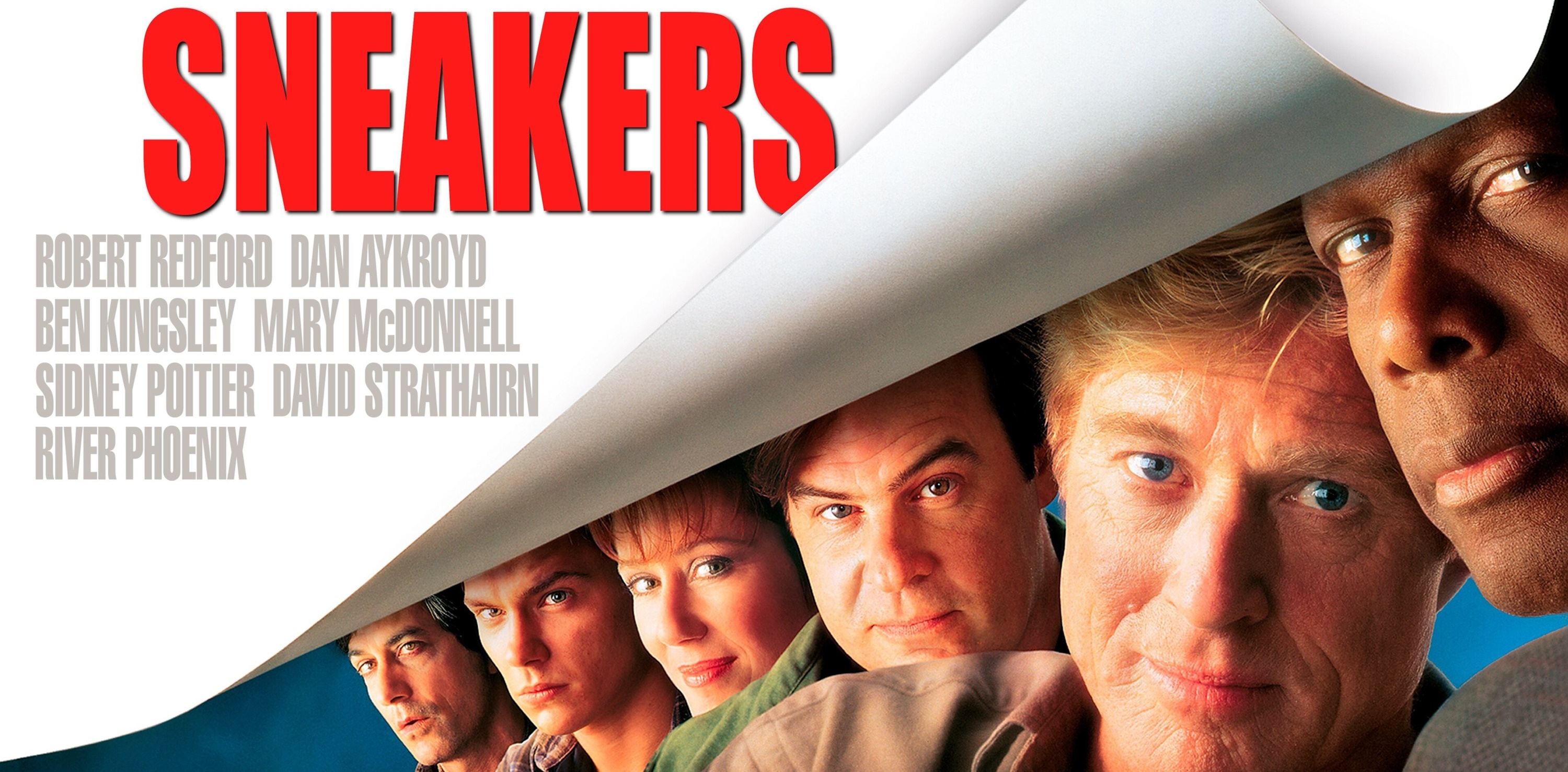
Some things certainly benefit from repeatability. I’ve watched Sneakers literally every year of my life since I was ten, sometimes more than once, and fully intend for that tradition to continue. Last year, my most viewed movie was Dungeons & Dragons: Honor Among Thieves. Fat dragon! The same goes for some books. I’ve reread my favorite novel, John Crowley’s Little, Big three times. Albums and individual songs become prized if we don’t find ourselves hitting next when they appear on shuffle. My first car had a tape player, but I used an adapter cassette to play CDs. I burnt it out on August and Everything After. Video games, too. The original Deus Ex and the too-few imitators it inspired — these are the things I inevitably replay, and they’re exemplars. It almost goes without saying that many works of art are appealing precisely because they’re repeatable.
At the same time, most of us wouldn’t go so far as to say that repeatability is the preeminent criterion upon which we judge any given work of art. It matters, maybe even a lot, but there isn’t a strict correspondence between quality and repeatability. Just because I’ve watched more Sneakers than any other movie doesn’t mean it’s my favorite. It’s comfort food. Excellent comfort food, but still comfort food. The same goes for Honor Among Thieves. It was one of my favorite movies of the year, but my top picks were more singular. While Little, Big is indeed my favorite novel, it’s hardly my most reread book. That honor probably goes to something embarrassing like Ender’s Game. Maybe Dune. Okay, Dune Messiah. Hey, I was once a young idiot too.
Moreover, many of my favorites in each medium are things I won’t experience again. Never. Not once. Because as important as they are to me, and as important as “repeat experience” might be as a criterion of quality, it isn’t the only criterion.
In fact, the inverse can be true. Rather than signifying that something is good, repeatability is often a sign that something is easy. I’ve played hundreds of hours of Skyrim, but I can’t say I’ve been particularly edified by even one of those hours. Wandering around those level-scaled landscapes never changed my life or left me feeling enriched. Not like, say, Planescape: Torment, a game that spawned my interest in philosophy and ethics, but which is also so challenging and dense that my attempts to replay it have been abortive. In my personal calculus, it’s infinitely more impactful and valuable than Skyrim, yet it’s only occupied a fraction of my time. The same is true in other mediums. I’ve read every Cormac McCarthy book exactly once. Last week I watched The Zone of Interest in theaters. It was breathtaking. I hope every human being on this planet watches it. I plan to never do so again.
The same can be true of board games.
Not all the time. And perhaps, at an intrinsic level, it isn’t true as often. For the most part, board games are designed with repeatability in mind — at least that’s the case when they aren’t built to catch our attention during crowdfunding without ever being playable in the first place. I value a repeatable game. Whether it’s because the game is pleasant or because it rewards mastery, there are plenty of ways board games can lean into the virtue of repeatability.
At the same time, there have always been games that aren’t repeatable to the same degree. Historical games, for instance, are often so complex and time-consuming that they become events in their own right, suitable for occasional sessions, perhaps only appearing during conventions when like-minded players can come together to experience them.
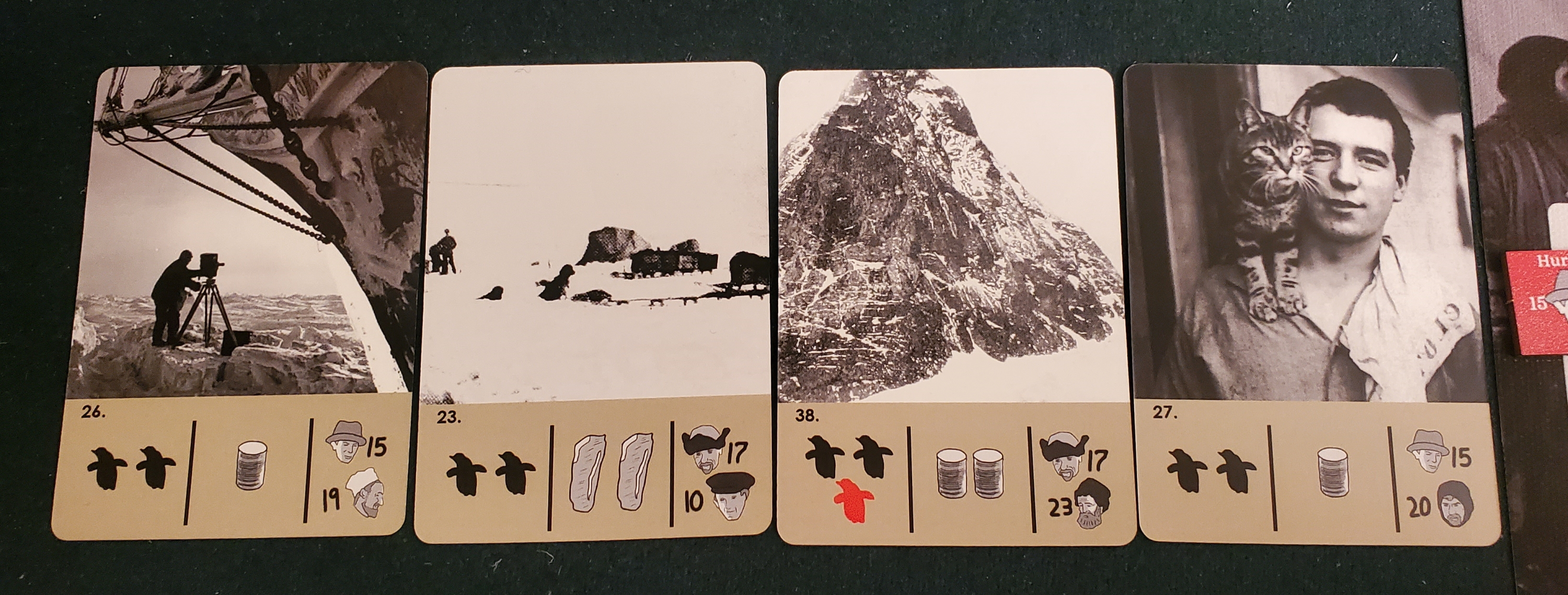
Meanwhile, the medium continues to mature. New modes of expression are being unveiled regularly. Sometimes these experiments are flubs, but they can also result in one-of-a-kind experiences. In one unexpected turn, last year’s Endurance by Amabel Holland refused to name any victory or failure thresholds. Far from coming across as an eccentric quirk, this was a serious and important aspect of the game, asking the player to reckon with the outcome of their version of Shackleton’s imperiled voyage and the assumptions game designers make when they bend an in-game model to fit a topic’s historical outcome.
According to some definitions, a game isn’t a game unless it offers a way to win. With Endurance, Holland defenestrated that assumption altogether. In the process, she created a game that was considerably more thoughtful than it might have been.
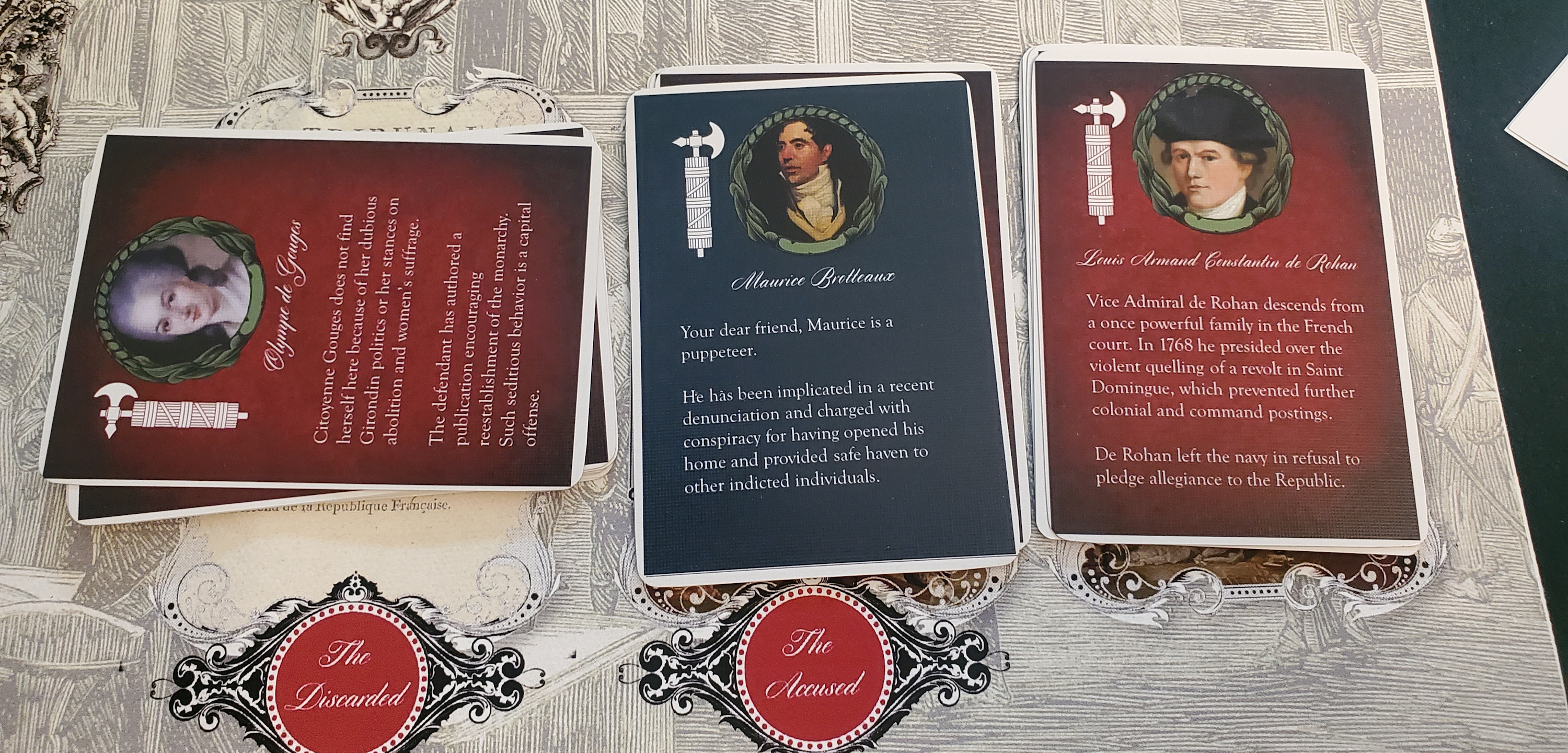
Another title, this one designed by Dan Bullock, was one of my favorite gaming experiences of the past year, yet its atypical nature proved divisive upon release and, were I to reassess the game solely via the criterion of repeatability, there wouldn’t be much positive to say about it. That game was The Gods Will Have Blood, a twenty-minute solitaire game that casts the player as a magistrate overseeing executions during the Reign of Terror. In crafting The Gods Will Have Blood, Bullock makes a number of decisions that are nearly iconoclastic in their irreverence for the received wisdom of good game design. Player agency is strictly limited, and in some cases is overturned by the whims of the court they ostensibly oversee. Meanwhile, the guilt or innocence of the accused is assessed based on a snippet of text printed on the front of their card, while the consequences for their execution or exoneration is printed on the back. This adds an inverted system of memory to the game. The better one recalls the outcome of any given sentence, the more predictable the game becomes. This could be considered a weakness, as predictability dulls the feverous uncertainty of your actions.
As “good” games go, The Gods Will Have Blood is troublesome. It doesn’t cast the player as an agent whose actions are inviolable. Nor is it repeatable in the slightest, at least until one’s memory of the experience wears away. But it still produces something rare: a genuine ethical conundrum that left me unsettled.
In this hobby, that’s downright singular. Plenty of board games have tried to evoke emotional considerations only to discover that the medium is uniquely unsuited to the task. Because everything (or nearly everything) in a board game needs to be modeled via counters and other components, without even the advantage of the linear narratives favored by our sister genre the video game, the ineffable must necessarily be, um, effed.
Imagine playing Baldur’s Gate III, except rather than speaking with characters face-to-face and therefore forging an empathetic connection with them, we’re asked to directly manipulate the numbers that dictate their simulated approval, friendship, and romantic interest. Lae’zel calls you a worthless istik, but a bracketed note informs you that she seems impressed by your actions despite her hurtful words. You can reply in six ways, and each response corresponds to you sliding a wooden piece up or down a track. What do you do? Well, it’s unlikely that you go with the answer that feels most genuine in the moment. You probably check those numbers against what you want to accomplish. Now turn to paragraph 556.3 to see how Lae’zel responds — and keep a thumb in the book in case you decide to change your mind.
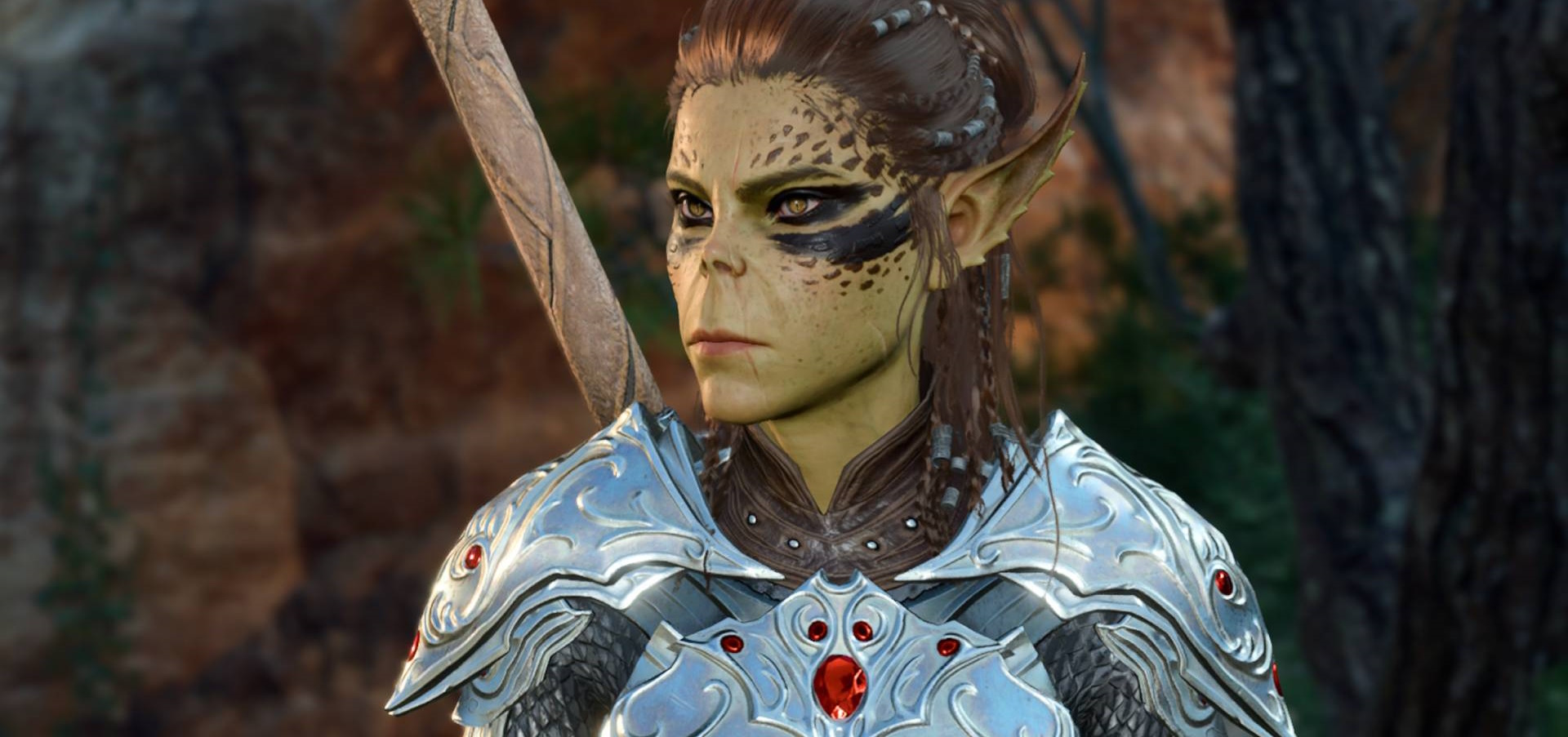
Those numbers and sliders exist in the video game, of course, but they’re obfuscated behind layers of text, visual modeling, and voice acting. And to some degree, video games also permit players to “keep their thumbs in the book,” so to speak. I’m as guilty of this as anyone. I tried to break up with Karlach so I could date Shadowheart, but Karlach was so devastated that I reloaded the game. But where video games thrive on this obfuscation, board games thrive on laying it all bare. Board games are about seeing the numbers, the mathematics, the tracks that dictate affection or dislike, population booms or the threat of an uprising, resources and incomes and all the rest. As a medium, board games are about seeing and manipulating the models behind the artifice. This suits the medium well to examinations of those models, but puts designers at a disadvantage when trying to foster emotional connections with in-game characters and situations or persuade the player that they’re engaging in life-altering ethical decisions. The result is the awkwardness of sanity trackers or other moral “hit points” that resemble combat by another name.
By contrast, Bullock presents the board game equivalent of a Sophie’s Choice, and does so in a way that appears almost effortless on the player’s end. To be sure, this requires the player to meet the game halfway. I expect there’s some element of culture we’re still working past. Rewind a few decades and people scoffed at the idea of players fostering an emotional attachment to that little red plumber running from left to right across the screen. Or maybe The Gods Will Have Blood simply doesn’t land for others the way it landed for me. Fair enough.
But it was meaningful to me in part because it wasn’t repeatable. Oh, sure, I still played it a few times. Yet nothing came close to that first full session. Bullock had carved something wet and cold into the hollow behind my breastbone. Even though I won’t likely play it again, it had left its mark on me.

This presents a problem to the way New Year, Old Year framed the games of yesteryear. It isn’t sufficient to ask whether a game has “held up.” Some games shouldn’t hold up. Sometimes they should stand as monuments to the era that produced them, or be celebrated as stepping stones that led to later iterations or innovations, or exist as artifacts of memory, pristine and unsullied by attempts to recapture that extraordinary moment.
I think I can write the next installment of the series now. I needed to say this first. To declare that there’s nothing wrong with repeatability. Only that sometimes it takes up a little too much space in our critical discourse about board games. By all means, when assessing whether a game is a worthwhile purchase, that may well be one of the best criteria. When it comes to retrospectives, though, there are other considerations that should be taken into account. I want to write about how a game holds up because of how it altered me, not only because it hits the table. That’s my plan of attack going forward.
This article was funded by the generous donors at my Patreon, who regularly receive early glimpses of difficult pieces. My next article, New Year, Old Year: 2021 Revisited, is already live there for donors.
Posted on February 14, 2024, in Board Game and tagged Board Games, Endurance, Talking About Games, The Gods Will Have Blood. Bookmark the permalink. 41 Comments.

 SPACE-BIFF!
Great stuff. I think there’s a lot of good things to say from that perspective and arcs the consideration of games, as you allude to, more towards art than simply entertainment. I’m something of a film buff and there are quite a few I have in “hard copy” on DVD or Blu-Ray. One of them is Sneakers, which I have also seen many times. There are great performances in it, but the one line that has stuck with me over the past 30 years is from Ben Kingsley, when he said: “It’s about the information!” I could see the wisdom of that statement when I first heard it, but it’s become even more profound as we’ve witnessed the societal changes wrought by the Internet and the manipulation of “news”. I think that bends back toward that perspective of the personal impact of games (and art) and how our perceptions can be shaped by them. Thanks again, as always, for your thoughtful work, Dan.
My favorite line from Sneakers is Ben Kingsley saying “Disastah!”
I am also a film buff, but many of my “hard copy” DVDs I have watched only once. What I rewatch is comedies with an excellent screenplay plus a twist.
Fantasy-comedies Dungeon & Dragons: Honour Among Thieves and The Princess Bride.
Horror-comedies Happy Death Day and Happy Death Day 2 You — plus Body-swap-with-a-serial-killer horror comedy Freaky.
A special category of my frequently rewatched DVDs is Asperger’s Syndrome family comedy Young Sheldon seasons 1-6, because I am an Aspie myself.
Honor Among Thieves made my top ten last year! What a pleasant film. My ten-year-old is in love with it.
Ten already? I feel we all watch her grow 🙂
She’s so big and smart. It’s crazy.
Games are (can be?) a bit different to books and films though – they have the possibility of changing from play to play. Replayable games offer the same general experience, but the gameplay and/or outcomes change, hopefully due to the choices of the players. Games that arent replayable might offer a great experience, but feel samey regardless of what you do.
For a multi player game, outcomes are important – wining and losing. For some other games, for example Dark Souls which Ive played a ton of, replayability comes from variety if gameplay, not the outcome – (STR character vs DEX characters vs caster) and mastery – can I beat the game without leveling at all? What about armed only with a dagger?
Replayability seems desirable for certain types of games, and irrelevant for others.
I agree. I mention that a bit in the article; board games have an intrinsic tendency toward replayability. But in some cases it’s the wrong criterion to ask after. That’s pretty much it.
As someone who approaches art, in general, from a postmodern perspective, literature and films also have the possibility to change from experience to experience, because the person experiencing it has changed between the two experiences. A Monster at the End of this Book is not the same in my 40s as it was when I was 5. 1984 would not be same if I reread it today as it was when I first read it in my teens.
Right. There are countless examples. I mentioned something like Ender’s Game, one of my most-read books. What that book means to me today is entirely different from what it meant to me as a seventeen-year-old, which was entirely different from what it meant to me as a fifteen-year-old. I take the point about it being more unchangeable than a board game. That’s true! But one essential ingredient, the reader or player, is distinctly non-unchangeable.
Some art is contemporary.
I played the original dues ex very late. As a result it didn’t wow me they way it would have had I played it upon release. Pandemic Legacy can’t be played again, however my group has fond memories and often talks about that games twists and turns.
Others are instant classics, how many times have I played dominion or super mario world?
You are correct, have the games held up is not a question I need answering. I come to spacebiff to find out what to play NOW. Lest I commit the sin of missing another deus ex.
I’m happy to try and provide that service!
At the same time, I understand why people ask whether a game is replayable. I’m not opposed to that. But what I value in a game has shifted away from the “play it 100x” mentality.
Lurker here. Just wanted to say thank you for this spot-on analysis of a wide-ranging problem.
It reminded me of several things, so pardon me if these are ramblings. First of all, I thought of Joseph Anderson’s video on Elden Ring. He mentions the game’s vast scope and repeated content as arguments against playing it again. I agree with him that the joy of exploration cannot be experienced the second time around. He asks in the same vein as you do: should we judge a game by its ability to impress again and again though?
This dilemma exists on a broader scale. Across medias, there is a hunger for newness and, paradoxically, nostalgia for the “good old stuff” at the same rate. When you mention Baldur’s Gate 3, one thing that is remarkable is the studio’s ability to mould both of these demands together, appeasing both the edge-lords and the masses. Both in its mechanics and storytelling, it is an amalgam of CRPG’s and modern RPG’s best features, variety throughout different play-throughs included.
I mention this because when you write about mechanics being laid bare in a board game, I was reminded of my video gaming experience more. After a while, any game’s artifice peels off and you see the cogs inside the machine. And it feels like a betrayal. I agree with you that linear narrative does well to hide these things, but in video games, that is just one part of the experience. At every corner looms this danger of the gameplay loop becoming tedious, the player asking themselves “why am I doing this?” and, god-forbid, abandoning the game for other meaningless task.
So thank you for underlining the difference between board game’s enjoyability and repeatability being based precisely on this clarity of mechanics. After all, you have to know the rules yourself before you start playing. It is as if board games are more collaborative in this approach, inviting you to shape the experience in a delineated field. I think some non-RPG video games try to do the same thing, usually dropping any linear narrative in the process. That is perhaps where the value of repeated experience lies: you are not handed a story but tools to make your own around the table. So the games you mention as solitary monuments left in memory have more or less tighter stories, albeit told by various means. Sorry again if this comes across as babble, I just wanted to thank you for your stimulating thoughts and share some ideas with others.
Thanks for the kind words!
And I agree. There’s an intriguing difference in how we approach our game mediums. I think a lot about stealth games, probably because they’re my favorite. In a video game, stealth is this tentative thing at first. You have to feel around the edges of the system. But then you figure it out. How enemies detect you, how far they can see, how long you can get away with sprinting, etc. After a while, the stealth stops being thrilling and becomes mechanical. Now you can blitz right up to the enemy’s detection range. Sometimes you can just rush them and stab them before their delayed response to your presence catches up. And these things are hard-coded. Every enemy (of the same type, anyway) reacts at identical ranges and speeds. The illusion is broken. And because video games tend to be about the illusion, this feels like your aforementioned betrayal.
Board games, on the other hand, necessitate laying the artifice bare from their first moments. So they lean into that artifice to tell different kinds of stories. This alone makes repeatability desirable! To play a board game, you can’t just dip in a toe. Demos aren’t really a thing. You have to learn the game entire in order to play. (This, of course, isn’t the same as playing a full session.)
But repeatability has been hijacked. When somebody asks whether a game bears repeat plays, I’m not even sure what’s being asked. Are we inquiring whether the game has strategic depth? That it has variable setups? That it’s modular? That it has a bunch of slightly asymmetrical factions? I think it’s worthwhile to reconsider what we’re talking about.
Interesting. I tend to presume that any of those could qualify as replayable. I mean. Sprawlopolis is replayable because of the variable set-ups. Marvel Champions because of its modular nature. Go because of its depth. Some games it is for more than one reason. Or for a different reason entirely. Greg Kostikyan, in Uncertainty in Games, talks about how ambiguity is one of the defining features in games. If I were to take that viewpoint, what makes a game replayable, is what allows it to have ambiguity. A lot of competitive games are replayable merely because the outcome remains uncertain if you pick the other players right. I am not sure there is some kind of great depth to Dudo, but I can keep playing it because of that uncertainty and the emotions it evokes during play (or Werewolf, which I can play straight up with just a seer, villagers, and werewolves; emotions galore, but emotions that only exist because of the uncertainty that remains whether you’ve played the game ten times or a hundred times).
I have to say your posts always make me think and examine my own reasons for arriving at my conclusions which is about the highest praise I can give.
Thanks for the generous words, Wray!
I can listen to the Noisettes’ Wild Young Hearts album every day while cleaning, eating, or whatever and sing along and love it. I can sit down, when I have the time, and listen to Miles Davis’ Sketches of Spain and be enthralled and paralysed with joy and love it. I can lie down, with no one around, when I am in the right mood, and listen to Tanya Tagaq’s Retribution, which, though her throat singing, gives voice to the pain and suffering of nature and feel horrified and love it. An album that will be played easily every month, another every season, and another maybe not even once a year. Each one of them, though, when I think back on them, for whatever reason, will move me just by thinking about them.
I think of music as the first comparison because, like tabletop games, it is often largely considered on the vector of reëxperiencing. How reëxperianceable is it? But, it is also often acknowledged that that should not be the only vector. Whether it is judged on technical skill. Feelings evoked. Danceability. We get that music can mean many things to many people.
Reëxperenciability happens to be, likely, the most important aspects of games for me because of what I want from them and because of my values with regards to material consumerism (there is a big difference between listening to an album one time and never again if I streamed it from Tidal than if I buy a game and never play it again in terms of the physical non-renewable resources implicated).
Now, if I go further along in artforms, say to story based, like film or literature, I often revisit, mentally if not experientially, works I know from the past. At that point, what I am asking myself is not, do I want to see this again (although, sometimes, yes), but rather, do I want to share this or does just thinking about still evoke the sense I got the back then when I read or watched it? I am never going to rewatch Breaking the Waves, but good golly it is still going to make my stomach lurch just by thinking about it decades after I saw it. It remains a piece of art that affects me to this day. And this is, as much as reëxperiencing, a perfectly valid way to “judge” art.
Games, unlike other art forms, I think, have a history that tends to push us to judge them on their capacity for infinite revisiting more than most other art forms. We still play Go millenia later (I use Go as my touchstone as the parent of modern tabletop gaming, but one could easily pick something else from the mancala family (like Owale or Gebeta), from the dice family (backgammon or dudo), or from the chatarunga family (shogi, xiangqi). We still know about these because… they get played over and over again. Board games are the only art form that I know that the most famous and most experienced are the classics. That it is feasible to dedicated oneself to exactly one game (can someone dedicated themselves to one song?) and never feel the need to go beyond it to experience a different game. There are television channels dedicated to just Go! Can we conceive of a radio station that just plays one song (actually, I know of a radio station in Las Vegas that just plays ABBA’s greatest hits, so, uh, pretty much, yes).
Perhaps that is part of why reëxeperiencing dominates the conversation so much in tabletop games, even if it does not have to and for some games, it really is nonsensical (the Unlock series would be completely ridiculous to play more than once, for instance; although personally I would prefer to not even play them once; not my thing).
I kind of feel like this is a subject that could be approached from many many angles and deserves more words than just one article and one person (even if, Dan, you have a gift with words and thoughts). But I suppose I tend to think that of so much regarding tabletop games.
Don’t worry, the companion piece to this one is already outlined. Wheels within wheels!
Great article. If people cared about replayability as much as they claimed, then maybe they would be interested in the game 504. With 504 ways to play, you wouldn’t need other games 😁.
Aha! What a fun invocation. Good call. Can you guess which game I played twice and immediately gave away? That’s right. 504.
I tend to think of 504 as being more designed for the people who want to experience a wide variety of games (which describes almost everyone on BGG and that I met at board game meetups (and also explains why I stopped going to them and am on BGG far less than I used to be)), rather than people who really want to deep dive into games. I mean, Go has all of one way to play and is more played than all the games invented in the last 100 years put together.
It is also, arguably, 504 games in a box, rather than one game. It goes further down the variable set-up whole than something like Dominion or Sprawlopolis, both of which are clearly the same game, regardless of the set-up for that particular play.
Sprawlopolis is a game, along with its sisters, that I have played hundreds of times. Marvel Champions and it account for the majority of my plays every year and have gone a long way to decrease the amount of new solo games I try in large part due to their ability to be replayed over and over again (and that I enjoy the experience of playing them). Outside of some strange niche discoveries (like play in hand Numbsters, useful for long bus rides), they have made me feel complete at the one player level. As usual, the point of anecdotal evidence is purely meant to prevent generalisations, not to create them. While I may be dedicating myself to a few games, that is not to suggest that it is the norm. It is merely to suggest that replayability can actually be important to at least one person, and presumably more (and I guess to say that what I want from replayability is not even something that 504 suggested was on offer inside the box).
But, I also agree that replayability is something people say they want, even though their actions suggest otherwise. But, that is not unusual, humans are often poor judges of what they want. And their actions do not always align with they believe they value (there is a whole segment of social psychology dedicated to studying this and it is why a lot of psychology testing is about tricking people into revealing the truth as opposed to asking them outright, people are terrible at judging themselves).
What can I say? Well said. This is a perspective I’ve never really considered before, but I definitely see it reflected in how I value games in my own collection.
Thanks, Christian!
I’m a game player who likes to go deep in at most a couple of games at a time. So it’s no surprise that I don’t relate to this piece. There are games that in a real sense you have *not played* if you’ve played them once or twice. For a game like Chicago Express, you haven’t really experienced it if you haven’t played it maybe a dozen times. For Go, not even that many plays is enough to get a real sense of what the game is.
More than that, these games “come alive” after many plays on a way that one-off games never ever do.
So I’m not disputing the modest version of your argument. Obviously there are games — good games — that don’t warrant or require multiple plays. But I can’t help wishing there was a recent game that had gotten its claws deep into you, not on the level of comfort but on the level of revelation.
I dunno, I think writing four separate articles about The British Way maybe qualifies it as a revelation. 😉
Sure! ^_^ and I only read one of them so maybe I need to go do my homework.
But I’m responding to the broader contention that “replayability” takes up too much space in the critical discourse. If people are talking about things like variable setups, I totally agree with you. But if we’re talking about a deeper sense of the word, I’m just surprised that you would say that.
I went off and read the rest of your pieces on The British Way (though could only find three? puzzled face?), and of course they are fantastic. I still connect most to the first one, because my grandfather fought in that war. (He’d be appalled to see the Irgun getting the starring role, however.) And then I came back to re-read this piece and all the comments.
So a couple of thoughts: I think we’re using the word “revelation” differently. I was meaning the way that a game unfolds itself over multiple plays so that you become aware of what we might call its emergent properties.
I think this is a distinct “thing” from any of the five categories you discussed in your (brilliant!) series about theme and mechanism. It isn’t even feedback.
Here’s a way to see what I mean. As you and previous commentators have mentioned, in almost all games the more you play them the more aware you become of the mechanical underpinnings of the system. You talk about boardgames leaning into that mechanical quality, with a couple of great examples. But there are some games that actually manage to transcend that mechanical quality. Games in which, almost miraculously, the more you play them the less mechanical they seem.
Ask any serious Go player to analyse a particular game and they will talk about life and death, strength and weakness, influence, and “flavour” (aji). These aren’t just shorthand – the more you play the game the more you actually perceive it as having these organic qualities.
It’s genuinely an amazing experience – like learning a new language – when dry and abstract shapes come to life. Or to go back to the original analogy, while for most games after a few plays you see through the surface to the clunky model underneath, for a handful of games that understructure forms itself into a window, a telescope, for you to look through to a different reality on the other side.
That’s why it bothers me so much that you talk about replayability as “repeatability” (there’s absolutely nothing the same about your 10th game of Go and your 100th), or when you compare games that bear replaying to comfort watching.
You’ve said, here are the range of game-playing experiences, and these are the ones I value. I would say “Fair enough” if I actually saw my own favourite game experiences represented somewhere along that range.
This was a great article. Needless to say, the only thing I need to understand now is why Dune is for idiots.
I don’t think Dune is for idiots! I love Dune! Rather, I think I was an idiot for preferring Dune Messiah. =)
Ah, I see. To me, I just loved the whole original series (never read the new ones) but which book was better or worse is something I can’t recall today. And obviously, it would be ok to not like Dune, too.
Replayability is related to uncertainty in the outcome. Out come uncertainty can come out from input uncertainty (players themselves, or in repeated games, through starting conditions/powers), or output uncertainty (dice rolls, card /bag randomization).
Uncertainty is related to excitement. It’s related to surprise. If a game can make you be both invested in the outcome and yet also be uncertain, thats a good trick!
What are your thoughts in uncertainty?
I would say that uncertainty is important in modern hobby gaming. But what kind of uncertainty is most important in a game that would generate both excitement and surprise.
I think the other big emotion is contentment, which is another itch a game can scratch, such as a nice tile placement puzzle, or euro efficiency game.
I have a (somewhat) opposing viewpoint. I would argue that a disdain for repeatability is a baked in bias of critics, for whom playing a game repeatedly is impractical. You can see these even in artistic mediums where repeatability is less baked into the art form. A film critic will savage an action movie for being cliched, but what they are truly saying is ‘I have to review 30 action movies a year, so for god’s sake, at least make it somewhat different’. Critics value originality to a much higher degree than a typical consumer of art, for obvious reasons. My friend might be enamored with Lords of Waterdeep for the great experience it provides, but if it had never come out and came out today, board game critics would call it tired and derivative. There’s a huge difference between playing your first worker placement game and playing your hundredth. I fully understand and sympathize with the critic’s viewpoint, but I consider it something of a professional obligation to speak to the public’s viewpoint.
My other main arguments for repeatability are environmental and social. Going through hundreds of games a year doesn’t just churn through our resources, but it makes it hard to treasure something. By this I don’t mean the infatuation that sometimes overpowers us when we discover a new game we love, but the work of bringing forth over time whatever a game has to offer.
At the same time, I’m not recommending masochistically spending time with games we quickly realize we don’t enjoy. This is insanity for both consumer and critic. I do invite people spend more times to relax and enjoy the good ones, even at the expense of getting to some other hot new game. Find something that’s repeatable for you.
I was talking to someone about Terra Mystica the other day, and I mentioned I’d played it about a hundred times. They replied ‘Oh, you’re a newb’. This was not meant jokingly. At first I thought this a bad example of gatekeeping, but then I thought, how wonderful that a game makes someone want to play it thousands of times. I’m not arguing for Terra Mystica here. It’s certainly not for everyone or even most people. But I do recommend finding your thing to treasure. When I was growing up, we only played a few games – trick takers like Oh Hell and Boo-ray, chess and Acquire. We cherished those games, even if they were limited.
Now I play hundreds of games a year. And while I love this hobby, I’m not sure that I’m happier playing games than I was growing up.
I don’t disagree with you. However, I’m not really arguing that repeatability is bad; just that we can’t rely on it as our principal criterion for assessing whether something was a worthwhile experience.
You make some excellent points. The only comment i would question is writing with a public mindset. I don’t look for that from a reviewer and i found, to my cost, thst reading the market or individual gamers is fraught. I woukd go as far as to say it is not even possible to write for everyone, so diverse is the hobby now.
As interesting as this is – as always – I think I’d find fault with the idea that whatever the artistic equivalent of “replayability” is isn’t a valid measure in other art forms. Vladimir Nabokov famously said that you cannot read a book: you can only reread it. And the more high literature I read, the more true I find that to be. Just because you don’t *want* to struggle through a tough novel more than once for whatever reason doesn’t mean that the effort wouldn’t repay the time handsomely, should you choose to do so and engage intellectually with the content.
This isn’t so very different from board games. You could play, say, Anachrony a few times, appreciate its clever, detailed design and move on. But if you want to play it more times, you’ll benefit from engaging with it on a deeper level, trying to understand its systems and improve your play. This is a very different kind of intellectual exercise than engaging with a piece of art, but it’s no less valuable or enriching. And in some board games – The Cost, for instance – you can also engage with it as a piece of art and, like Nabokov’s novel, you’ll gain more from it the more you play.
The exception to this is media that delivers a single, powerful message through a surprise that fails to work a second time. Again, there are board game equivalents like Romero’s Train. But these are very much an exception, rather than a rule, I would argue and, critically, need to be treated differently. In most instances, the more exposure to a given piece of demanding media you get, the more you’ll get out of it, whether it’s a book, a film, a painting or a board game.
Hey Dan—
What a wonderful exploration of not only the concept of replayability/repeatability in board gaming, but also the value of returning to old ground—particularly the precariousness of revaluating thoughts and feelings from our recent plague years. Tough times they were, indeed—and hard to apply the rational of our emotional and aesthetic needs then to any other time. Still—it is worthwhile to understand something about why those evaluations fit that time, and may or may not apply to now. So I’m still rooting for the return of Best Week Revisited (and hopeful to see it…in, what, June, I think was the tradition)?
(Also—didn’t I ping you somewhere here in the comments on an old Best Week Revisited about this very subject, asking why the Revisiting stopped? I swear I did, but I’ll be danged if I can find it. Not important, really, but just questioning my sanity a bit. …more than usual.)
I don’t remember if it was you who asked, but some folks definitely have. But here’s the good news: the first one is already live on Patreon! So it’ll appear here before too long. Whenever I get around to writing the next thing that goes on Patreon. I’m much happier with how it turned out than I was with the last one. Replayability is still something worth assessing, of course, but it isn’t the only metric I use. This piece was crucial to helping it come together.
Pingback: GM Advice: Theatricality versus Transparency – Indie RPG Newsletter
Pingback: New Year, Old Year: 2021 Revisited | SPACE-BIFF!
Pingback: Catan Modular Board: Revolutionizing Modern Board Gaming - Tabletop Trove