Age of Three Civilizations
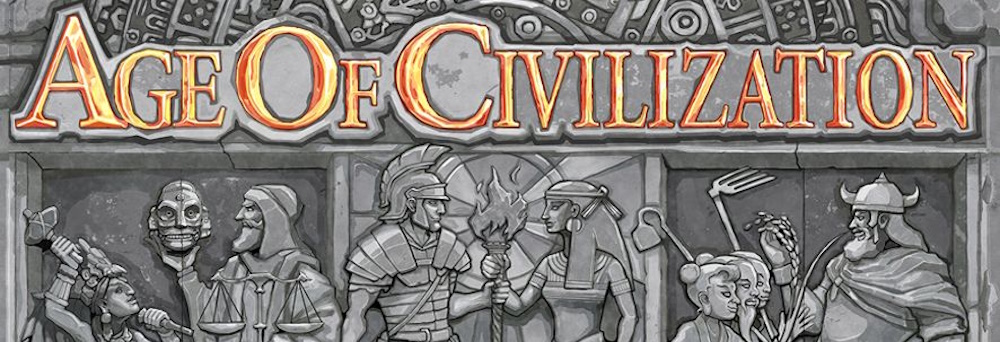
Before Inheritors, before Eila and Something Shiny, Jeffrey CCH designed a civilization game. The white rabbit of “civ but in half an hour” has humbled many a talented creator. Does Age of Civilization bend the long arc of history away from failure?
Nope. But it’s an interesting failure. That’s more than I can say for many of its peers.

The action selection system is clever, if strictly limited by the format.
Age of Civilization isn’t the first civ game to mask its deficiencies with an entire storage unit of individual civs. There are scads of the things, forty-eight in all, each with their own perks, and there’s no small amount of delight to be found in examining how those traits reflect the designer’s understanding of the people in question. It’s an effect not unlike skimming the national bonuses in Sid Meier’s take on the genre. Italy, with its extra victory point from the culture action. Mongolia, forever known for its blaze of militaristic glory. Khitan, perplexing western audiences with its absence from their textbooks.
Right away, though, Age of Civilization makes one crucial misstep: it limits access to its civilizations. I’m reminded of two other titles that boasted an entire globe’s worth of tribes and kingdoms, the Ragnar Brothers’ History of the World and Philippe Keyaerts’ Small World. In those, players were constantly on the move, or at least permitted to swap out nations as rapidly as they liked. Here, CCH limits everybody to three civilizations per game. A full session lasts six rounds. Since you’ll only pick three civilizations, easily the highlight of the whole affair, a full half of the game misses out on its biggest moments.
Meanwhile, the paucity of these upgrades tends to reduce the civilizations to one factor above all others: population. When taking a new civ card, you immediately reset your meeple count to the number on the card. If you’re under that number, taking a new civ is a boon. Otherwise, it’s a step down. Which is an odd statement in its own right, a prioritization of raw numerical advantage over everything else. More than that, though, it reduces the entire game to a singular puzzle.
Because Age of Civilization isn’t only about picking up cards; it’s an ultra-light worker placement gig as well. There are only six actions open at a time, selected from a trio that are always available and a conveyor belt that gradually swaps out the others. Along the way, wars and a plague will wreak their own havoc. It’s a clever but deeply odd system, one that permits construction and conquest one moment only for those options to give way to fishing and trade. Or vice versa, depending on the setup. Either way, it generates a civ game that does indeed last thirty minutes, but at the cost of feeling painfully artificial in every way that matters.
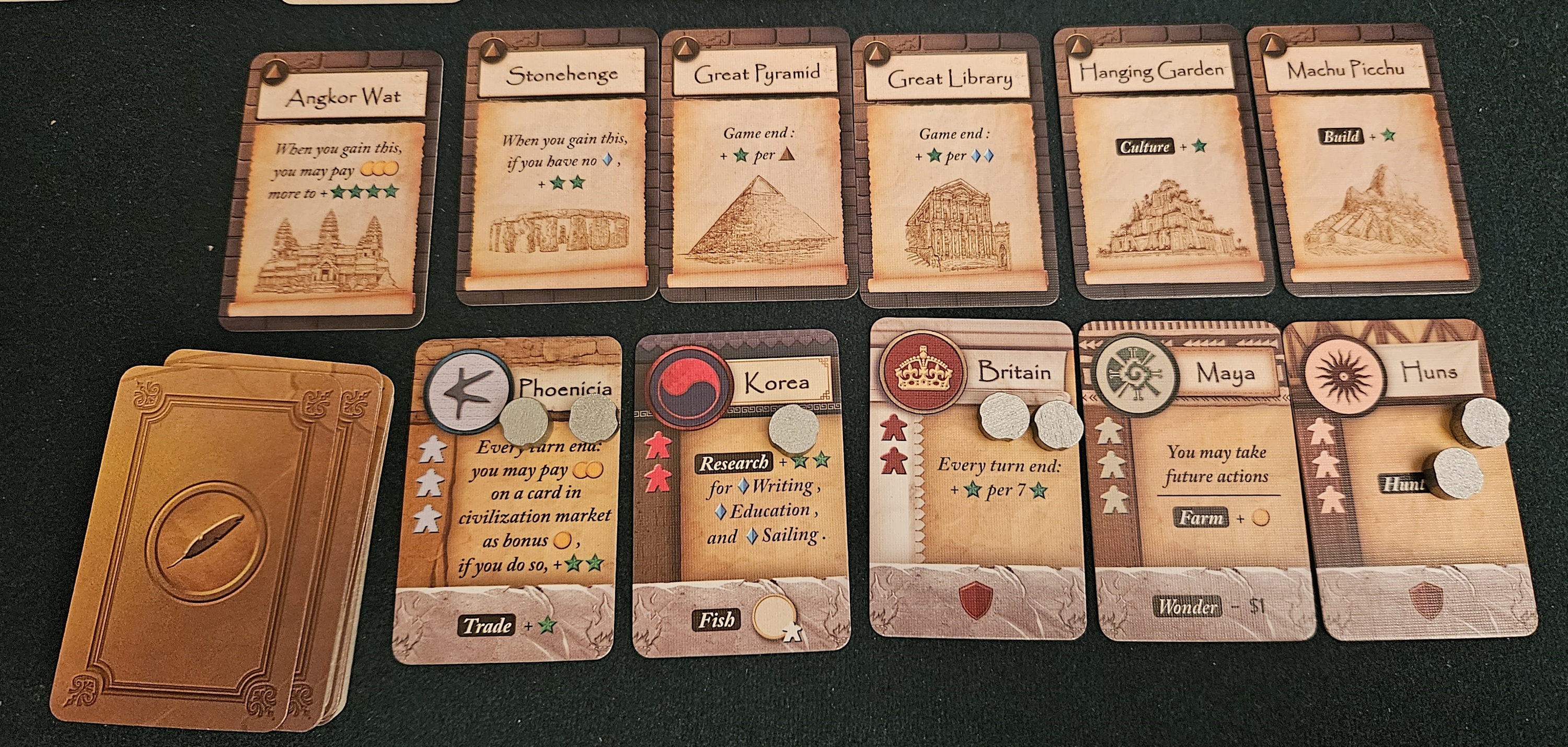
You get a civilization! You get a civilization!
There are means of mitigating the caprice of that conveyor belt. The answer, again, lies in the civilization cards. Some grant access to actions even if they aren’t currently available to the general public, like Korea and fishing, the Celts and hunting, or Vietnam and a whole bunch of stuff. These can offer a lifeline, especially since their actions tend to remain available even after they’ve fallen into decline. That’s because there are at least two perks per civ, one that’s only available as long as they’re dominant, plus another that pokes out from under whichever card replaced them.
Of course, such mitigations are contingent on the card market, which, while ample, doesn’t wholly conceal the game’s awkward stagger. The whole thing is closer to a combo-building puzzle than a civ game proper. Everything is about picking civilizations that match the current (and future) action offer, round out your dwindling population of meeples, and hopefully build a wonder or three at some point. Getting those planets to achieve syzygy is a royal pain the butt. There’s room for some clever combos, but not much, and those that do manifest are often the result of chance more than skill. Meanwhile, good luck keeping your population around long enough to make a civilization feel worthwhile longer than a single turn.
That constrained playspace makes it hard not to contrast with the other games I mentioned earlier. Both Small World and History of the World tinker with similar ideas, letting players cover a whole range of civilizations in a single sitting. But they understood that there needs to be a reason to keep a civ around. They did this by offering players ongoing points from their previous civilizations, letting a now-declined kingdom or empire contribute as the player changed into a new toga. This favored players who effectively fielded two teams at once, both a robust declined civilization for generating points and an upstart chewing into rival territory. Age of Civilization, by contrast, offers no in-game reason behind the three-civ limitation. It exists “above the table,” so to speak. Half of your turns feel puny and that’s that.
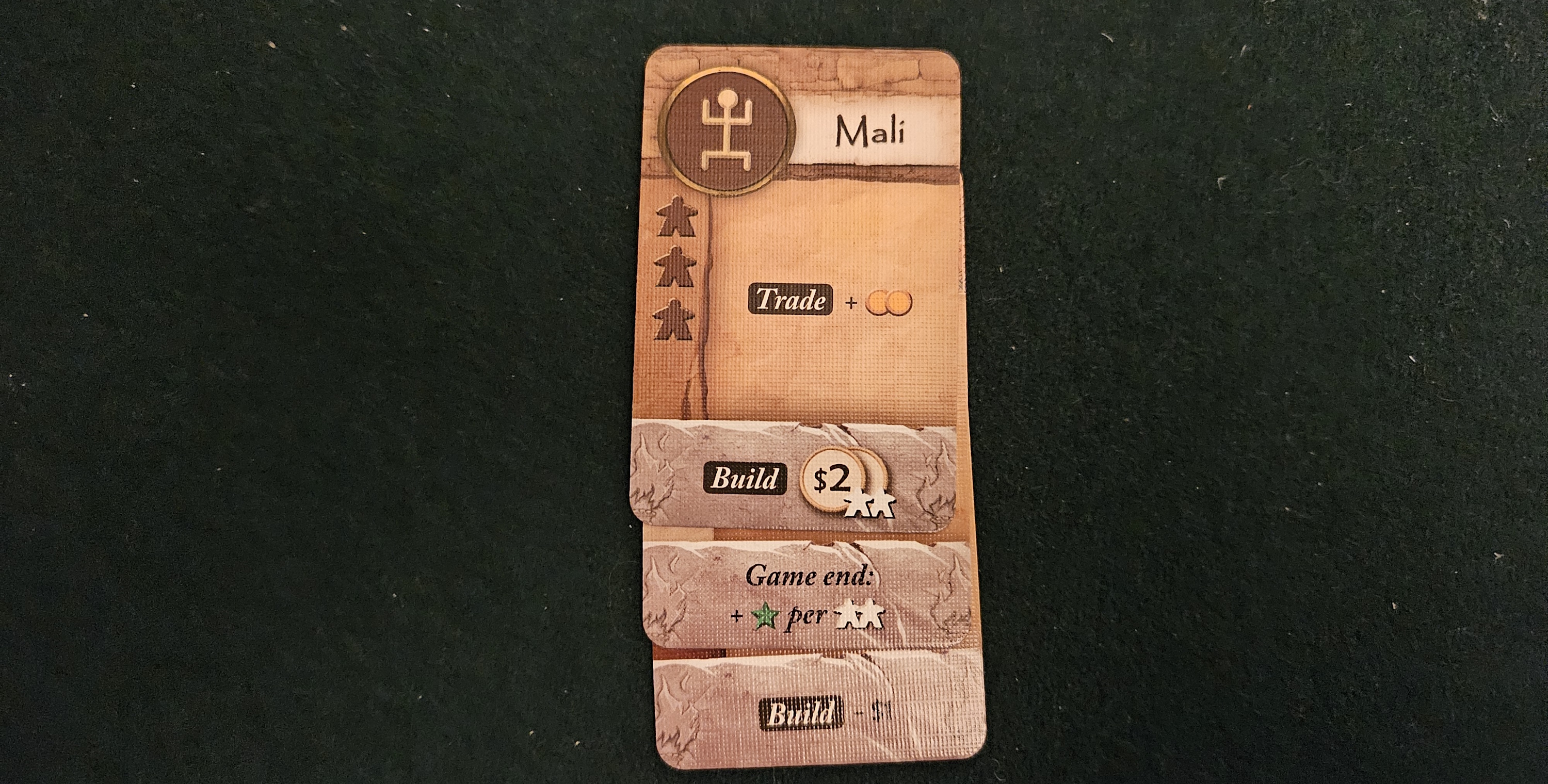
Three civilizations piled together.
Without more to bind the experience together, the game feels too chore-like, a minor exercise in pulling the right cards. It’s still interesting, to be sure, especially thanks to the wide territory it tries to cover. But that territory is only glimpsed in low resolution, like taking a cross-country train with fogged glass windows. There’s a reason this game is thirty minutes long, and it isn’t by dint of cramming the civgame experience into a suitcase. Any longer and its diminutive conundrums would overstay their welcome.
But here’s the good news. Although Age of Civilization doesn’t make much of an impression, CCH followed it up a couple of years later with a sequel of sorts. Age of Galaxy it’s called. And tomorrow we’ll take a look at why it succeeds where its predecessor is best relegated to the sands of time.
(If what I’m doing at Space-Biff! is valuable to you in some way, please consider dropping by my Patreon campaign or Ko-fi.)
Posted on November 27, 2023, in Board Game and tagged Age of Civilization, Board Games, ICE Makes. Bookmark the permalink. 11 Comments.

 SPACE-BIFF!
haven’t played Galaxy yet, but I disagree on Civilization. I thought that the use of the civilizations in this manner, including the hard 3 limit in the 6 round game, to still fit very well with the intended feel of the game. I mean, if the switch ups were more glib, I don’t think you’d feel that there was any kind of permanence to your empire. Every civilization has a flavor through its given bonus, that they are represented at all is somewhat of a statement that they were noteworthy, but why do empires fall? Through war, famine, pestilence, etc. No matter how great you’ve been playing, your civilization will inevitably decline. I get what you’re saying about the worker placement (which, if I recall, was less worker placement and more just action allocation), but we’re abstractly representing a huge chunk of time in what’s *supposed* to be a 30 minute window. People get replaced, but something often remains. The Romans weren’t Greek but they adapted a lot of Greek shit, Spain was most definitely affected by Arabic conquest but has since become a rather distinct entity altogether, The golden horde in Turkey, etc. I mean, I’m not exactly the best informed historically so feel free to throw this all in my face but I do think AoC is really neat in this regard. It’s a puzzle, for sure, but I think it holds up as a civilization game even if it isn’t 4X. It’s definitely at least easier to get to the table than Carta Impera Victoria.
As an aside, I wonder what you’d think of an obscure mobile game called Age of Rivals. It isn’t nearly on par with Through The Ages, but I enjoyed it immensely. Think, like, Seven Wonders Duel as a deck builder with lightly customizable characters thrown in for good measure.
Thanks for the recommendation. I’ll have to check it out.
Robert, was able to find a copy at Noble Knight. Looking forward to it
I agree with Dan about this game.– it was such a disappointingly on-rails experience. BUT, I agree with Daniel about Age of Rivals — amazing game!!
Another vote for Age of Rivals.
I think the best short-duration civ game I’ve played is Jesse Li’s The Flow Of History, though it too is artificial and flawed. But it has the great merit (in my book) of not being like any other civ game (hell, tableau-building card game) I’ve played, not even Jesse Li’s other civ game, Guns and Steel.
The Flow of History? I haven’t heard of it but that sounds rad, haven’t heard of the designer either but that might just be because I’m a filthy casual haha. Anyways, I’m happy to find fellow fans of such a great game that doesn’t even show up when I look for it on the playstore
Hey, I have this game! One of many on my shelves that I haven’t played. So strange but cool to see a review of a game that feels like it came out aeons ago…and now, based on this review, I’m all the less likely to ever play it. Thanks, Dan!
My job is to clear your shelf of shame, no matter the cost.
Pingback: Federation Kitbash | SPACE-BIFF!
Pingback: Terrace Jerks | SPACE-BIFF!
Pingback: The Little Crunch | SPACE-BIFF!