Blog Archives
In the Margins

At a mechanical level, In the Ashes, the gamebook by Pablo Aguilera, is a major accomplishment. Full of novel solutions to problems that have dogged the format since somebody first decided to put a game inside a book, I was repeatedly struck by Aguilera’s creativity. Nearly every encounter did something new, exciting, or innovative. Sometimes all three at once.
But before you order the thing, let’s rein in our expectations. In the Ashes is also a hot mess. At least in the format I played it, anyway.
We Are All on Drugs
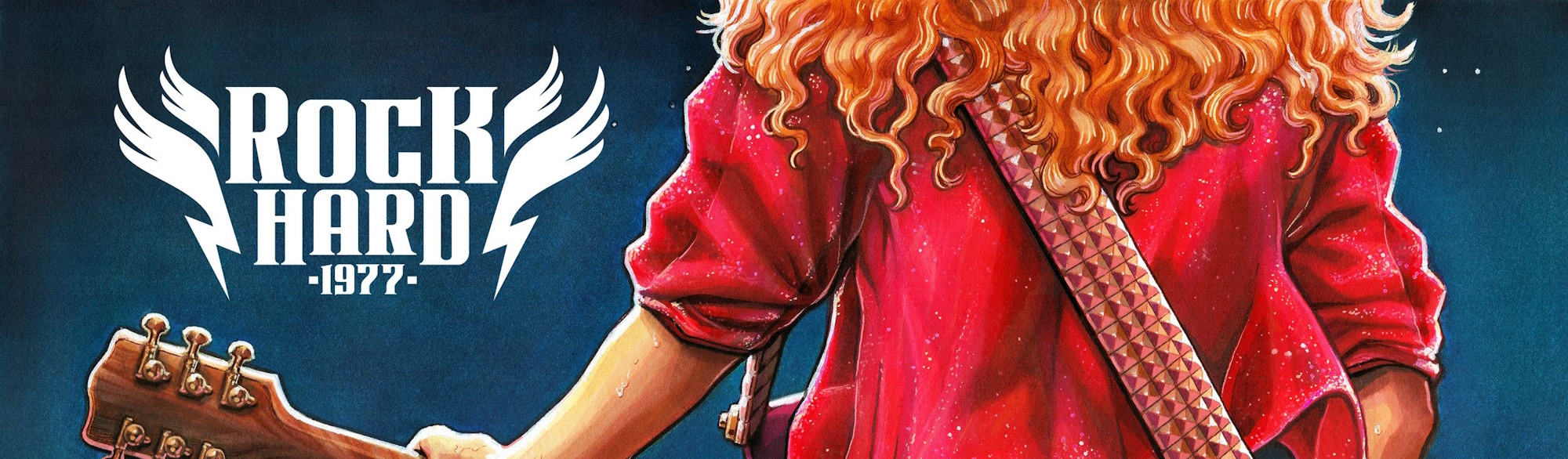
Everything I know about rock and roll, I learned from biopics. Now look, I’m a boring straight-edge, a real square, but watching Ray, Bohemian Rhapsody, Rocketman, Elvis, and Back to Black within the span of a year doesn’t give the, ah, healthiest impression of the career. So many young talents teetering on the brink of annihilation. Hopefully I’ve just missed all the wholesome ones.
Or maybe it’s that perpetual teetering that ignites our admiration. If nothing else, Rock Hard: 1977 feels primed to make such a statement. Playing this game is like riding a rocket ship on a gravity-breaking trajectory, albeit with an awareness that some seal or bolt has been improperly fitted and will vaporize upon contact with the upper atmosphere. As a worker-placement game, it’s merely okay. But as an accelerant-soaked wick leading not to a candle but to a firecracker, it hits many of the right notes.
The First Shall Be First
There’s an account in the Gospel of Mark that stands out, not only as an expression of Jesus’s idealism, but also as an indictment of the Christian project at large. Jesus walks in on his disciples arguing over which of them is foremost among the entourage. His answer is succinct: Whoever wants to be first must instead be last. The symbol of greatness to Jesus is the servant, the child, the helpless. I have yet to find a church that takes Jesus at his word.
Pardon the religious talk. It’s impossible to discuss Ierusalem: Anno Domini without slipping into the territory. Designed by Carmen García Jiménez, this is the most devotionally charged board game I’ve played in recent memory, and that’s counting titles like The Acts of the Evangelists, Nicaea, and The Mission. The rulebook is glossed with statements from the Gospels. Resources include stones, loaves, fishes, and the Holy Spirit. Final scoring is an outpouring of points based on your proximity to the big man himself.
Speaking as a lifelong student of early Christianity — and surely not projecting any of my own hangups and traumas — it’s a very weird game indeed.
Lunacy… on the MOON

Being honest upfront, there are very few topics I know so disproportionately much about as lunar colonization. So when I bellyache that Jose Ramón Palacios’s LUNA Capital doesn’t even mention regolith printing, lava tubes, basalt radiation shielding, or the deposits of thorium, titanium, and lunar ice that would be the few resources of value to corporations settling the moon, don’t take it the wrong way. Did I really expect LUNA Capital to take a serious stab at what a real moon colony might look like? No. I’d say I hoped. Hoped forlornly.
But it’s bad practice to write about the game I hoped for rather than the game I got. So instead, I’ll say that LUNA Capital is defined by some excellent set drafting and some very tired tile placement.
Pumpkin Party
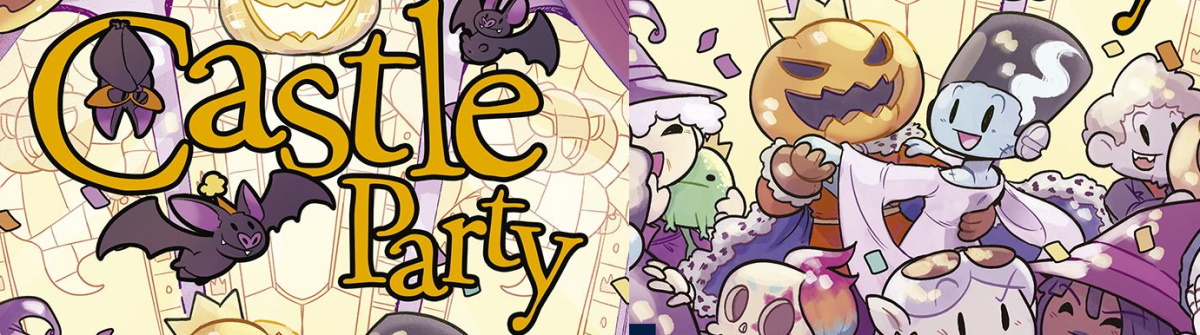
Designing a roll-and-write or flip-and-write game is like transcribing an epic D&D campaign into a fantasy novel or sampling Rocky Mountain oysters — something everyone apparently has to try once. Josep Allué and Eugeni Castaño’s flirtation with our hobby’s latest craze is Castle Party, a game about monsters crowding into a Halloween bash to watch some fireworks, do the conga, and toast the pumpkin king. And it delivers two small tricks that are a real treat.

 SPACE-BIFF!