Neither Board Nor Counters

I remember the first time I felt doubt. It was the night my little sister was diagnosed with type-1 diabetes. Mom figured it out at the grocery store — we’d been through this once before — and was sharp with us, but she let me buy a treat and for a while on the ride home everything seemed okay.
Then she said it. “I think Em has diabetes.”
There’s that pang even now. That lurch. Em was three. At home, we already had the equipment from my other sister’s diagnosis. The glucose monitor. The ketone strips. Mom was crying. Em was crying. I couldn’t tell which was worse, my mother’s grief or my baby sister’s wails. I went upstairs to my room and shut the door and prayed so hard it felt like my stomach would roll into a ball and fall out. Please, I said. Please, Heavenly Father, give it to me instead.
Nothing. No miracle. I didn’t really expect one, even as a ten-year-old. But no comfort, either. I cried, then went into the bathroom and nearly vomited, then crawled into bed and cried some more. When I looked out from the cocoon I’d built around myself, there was the treat from the store. Sugar. Something my sister would have to avoid from now on. I threw it in the trash and fled back to my blankets and that’s where the memory stops.
The Great Commission, designed by Simon Amadeus Pillardo and Paul Snuggs, is sometimes about doubt. Not often, but sometimes, and not always in a way the game seems to understand. Set during the early years of the Christian Church — strictly speaking before there were Christians or churches as we conceptualize them today — it is preoccupied with the evangelizing mission that Jesus commanded after his resurrection. Or rather, a particular interpretation and portrayal of that mission.
Moregenta

On the whole, I appreciate CMYK’s Magenta series, which takes classic card games and shrouds them in oversized pink boxes. Don’t believe me? Uh, that’s an odd thing to not believe. Here are the receipts: Fives, Duos, Figment, and Fruit Fight. Now you can get back to the serious business of not believing the propaganda in your social media feed.
Anyway, two new titles have now been added to Magenta. They’re both excellent. I’d even say that these are the best games in the series to date.
The New Dog-Ears
Storyfold: Wildwoods isn’t the game I was expecting. It isn’t the story I was expecting. If we want to be a little more crass, it isn’t the product I was expecting, either.
Repentants

Gosh, it’s been a while since I thought about March of the Ants. Tim Eisner and Ryan Swisher’s eusocial civilization game is now ten years old, which in board game years represents the better part of a century. As befits the game’s diminutive nature, this has always been the smaller, faster, and scuttlier cousin to fare like Eclipse: New Dawn for the Galaxy, Clash of Cultures, and Twilight Imperium. With the recent release of the Evolved Edition, it seemed like a good time to take a second look.
I’m glad I did. Not only is this new edition an improvement on the original in pretty much every regard, it has swiftly become a jumping-off point for my eleven-year-old into the expansive world of 4X games. And the ants! There’s nothing quite like slapping a big old butt onto your custom subspecies.
Tricker Taker Soldier Spy

It’s that time of year again. The days are getting shorter. The air is starting to nip. And the Indie Games Night Market at PAX Unplugged is only a month away.
After the success of last year’s Indie Market, a greater number of contenders are stepping out of their comfort zone to offer small-batch titles to the public. One of those previous successes, Torchlit, now has a younger brother. And here’s the buried lede: David Spalinski’s followup trick-taker is probably the best example of the genre I’ve played all year.
Auto Dominion
I believe Gricha German and Corentin Lebrat have cracked the code. Ever since the auto-battler was popularized way back in 2019, the format has seemed ripe for cardboardification. I mean, its alternate title is auto-chess, for heaven’s sake. But while plenty of titles have attempted to bring the genre to our tabletop, none of them have really captured the spirit of the thing.
Until now.
Afterlives

Sometimes I think about the afterlife. Not the actual afterlife. I’m suspicious about the probability of any such thing. But the afterlife as it appears across faiths and cultures, as reflections of our lived values and fears.
Take Club Spooky and That’s the Spirit!, the forthcoming duo by Connor Wake, whose Out of Sorts was one of last year’s unanticipated (and overlooked) hits. These small-box titles present contrasting soteriological outcomes for our disembodied souls, one an endless celebration and the other an endless process of self-doubt. To my Manichaean mind, one of these afterlives must be paradise and the other purgatory. The only problem is that I can’t tell which is which.
Belligeniture
It isn’t often that a title will cause me to spend more time thinking about its system of political succession than its gameplay, but that’s exactly what happens every time I try to break out Leaders. According to designer Hugo Frénoy, these borderline abstract contests serve to keep the kingdom peaceful. Every spring, would-be rulers engage in a bout to capture their foe. Recruiting warriors from the sidelines and calling it quits the instant one potentate has been surrounded, these matches are bloodless, honorable, and prevent infighting.
Sure they do. Because a loser has never decided to stab the winner in the face. Because the court eunuchs have never manipulated the odds to favor whichever weak-willed sycophant will let them do their thing. Because the mercantile class has never said, you know what, annual belligeniture isn’t suitable to long-term economic policy, let’s poison the game-masters.
Am I fretting too much over throwaway details? Undoubtedly. But that speaks to some flimsiness on Leaders’ part. This is a game that ticks so many of the right boxes. All the more pity it doesn’t quite work.
The Hero We Became

Every time a pearl necklace is scattered across a rain-soaked alleyway behind a theater, a superhero is born. Sorry, them’s the rules. While endless reboots have turned origin stories into a topic of much lampooning, there’s no denying the appeal of watching an everyman transform bit by bit into a reluctant defender of justice. Or maybe a relatable villain. Or, perhaps, hear me out, both.
Origin Story, designed by Jamey Stegmaier and Pete Wissinger, tills the well-trod ground of superhero origin stories to craft a hybrid trick-taker and… wait for it… engine-builder. It’s a combination I haven’t seen yet, at least not in such a compact format, and it certainly seems like it was built to appeal to my preference for hybrid designs.
But I’ll say it right now: this is a weird one.
Once More Unto the Leviathan
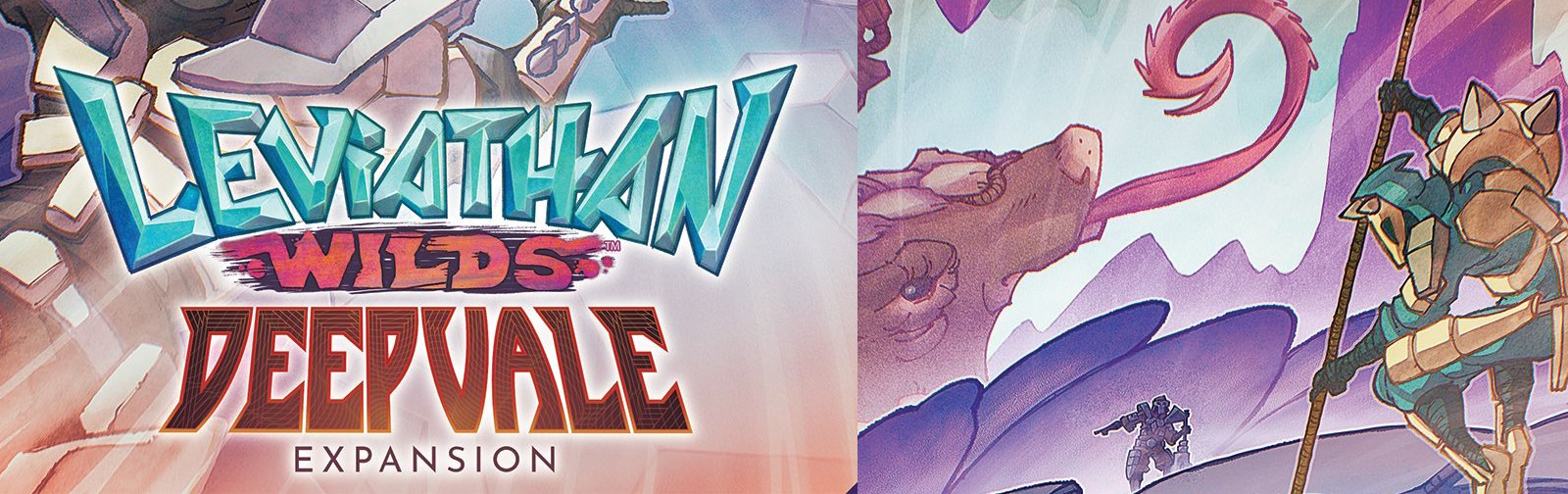
Any opportunity to get back into Leviathan Wilds is a good thing. That’s another way of saying you already know my impressions of Deepvale. As expansions go, nothing major has changed. There’s one new character, one new class, and another seven hospital-sized colossi to beef up the original game’s already ample rotation. In one sense, it’s rather workmanlike.
But when you have a game as good as this, it’s better to not over-alchemize the formula. Leviathan Wilds was already near perfect. With Deepvale, Justin Kemppainen reveals himself at top form, unspooling his most confident creations yet.

 SPACE-BIFF!