Snack Packs

AAAHHH! Too many games! I didn’t ask for this. Literally, I did not ask for this. I requested A Message from the Stars, and Allplay sent me these four tiny boxes. That’s one way to manage your warehouse overfill.
Fortunately, I wouldn’t call them half-bad. One or two might even be quite good. But since they’re all tiny, it seemed appropriate to write about them all at once. I’ll tackle them in alphabetical order so as to avoid the appearance of favoritism.
You’re the Duke! You’re the Duke!

Because I play so many board games, sometimes this funny thing happens where I’ll experience a game and its source material out of order. Last night, for example, I watched my first episode of The Mandalorian as research for Corey Konieczka’s latest adventure title. This is always an interesting process. Rather than approaching the game with my own assumptions about what a proper adaptation might entail, everything is flipped on its head as my feelings toward the source material are filtered through the lens of the of the adaptation. I’m peering through the telescope in reverse.
A few weeks back, I watched Escape from New York for the first time. The reason? That same evening, I’d conducted my inaugural play of Kevin Wilson’s version of John Carpenter’s cult classic. My main takeaway was that the film, like the game, is sublime trash. But here’s the kicker: I think I prefer the game.
I’ve Got Callouses on My Fingers

After the first two sets in Kevin Wilson’s Kinfire Delve, Vainglory’s Grotto and Scorn’s Stockade, it remained to be seen whether there was much reason to return for a third (and final?) outing.
The short version? Callous’ Lab offers more of the same, with the anticipated adjustments and extras that aficionados may want to pick up. But it would be a lie to say I wasn’t getting a little strained at the prospect of any further quests.
Terrace Jerks

In the Urubamba Valley of the Andes Mountains there are extensive terraced earthworks. Located under the watchful gaze of Machu Picchu, itself a royal estate for overseeing the terraces, these were the principal growing grounds for the Inca Empire’s maize. The harvest was massive thanks to the valley’s careful arrangement of arable land, and much of it was fermented to produce chicha for the Inca’s many feasts and celebrations.
Very little of that comes through in Jeffrey CCH’s Sacred Valley. There are terraces all right, but they may as well be three separate fields. There are no earthworks, imperial-scale agricultural projects, or mountaintop citadels. There isn’t even any corn beer. Instead, Sacred Valley is about passive-aggressive farmers maximizing their yields while sabotaging their neighbors.
At least there are alpacas.
Mount My Head on the Wall
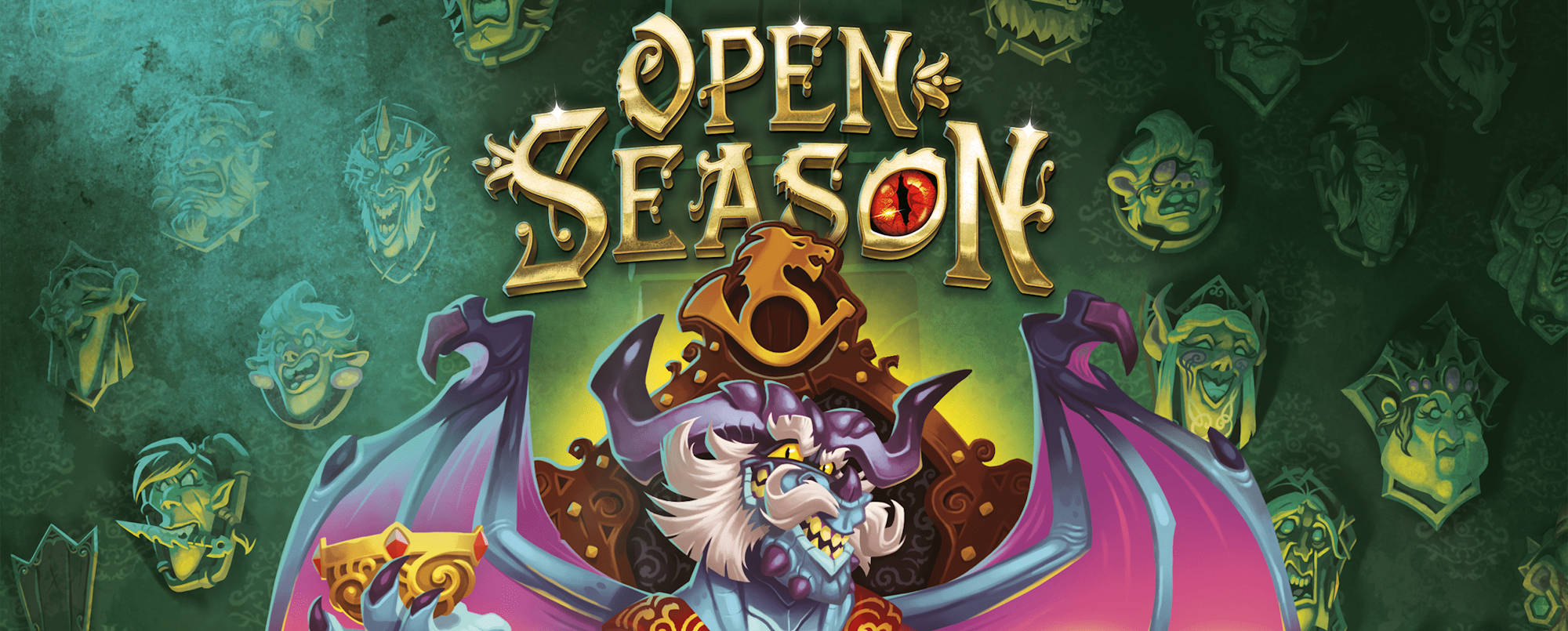
Open Season takes place after the good stuff has happened. As one of the land’s evilest evil lords, you have defeated a bunch of plucky heroes. Defeated, past-tense. Now you’re mounting their taxidermied heads on your wall. Call me crazy, but I’d rather compare paint swatches.
Xylophone Guitar Bear

Is Xylotar’s xylophone/guitar-playing polar bear based on the keytar bear busker of Boston fame? Eh, probably. Or maybe it’s an indication of how little the window dressing of any given trick-taking game matters.
Cold as I am on the setting, I must admit that Chris Wray has once again produced something special. The big surprise of Xylotar is that it’s a hidden information game as much as it is a trick-taker. This time around, though, the hidden information is your own hand of cards.
Caught in the Tangle of These Power Lines

The difference between a good stacking game and a truly memorable one is slender. Like the components themselves, every element needs to be weighted precisely, neither too heavy nor too light. Without a solid foundation, the merest wiggle or imbalance can send the entire structure tumbling down.
Nekojima, designed by Karen Nguyen and David Carmona, qualifies as a good stacking game. I’d even staple a “very” in front of that. But a keeper? It’s a few whiskers shy of that distinction.
Pugna Quin Percutias
One of my favorite things about board games is their ability to shine a spotlight on the undusted corners of history. Take Brad Smith’s Comet, a solitaire game about the titular resistance group and underground escape route that crossed from Belgium to Spain and helped over 700 Allied airmen escape back to Britain over the course of the war. It’s one of those tidbits I had an inkling of, but hadn’t given much consideration until I sat down at a table to reenact the smallest fraction of the hazards they faced.
Make no mistake, these were monumental acts of heroism, performed by civilian safe-house keepers and trail guides, under threat of arrest and execution, and conducted without firing a shot. Indeed, that was the Comet Line’s motto: Pugna Quin Percutias. To fight without arms. In many respects, an even more courageous proposition than taking up the rifle.
See Shells She Sells

In an age when so many board games are designed as ludic dogpiles, heaping as many mechanisms and tracks onto a board as humanly possible, it’s little oddities like Seaside that prove the inverse. You can do so much with a single idea.
Here, Bryan Burgoyne’s idea is simple. On your turn you draw a tile. Each face shows a different action. You select one, either tossing the tile into the sea or claiming it for your stretch of beach. Barring a few specifics, you could start playing right now.
Infinite Gest
One of my professors believed that every generation needed to retell the story of Julius Caesar. In her mind, the story functioned as a sort of cultural tonic. Tyrant or hero, victim or opportunist — Caesar was a lens through which generations current and future might better witness themselves.
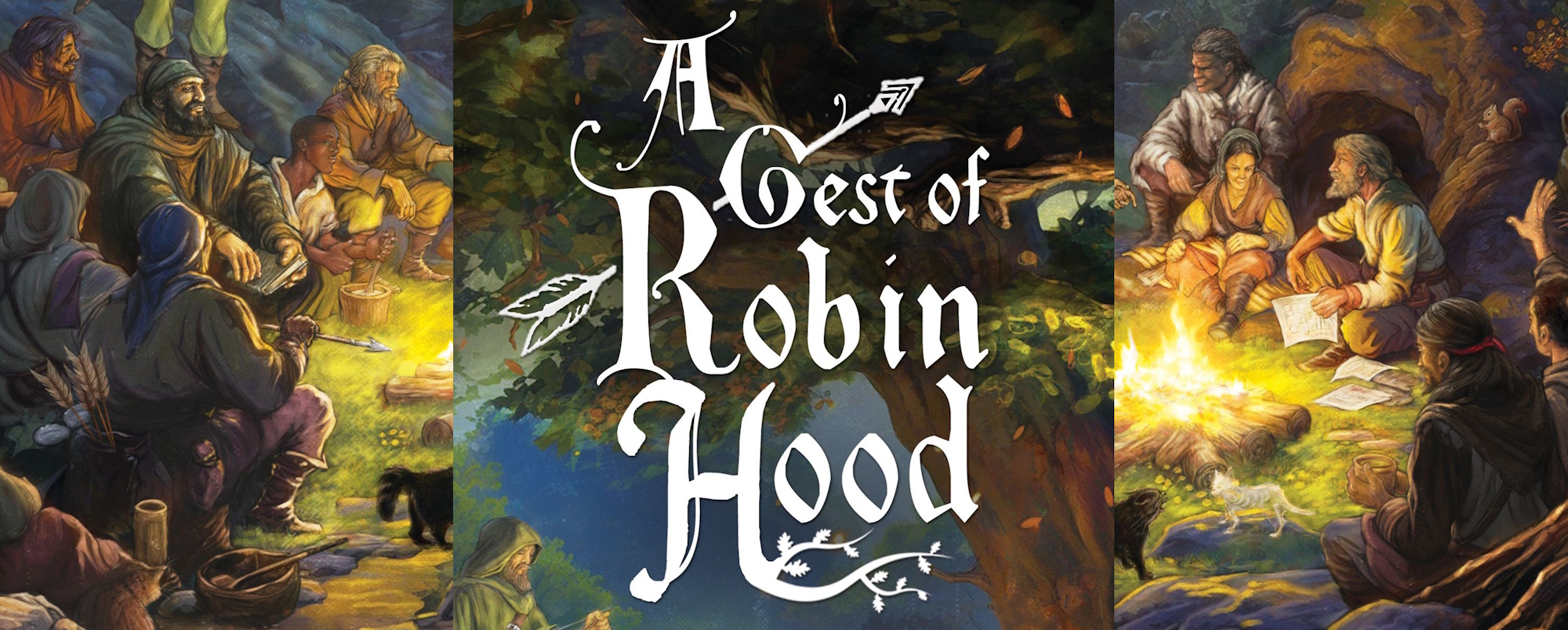
In playing Fred Serval’s A Gest of Robin Rood, the second installment in the Irregular Conflicts Series, itself a spinoff of the long-running COIN Series, the same could be said of everybody’s favorite forest fox. Is he a vagabond, robbing the rich for no other reason than because their wealth is there for the taking? Is he a lower-class hero, uplifting the poor? Has he been coopted by the gentlefolk, elevated to a lordling deprived of his privileges? Is he a crusader? A jokester? A kingsman? Does he venerate the Virgin Mary or has Maid Marian been invented to take her place? Eventually he’ll move into his gritty teenage years and relitigate the Battle of Normandy. Shhh. He gets embarrassed when we talk about that.

 SPACE-BIFF!