Yoink: The Gathering
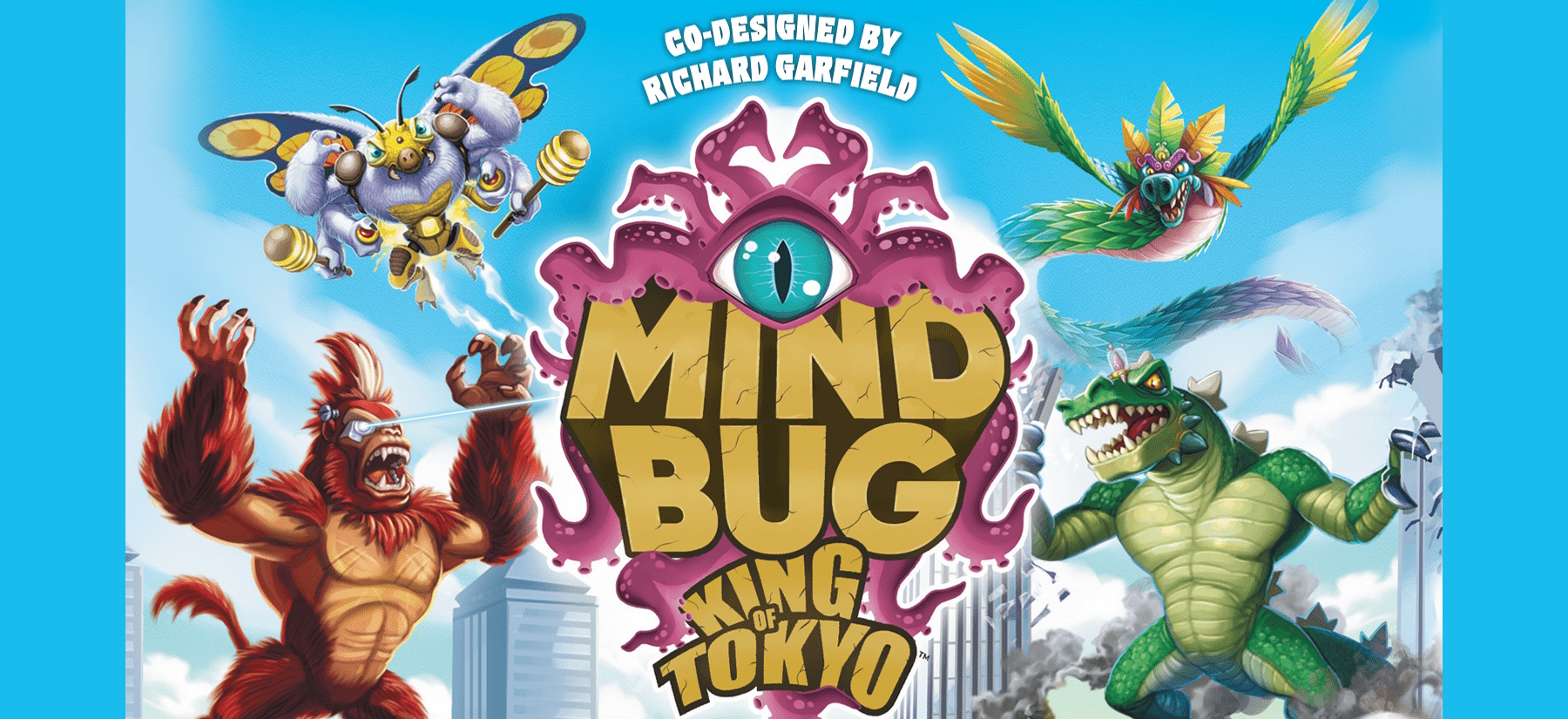
It occurs to me that I’ve never written about Mindbug. Co-designed by Richard Garfield, a fact the box prominently advertises, along with Skaff Elias, Marvin Hegen, and Christian Kudahl, there are a bunch of these things out in the world. Six core sets and well over a dozen promos, I think. It’s the sort of game some folks decry as “lucky” and “random” and “vacillating.” And it is those things. But it’s also clever in a way that feels like a remediation of Garfield’s past work, especially titles like Magic: The Gathering and its many collectible descendants.
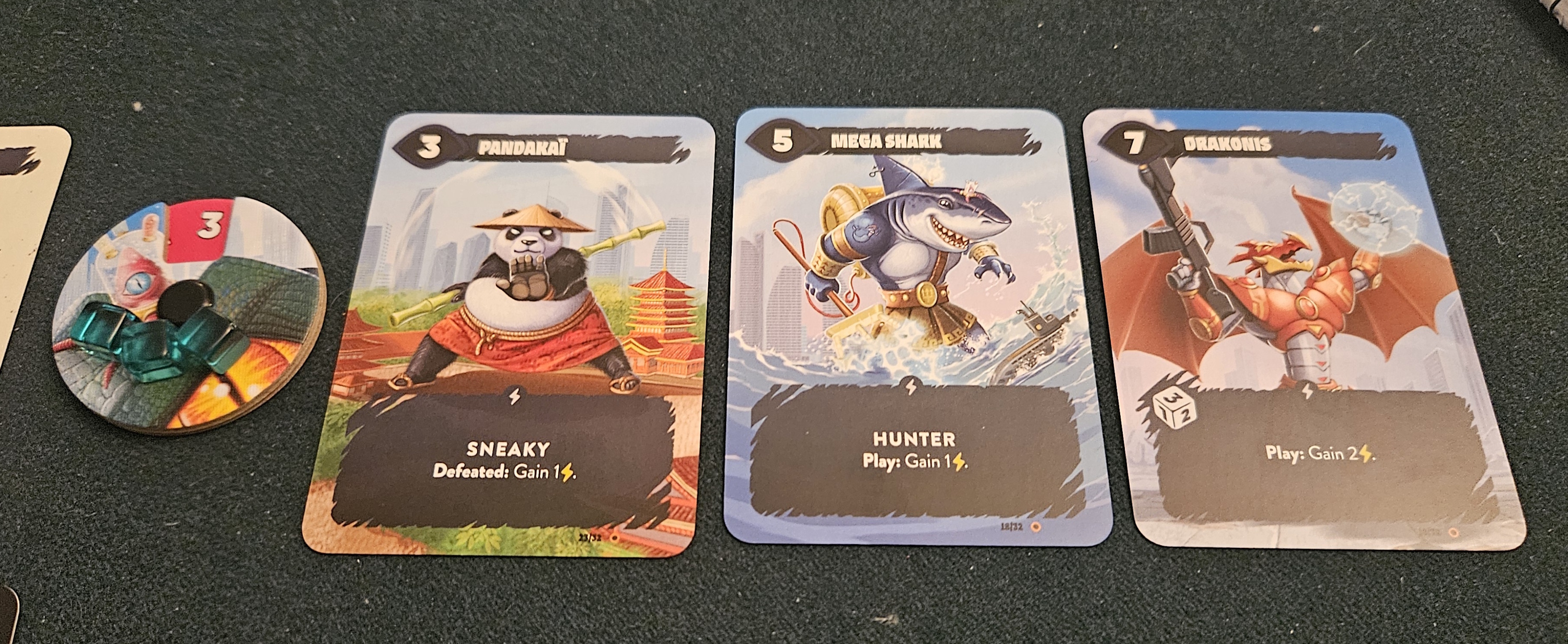
Monsters. From that one game. Now in this other game.
In fact, Mindbug resembles Magic in more ways than one. Take the entire formula. Two players sit across from one another. They both have some hit points. Three, I think? I’m actually not sure if that’s the case in every iteration, even though I’ve played four of the sets now. In the latest set, Mind Bug x King of Tokyo, it’s three.
Anyway, both players have some hit points, but not many. They also have a personal deck of cards. In Mindbug’s case, those decks are built at random rather than favoring the kid with the biggest allowance. Look, it’s already fairer.
From there, players alternate turns. These are simple. Either you play a card or you attack. Playing a card adds it to your personal menagerie of monsters. Attacking means taking a single monster, sliding it forward, and letting your opponent either block your monster with one of their own, or let it pass. In the latter case, no matter the monster’s strength, it deals one damage to the player. Drop to zero life and you lose.
It’s like Magic for kids. Kid kids. Which isn’t saying much, since kids can play Magic just fine.
But here’s the thing. Rather than focus too much on balance, the cards in Mindbug are all over the place. Monsters range in strength from 1 to 10. Also, they don’t have costs, so there’s no balancing via economy. Also also, their abilities are short and sweet, which only makes them more enthusiastically skewampus. Stealthy monsters can only be blocked by other stealthy monsters. Hunters get to pick their blocker. Tough monsters absorb a free hit without dying. It isn’t uncommon to see abilities that in the proper context could eradicate your opponent’s zoo. Or crud, win the game outright.
In other words, it’s “lucky” and “random.”
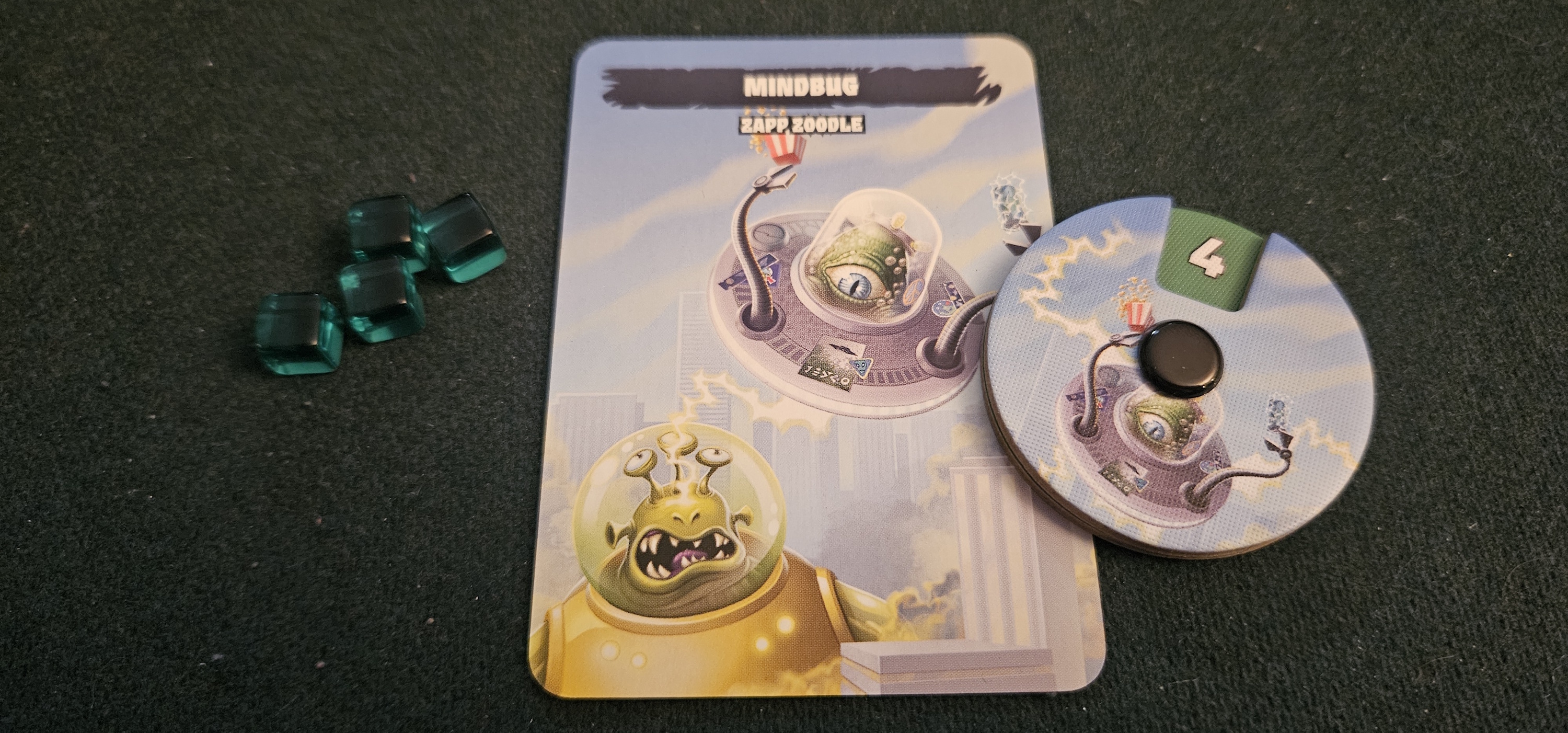
Hey! It’s the thing! The mindbug thing!
Except the entire thing is mediated by a single idea: mindbugs. Both players begin with two of these things. They’re aliens, both brains and bugs, who can bend the will of any monster to match their own. In game terms, this means that whenever your opponent plays a card, you get the chance to take control of it for yourself.
The limitation, of course, is that you only have two mindbugs. And your opponent has two of their own. And you can only use a mindbug the instant a card is played; there’s no waiting around to decide that a particular monster is too potent to leave on the field. As soon as it appears, you either mind-wipe it or you don’t.
But it’s enough. All those imbalanced abilities, all that “luck” and “randomness,” are suddenly the game’s greatest strength. Because it doesn’t matter if your opponent happens to draw the best card in the entire game. As long as you have a mindbug, you can claim it for yourself.
Naturally, this leads to all sorts of psychological crises. Mindbug quickly enters that donkey space where every action is a possible trap and your opponent’s intentions are the topic of much anxiety. It isn’t uncommon to play a strong monster, but not your strongest monster, in order to bait your rival into using up their last mindbug. Except they know you’re probably baiting them. So maybe instead you play your strongest monster, hoping they’ll think you’re holding onto something better. Or you assess every single monster on how nasty it would become were it turned against you. Heck, a lot of the time the game is decided by whichever player just plays, focusing on cards and attacks, rather than getting so invested in the mind-control stuff that they lose sight of their offense.
Each set does something different. Only slightly. Not so different that they can’t be mixed together, if that’s how you roll. For example, because the latest set ties in with King of Tokyo, it features big chunky dice that can increase a monster’s strength or award energy cubes to be spent on upgrades.
It’s light. Everything in Mindbug is light. It’s Magic for kids, but with that deadly mind-control idea that rubber-bands it back into the realm of the adult, or at least the territory of those who are mature enough to take a walloping now and then. Because even with those mindbugs, Mindbug might not shake out. Maybe your starting deck will be packed with obvious synergies, rival manipulations be damned. Or maybe you’ll only have access to a bunch of easily countered chaff, mindbugs be damned. There’s no telling until you’re in the thick of it.
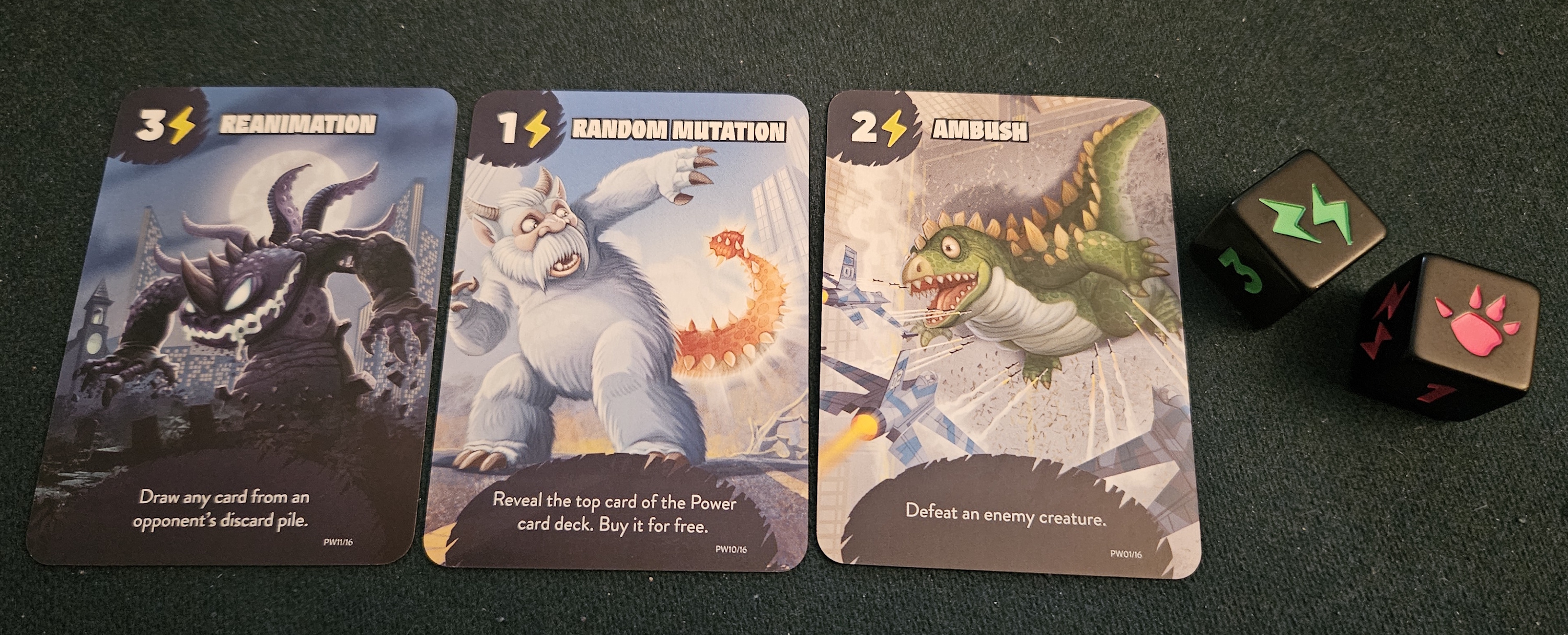
Dice and power-ups are the order of the day.
Like I noted at the outset, Mindbug comes across as a remediation on Garfield’s more chaotic fare. Mindbug is still chaotic, but it introduces a robust psychological drama around the chaos. A long session might take fifteen or twenty minutes. A short one can last as few as five. It’s so brisk that the game often feels like a throwaway joke.
It isn’t. A joke, I mean. Mindbug is smart, the work of an aging master and designers who grew up with his creations, now folded inward to stare itself in the face. That doesn’t make it feel like more of a staple, but there it is, like a trifle from a composer who once won academy awards but now wants to lampoon his earlier hits. I’ll probably play this a hundred more times over the coming years. And then, as before, marvel a little bit at the game’s quiet brilliance before packing it away and forgetting about it until the next time it catches my eye.
A complimentary copy of Mind Bug x King of Tokyo was provided by the publisher.
(If what I’m doing at Space-Biff! is valuable to you in some way, please consider dropping by my Patreon campaign or Ko-fi. Right now, you can read my third-quarter update on all things Biff!)
Posted on December 18, 2025, in Board Game and tagged Board Games, Mindbug, Nerdlab Games. Bookmark the permalink. 2 Comments.

 SPACE-BIFF!
How is it as a crossover? I see it skews towards Mindbug, but does it retain any of KoT spirit?
To some degree. Unlike other Mindbugs, there are dice that modify your relative strength. Energy cubes for buying upgrades. It does a decent job.