Intergalactic Knizia, Verse One: Silos
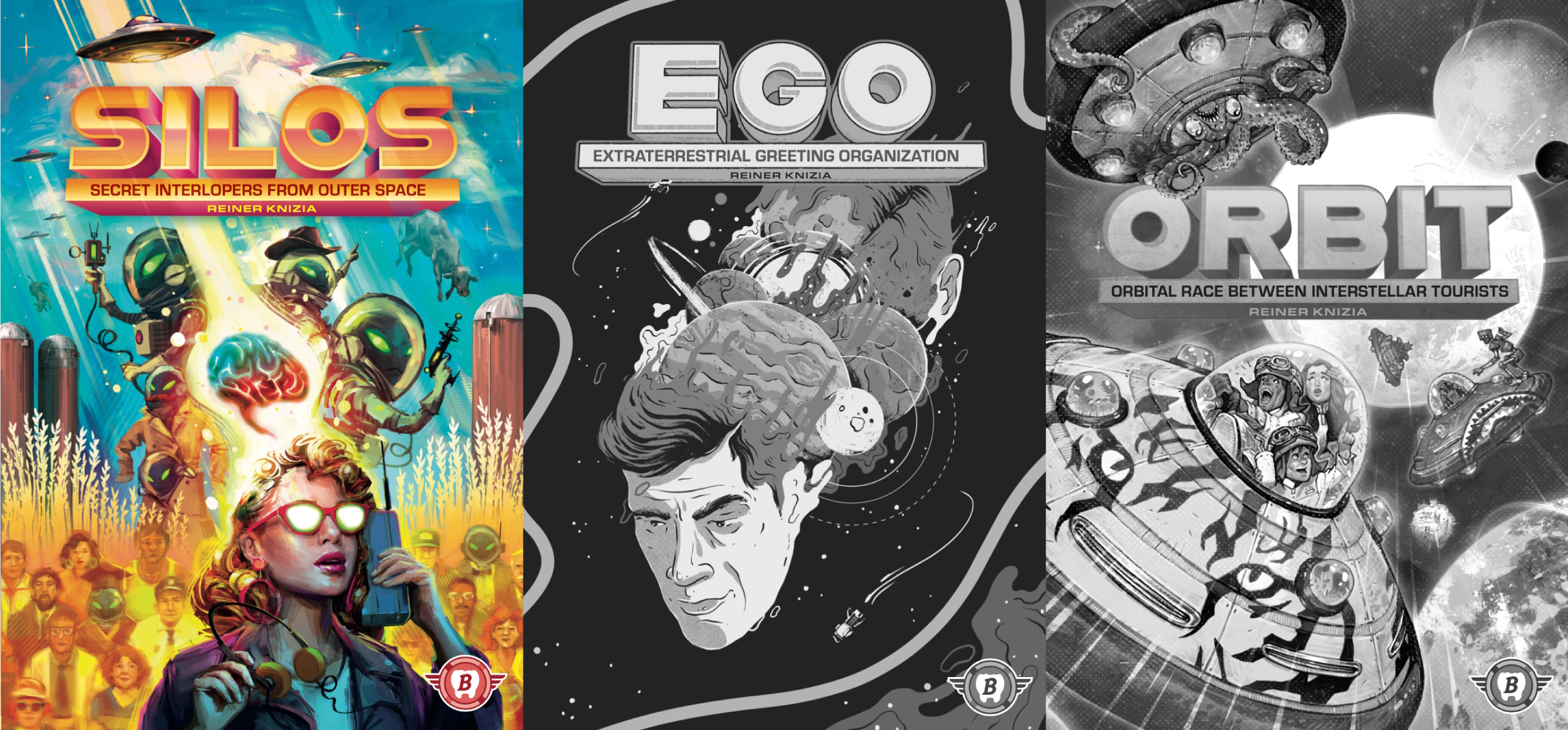
By now you’ve heard that Bitewing’s ultra-secret Reiner Knizia production is not one game but three, loosely woven together into a saga about humanity’s transformation via extraterrestrial contact. I’ve been playing the entire trilogy over the past month, and I can confidently declare it two-thirds excellent.
In the first chapter, Silos, aliens walk among us — although we’re none the wiser, since their preferred abductees are cows.
UFOs are about. Pardon me, UAPs.
Rewinding a little bit, Silos is a reworking of Municipium, a 2008 Knizia about Roman families climbing the ranks of their local township through careful timing and influence. Now it’s a game about body-snatching, learning the local shibboleths, and nabbing the right citizens. Also, there’s undoubtedly some behind-the-scenes cavity probing.
The change could not be more refreshing. Knizia and Bitewing have made a number of small improvements to the original that, when taken together, produce an entirely different feel. This is a silly game first and foremost, but one that still allows for clever play and surprise swings.
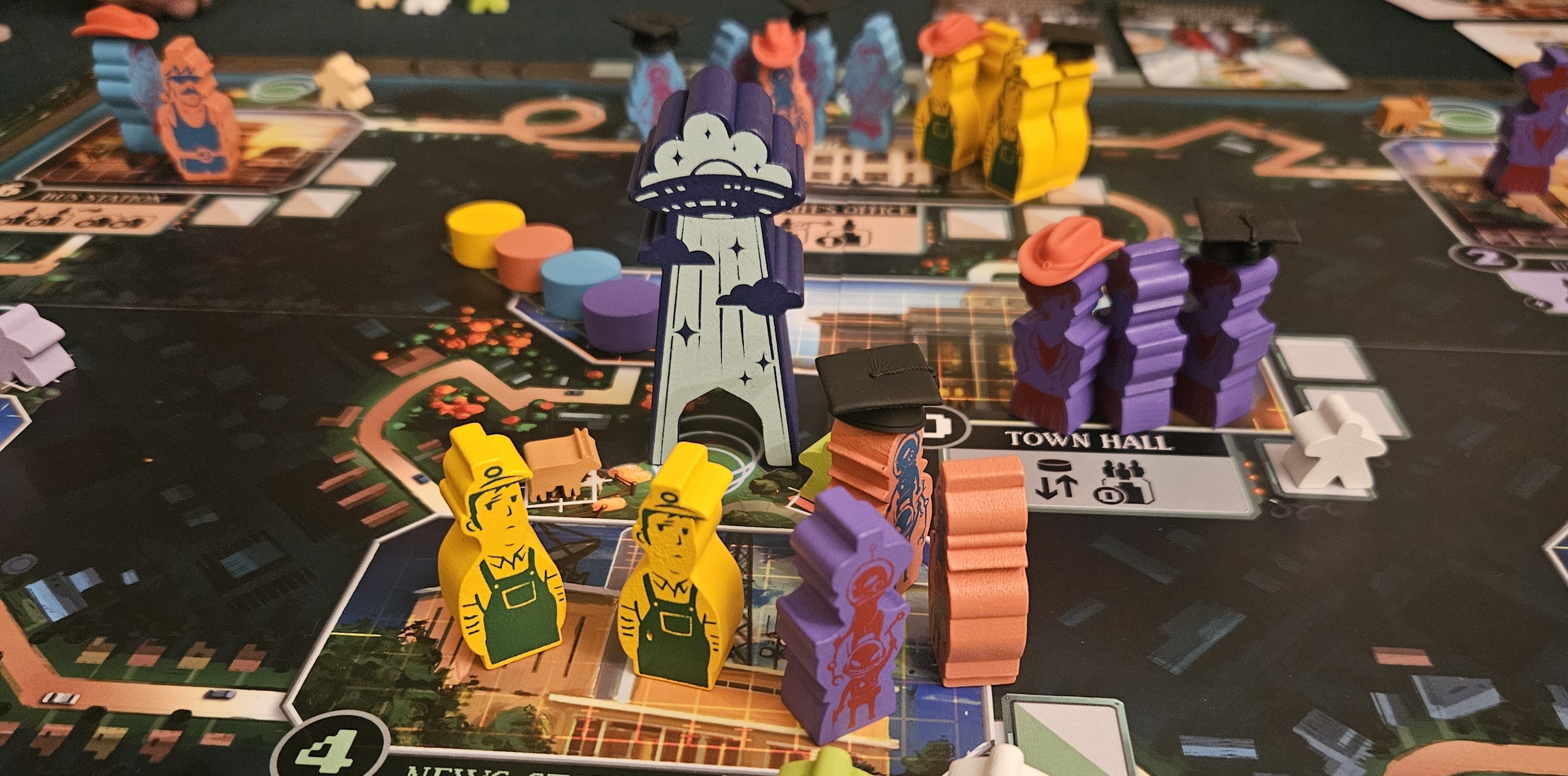
At a basal level, Silos is an area control game. Its small town is divided into segments, each of which holds its own particular interest to your studious E.T. The town hall is the seat of power, so it governs tiebreakers, while the sheriff’s office is great for forcibly rounding up your competitors. The shopping mall dictates the movements of these primitive organisms, but the news station lets you freely alter the composition of the beings you’ve already abducted. Controlling an area lets you wield its power. For example, commanding the university lets you school one of your infiltrators in the local customs, making them more effective at blending in with the apes.
More importantly, there are periodic influence checks of two types, one when an area fills up with potential abductees and another when your vessel swoops into a new space. In both cases, these checks are easy to conduct: whichever player has the most influence wins the best prize, while second-place wins something only slightly flimsier. Your goal is to collect sets of humans. These are color-coded to various roles, such as politicians and influencers, but we immediately defaulted to calling them green, beige, purple, and white. Cows, the planet’s more desirable life form, function as wilds.

This tiny town has been overrun by imposters.
That’s Silos at its most basic. To understand what makes it tick, we need to look deeper, to the way Knizia allows players to position themselves for maximum influence.
At the start of each turn, you’re permitted two moves, nudging your imposters along paths to various parts of town. There’s some breezy strategy to this process, especially when you consider the clockwise motion of your orbiting mothership. By making a strong showing wherever your ship moves, you’ll inevitably abduct plenty of humans and cows.
But the movement of the UFO, not to mention the actual triggering of all those abilities, is governed by a deck of cards. Once your moves are out of the way, you’re required to play a card. There are options here. You can play one of your personal cards. There are three of the things, each of which allows a single action. This is the reliable option. But it’s also severely limited, as your cards are burned up after a single use. More often, you’re forced to draw randomly from the deck and play whatever you happened to pull.
Now, this is where Silos’ relationship to Municipium gets interesting. That game was often derided as overly random, and for good reason. Pretty much everything that could happen was only triggered at random. The same is true in Silos. Depending on your revealed card, one of four things now happens. Maybe the mothership moves, prompting an influence check and some abductions. Maybe everybody gets to trigger the power of a single region they control. Sometimes new humans appear, again leading to influence checks. In the most extreme case, every single space on the board activates. Depending on where everybody stands, this might result in some players triggering two or three powers while others miss out entirely. It’s a lot to take in, and it often feels like a controlled tumble more than sinister machinations.
In two major ways, though, Silos makes it work. The first is thanks to the game’s new cut. Goofball extraterrestrials stammering through social interactions fits Knizia’s tumbledown system better than Roman social climbers. Silos is colorful and silly, even outright funny at times, and its new look communicates that tone far better than dusty mosaics. In Kwanchai Moriya’s artwork, these aliens disguise themselves with overalls and neckerchiefs. On the board, they’re capped with cowboy hats and mortarboards to visualize their potency and signal that they know how to blend it. The only thing more fumbling than these aliens is the humans who constantly overlook the danger they pose.
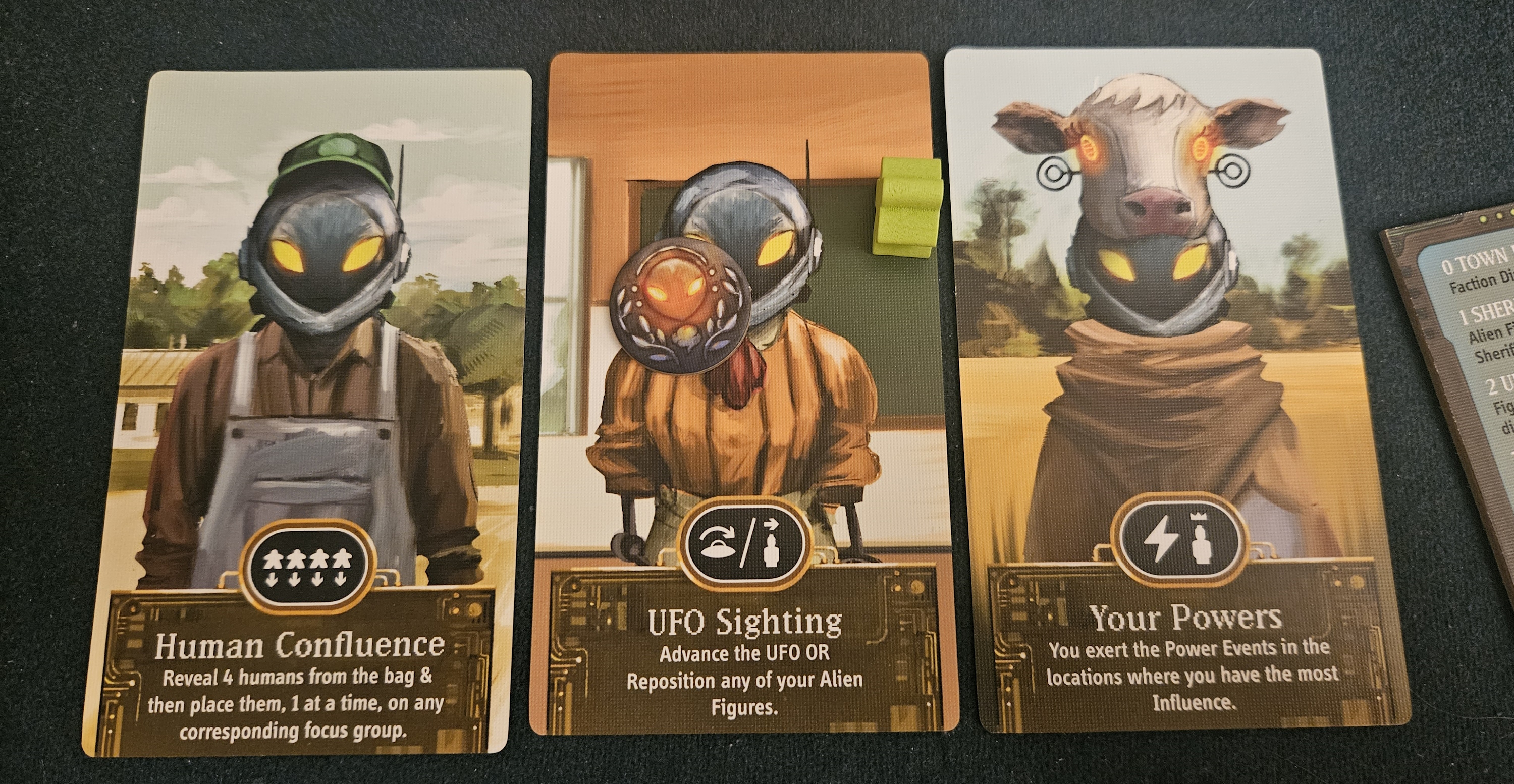
Your personal cards let you take limited actions when necessary.
The second improvement is smarter and subtler, coming down to visual layout. Basically, Silos lets players know where they stand. Municipium concealed the composition of its deck, leaving players alone to assess the odds of any given draw going their way or landing them on their face.
By contrast, Silos lays its calculus bare for everyone to see — and, more importantly, count. There are only twelve cards in the deck. Once played, cards are discarded into dedicated slots along the board, with each side corresponding to a particular type. UFO movements discard to one side, area powers go over there, and so forth. Which cards have been played, and, by extension, which remain to appear from the deck, are always visible.
It’s a testament to the function of user interfaces that this is enough to communicate the game’s intentions. Unlike Municipium, where the contrast between careful positioning and random draws struck many as unkempt, here the game’s focus on card-counting and risk assessment is wholly transparent. Many of Knizia’s best regarded titles contain elements of chance, but also offer ways to mitigate or play against their inherent randomness. Silos falls into a similar category. It’s possible to be swept away by an ill-timed card. But when you drew from the deck, you knew you had a one in four chance of upending your plans. So why did you draw? Why didn’t you plan ahead?
Or why didn’t you utilize one of your personal cards? I mentioned them before, but it bears repeating that these are essential means for sidestepping the randomness completely. The only problem is that they’re so damnably limited. Okay, they have one more problem: in a game about developing your sea-legs, their certainty is a siren’s call. More than once I’ve spent one prematurely, dispensing with a resource to ensure a perfect UFO movement when the deck might have produced what I needed anyway.
Then again, that’s the final achievement of Silos, one that fans of Knizia’s work will recognize. The Good Doctor may be a master of math and probability, but his best games never slouch when it comes to human psychology. Silos, like the best of them, understands that we are our own worst enemy. The cards may be drawn at random, but their effects are player-driven. You prep the suburbs for body snatching. You trigger the abilities. You determine where the humies congregate. And, in the end, you fail to account for the one draw that will hand the game to your worst rival.

We’re just regular everyday normal guys.
There are other little details, of course. Silos includes a few expansions and optional modules. For what it’s worth, I haven’t found them to be essential. Like Ra or Babylonia or any of Knizia’s other classics, Silos knows what it’s doing and executes its plan perfectly. What a difference is made by a splash of color, an improved user interface, and a few cowboy hats. Bring on the abductions.
Tomorrow, we’ll continue the saga with Ego.
Silos, along with Ego and Orbit, is on Kickstarter right now.
(If what I’m doing at Space-Biff! is valuable to you in some way, please consider dropping by my Patreon campaign or Ko-fi.)
A prototype copy was provided.
Posted on October 15, 2024, in Board Game and tagged Bitewing Games, Board Games, Reiner Knizia, Silos. Bookmark the permalink. 14 Comments.

 SPACE-BIFF!
Bitewing Games is quickly becoming my favorite publisher. Fantastic review – you put me on Babylonia which has shockingly become my favorite Knizia game, so your Knizia game analysis is always appreciated!
It’s interesting that the current discourse (at least on Reddit) is that the art is “bad” in these games because… what? It’s bright and colorful? Maybe it’s the case that something that looks busy in a photo looks much better in person. I find it very refreshing.
This sounds fantastic and a pretty easy recommendation. However, you’ve got me hooked with your comment about “two thirds” being excellent. Based on the comments on BGG it seems like EGO is Bitewing’s favorite game they’ve ever developed with Knizia, so I’d be shocked if that’s the dud in the collection.
I guess we’ll find out soon enough – but just going by the pull-quotes on the page there’s way less unqualified praise for ORBIT, which seems like the lightest game of the bunch.
Unrelated comment… any chance you’ll be able to snag Knizia for one of your podcast interviews?! The most legendary gaming auteur being interviewed by the Roger Ebert of board gaming – it’s gotta happen eventually, right?!
Haha, that would be a lot of fun. Maybe I’ll ask Nick if Reiner would be game.
You’ve already sussed out the secret! It’s true, I dig Ego quite a bit but don’t feel much kinship to Orbit. More details to come over the next two days!
Ego is such an odd-looking game, that I’m glad it’s part of the excellent two-thirds. Excited for both of the upcoming reviews!
Nice review as usual! Bitewing keeps delivering.
Will the upcoming Ra Expansion be the opportunity for the long awaited Ra review?! Sure hope to see it
Oh wow, yeah, I’ve had Ra on my to-review pile for so long. I really should just get around to it.
Stoked for this release. Also stoked to see that my instinct (2/3 of the games looks GREAT) matches your experience. I’ll wait to consider pledging after reading all 3 reviews.
Good plan! I intend to publish them all within the next two days, and indeed the next one is already ready to go, so there shouldn’t be much of a wait.
Cowvity inspection
Very good.
I know better than to read your reviews if I want to save money. How difficult do you think the teach is?
Not especially difficult. But I love teaching games, so maybe I’m not the best person to ask!
Pingback: Intergalactic Knizia, Verse Three: Orbit | SPACE-BIFF!