Runewars Mega, Year 6: The Gathering Storm
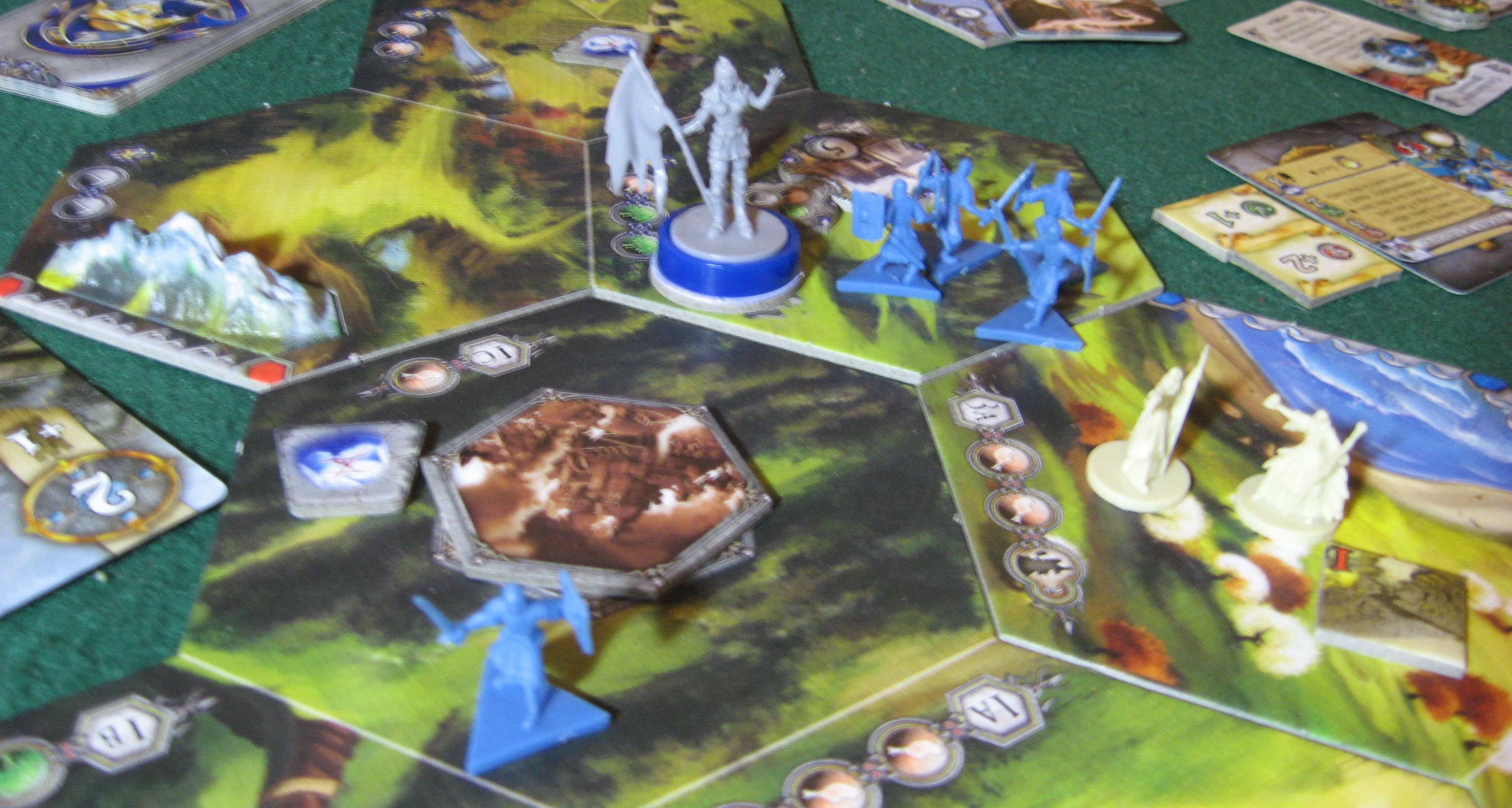
Five years of war have left the nations of Terrinoth exhausted.
There are no invigorating wars, and the War for the Dragon Throne was no different. As it entered its sixth year and third act, the nations of Terrinoth were exhausted. Two of the Seven Cities had been thrown down, and two of the four nations were all but beaten. But even though the Latari public was declaring their mission accomplished, and though the Daqan Lords were on the cusp of surrender, the war’s resolution was yet a long ways off.

The remaining Uthuk escape the mobilized Latari.
This is the year that all historians of the War dread to tell. There comes a point in any match when two equal combatants, no matter how well-trained, will grow so fatigued that they will collapse into each other. Once-elegant combat becomes a test of wills as they spasm and wrestle on the ground, both too tired to continue, but both too stubborn to yield. Such was the sixth year: the energy of nations was not yet spent, but everyone believed it to be. This is why the sixth year is the most difficult to talk about, for very little happened, and what little did occur was desperate and brutish.
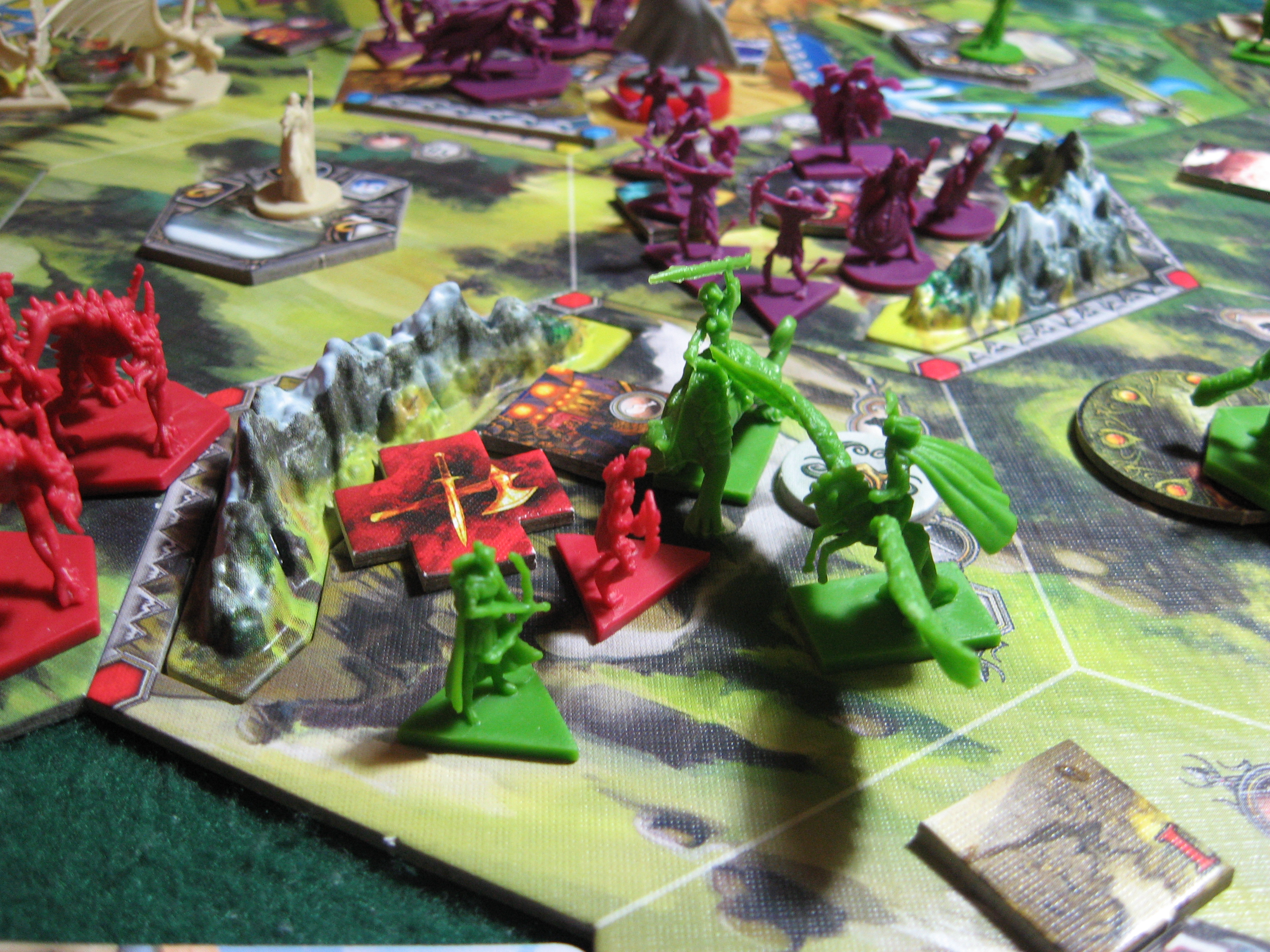
The Latari descend on the last remaining Uthuk in the west.
Perhaps the most exhausted nation was the Uthuk Y’llan, who had abandoned their dreams of making Terrinoth run red with sacrifice. The old chieftain had been lost along with the capital, and his sub-chieftains quickly united with more pressing ambitions—primarily to escape the slow but methodical march of the elves. The Uthuk were a people of three natures: the demonic, the nomadic, and the poetic—the last of which few knew about because the Uthuk were terrified of revealing the softer side of their hearts. As spring broke, they embraced the way of the nomad. They picked up their tents, packed their baggage carts, and vacated the western lands that had once been the base of their infamous red corridor.
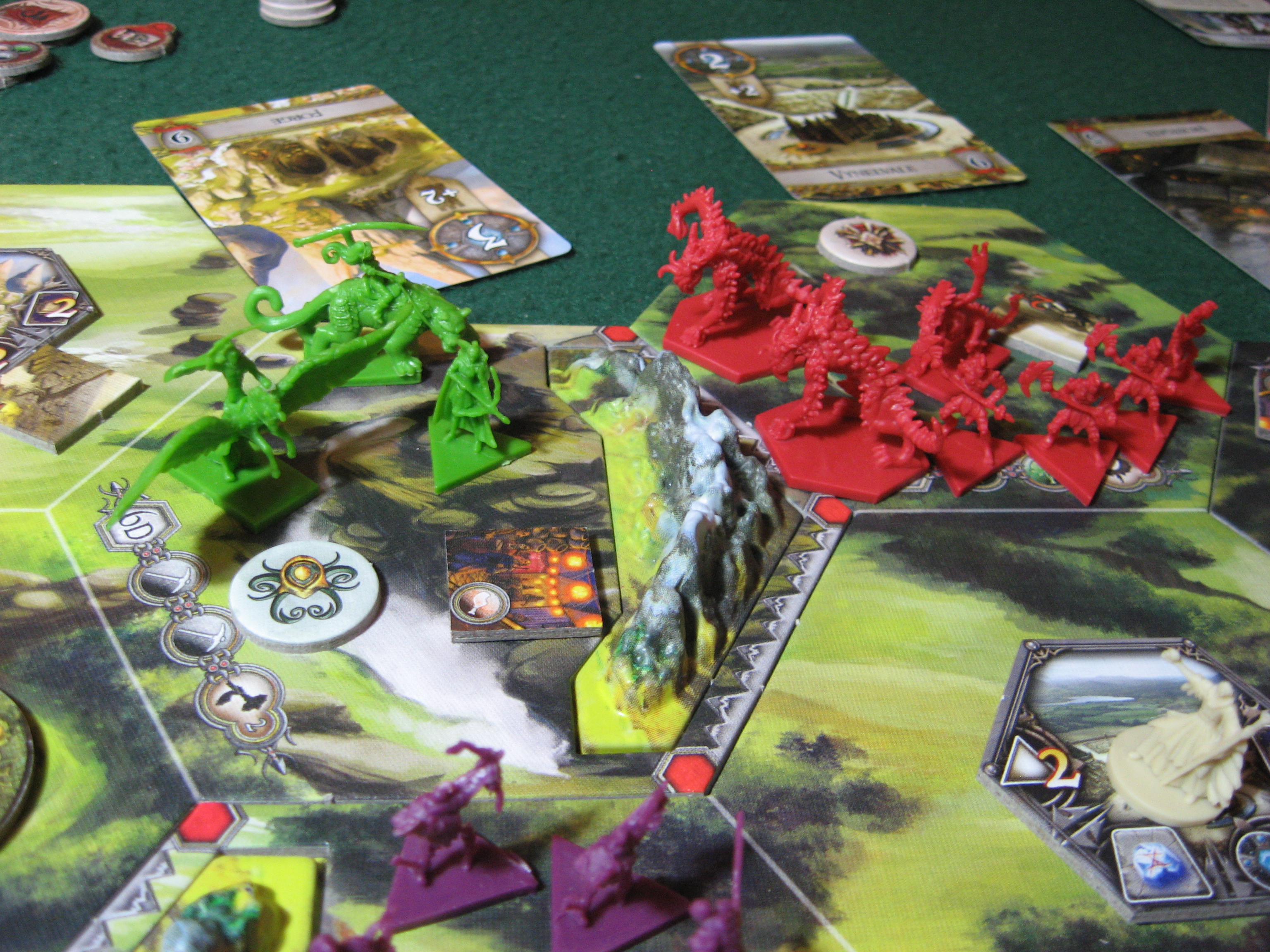
The Uthuk survive, safe on the other side of a mountain range and no longer in occupation of Vynelvale.
After escaping through a secret mountain pass and eliminating their new land’s natives, the Uthuk also withdrew from the city of Vynelvale, knowing that it could not be held in the face of Old Man Waiqar’s black approach. To ensure that Waiqar did not attack them immediately, they left behind many of the sorcerers who had joined them to study at the Lost City. These sorcerers were naturally upset at this perceived betrayal. Stranded in Vynelvale, they prepared to die and be raised into Waiqar’s service.
Andira Runehand misinterpreted the Uthuk movements for invasion. They may as well have been, given the numbers of barbarians that had suddenly appeared from the mountains. Although Andira’s decision has been debated by many, it is my opinion that she did the right thing by withdrawing from the western Daqan stronghold, ceding it to the Uthuk. Her forces maintained a line at destroyed Frostgate, and she was able to turn her attention to the far east. There she began to subjugate a few territories that had thus far avoided the war. The resources that the Daqan farmed and mined and chopped proved a helpful boon to the drained Daqan Lords.
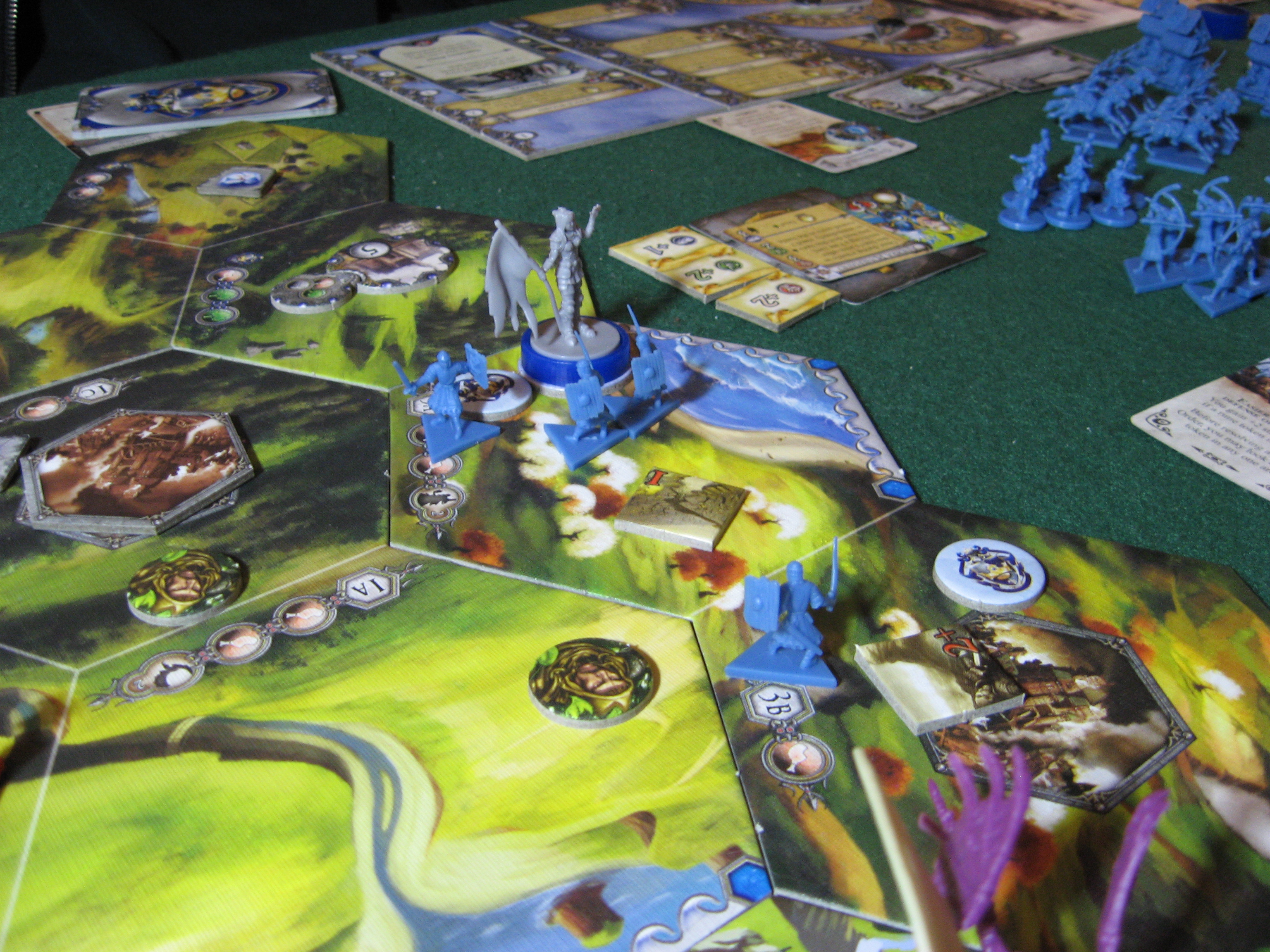
Andira Runehand opts to not fight the Uthuk migrants, instead conquering the eastern portion of Terrinoth.
Though desperate, the Daqan Lords had one significant benefit: they had managed to gain the support of their people. When their military departed a region, local peasants and militias cropped up to rule in their name, still providing resources and overseeing local affairs. This allowed the Daqan to use their precious few bands of footmen and knights to continue the campaign in the east rather than guarding what they had already taken.
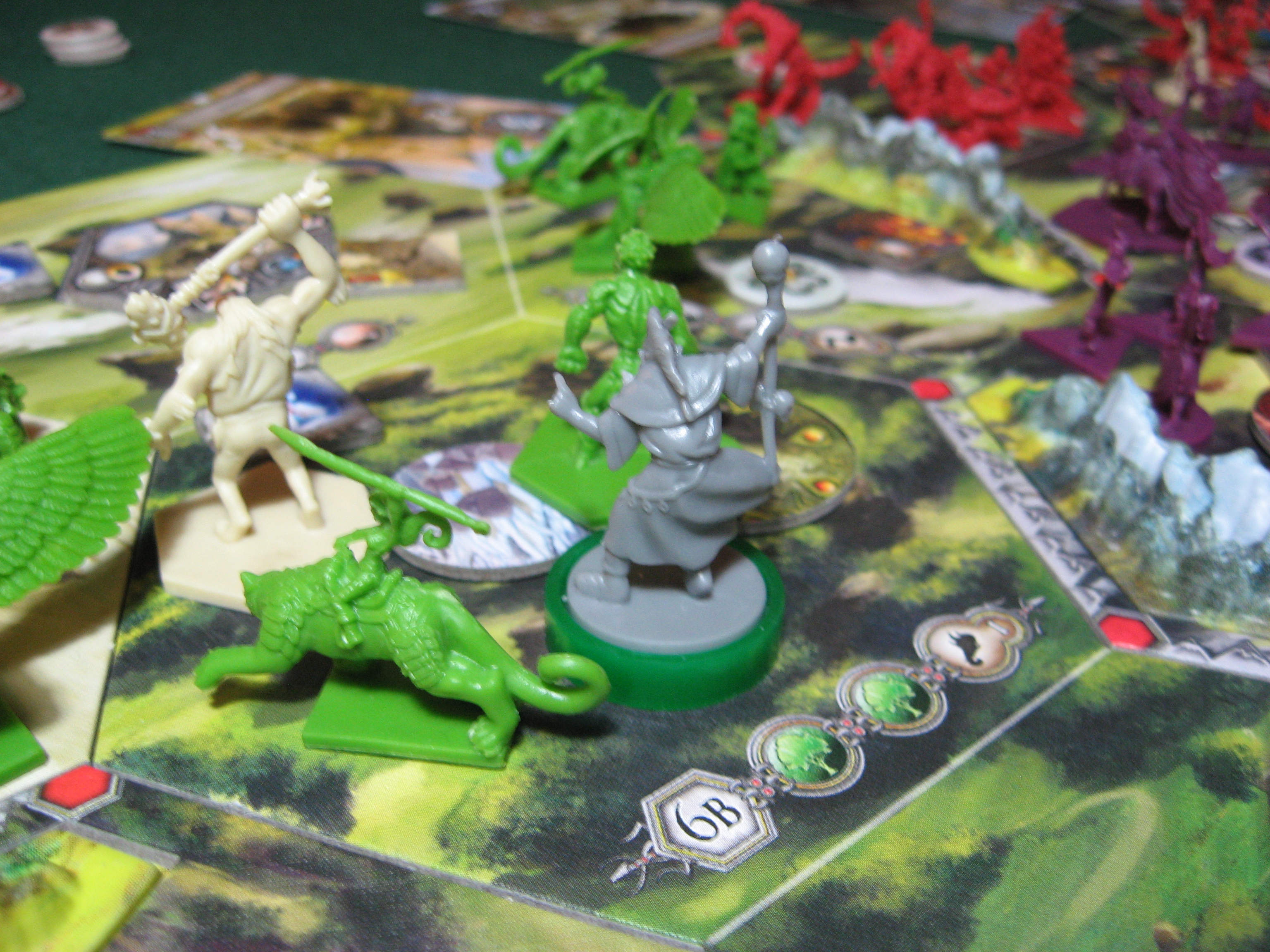
Spiritspeaker Mok hunts trolls with the Latari while Vyrah the Falconer (not pictured) does nothing.
While Andira was working to rally more resources and troops, the Latari were trying to seize what remained of Uthuk lands in the west. Although the baked lands were all but emptied, there was still a large amount of territory to cover. Forge and its dragon rune were taken immediately and without a fight, though the Latari failed to find the hidden location of the Uthuk’s native rune.
While these minor strategic adjustments were taking place, the Latari public back in the Aymhelin Forest was beginning to argue that their work was done. They reasoned that they had defied the prophecies of hags by ridding Terrinoth of the Uthuk pestilence, and that the Daqan should be able to handle the rest. They raised such a commotion such mandatory disarmament began, leaving the elven commanders with decreased options.
Vyrah the Falconer argued that this course was premature. He would have preferred to be out adventuring—that was left to Spiritspeaker Mok, who heroically cleared out a rampaging troll in the Starfall Forest—but he was still healing from the wound he had suffered earlier. So he spent the year at court, arguing that the Latari would be fools to disarm with Old Man Waiqar in possession of the Dragon Throne and who knows how many dragon runes.

Grey Ker excavates The Island and finds a dragon rune.
Dragon runes were the primary topic on Waiqar’s mind as well, and thankfully he was nowhere near as close to having the requisite eight as Vyrah insisted to the Latari court. In fact, as the year began he only had three. Waiqar, a fan of setting goals, decided to double that amount by the year’s end. He would meet his goal by two-thirds.
First, Grey Ker was relieved to discover that the blind seer’s prophecy was not a ruse. The Island turned out to house a lost rune. It proved magically bound and unable to be moved, but seemed secure enough under the protection of dragons.
And second, Waiqar decided to conquer Vynelvale. At first he prepared for the invasion by persuading even more dragons to join his cause, but the Uthuk withdrawal from the city made an easier prospect of the task.
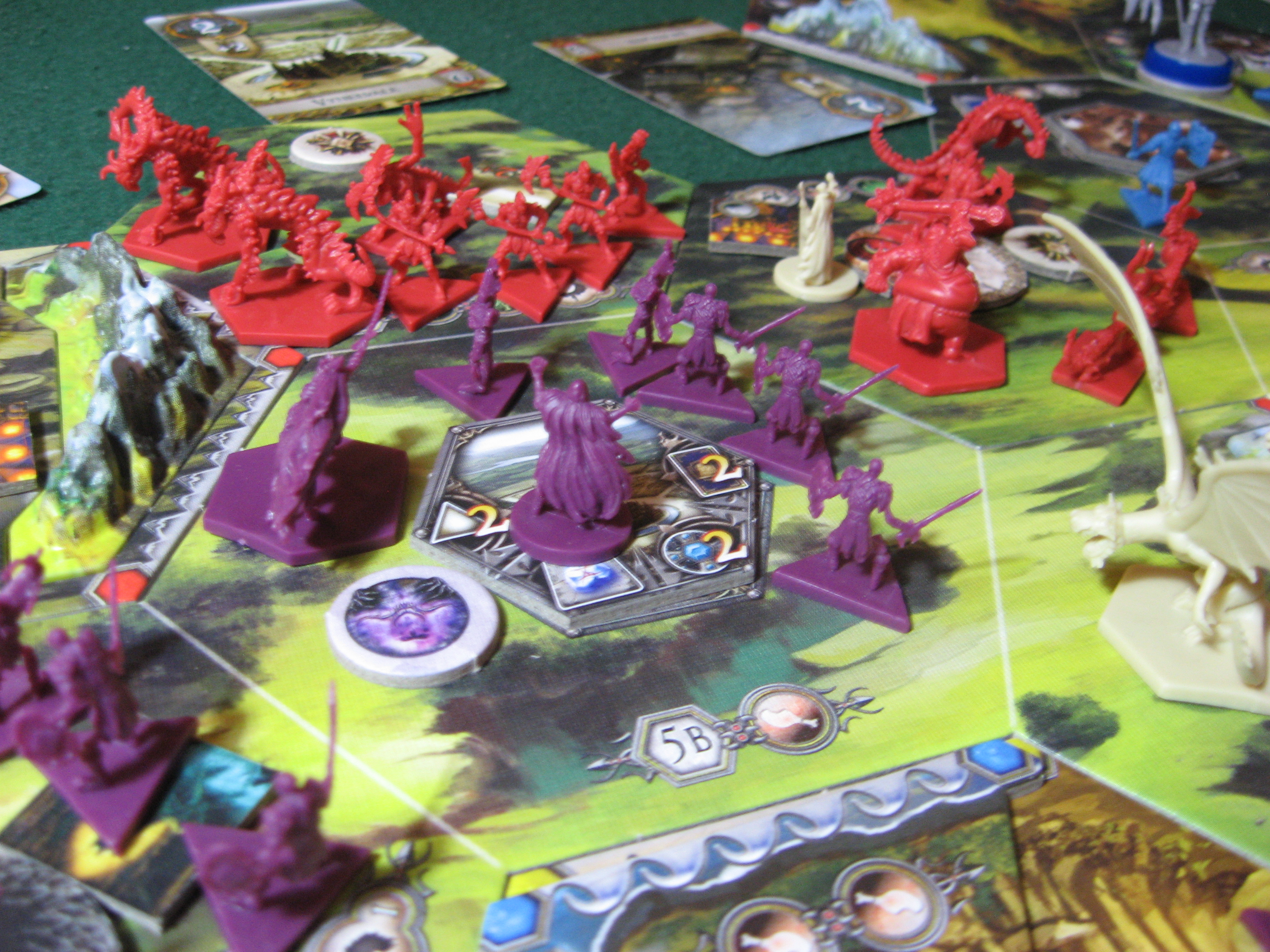
Vynelvale welcomes their third owner.
The sorcerers that had once served the Uthuk chieftain were soon transformed into lowly undead swordsmen. Waiqar cackled over this irony.
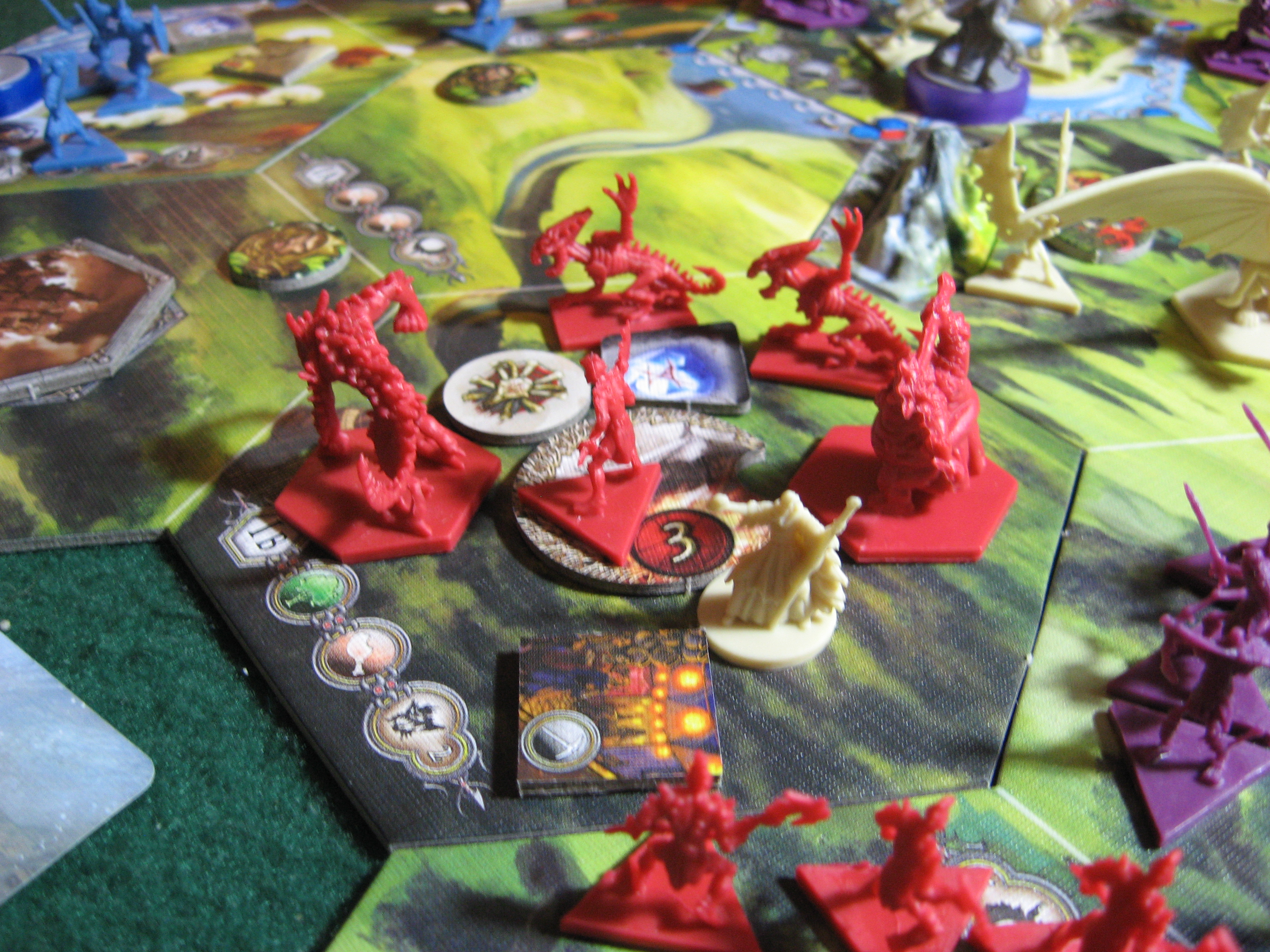
The Uthuk smuggle their native dragon rune out of the baked lands.
As the year neared its end, the Uthuk nation was in a much stronger position, having drawn more of its scattered sons and daughters to the former Daqan stronghold. They even had the manpower to begin construction on a second fortification nearby.
That autumn, the Latari received a missive from the newly-formed Uthuk chieftain council, and its contents made even elven cheeks blush. A band of berserkers had removed the much searched-for dragon rune from the baked lands and secreted it to their new lands, right under the nose of the Latari military. Regardless, there was nothing for the Latari to do but pretend that they had never received the message at all. The Uthuk were all too happy to send another.
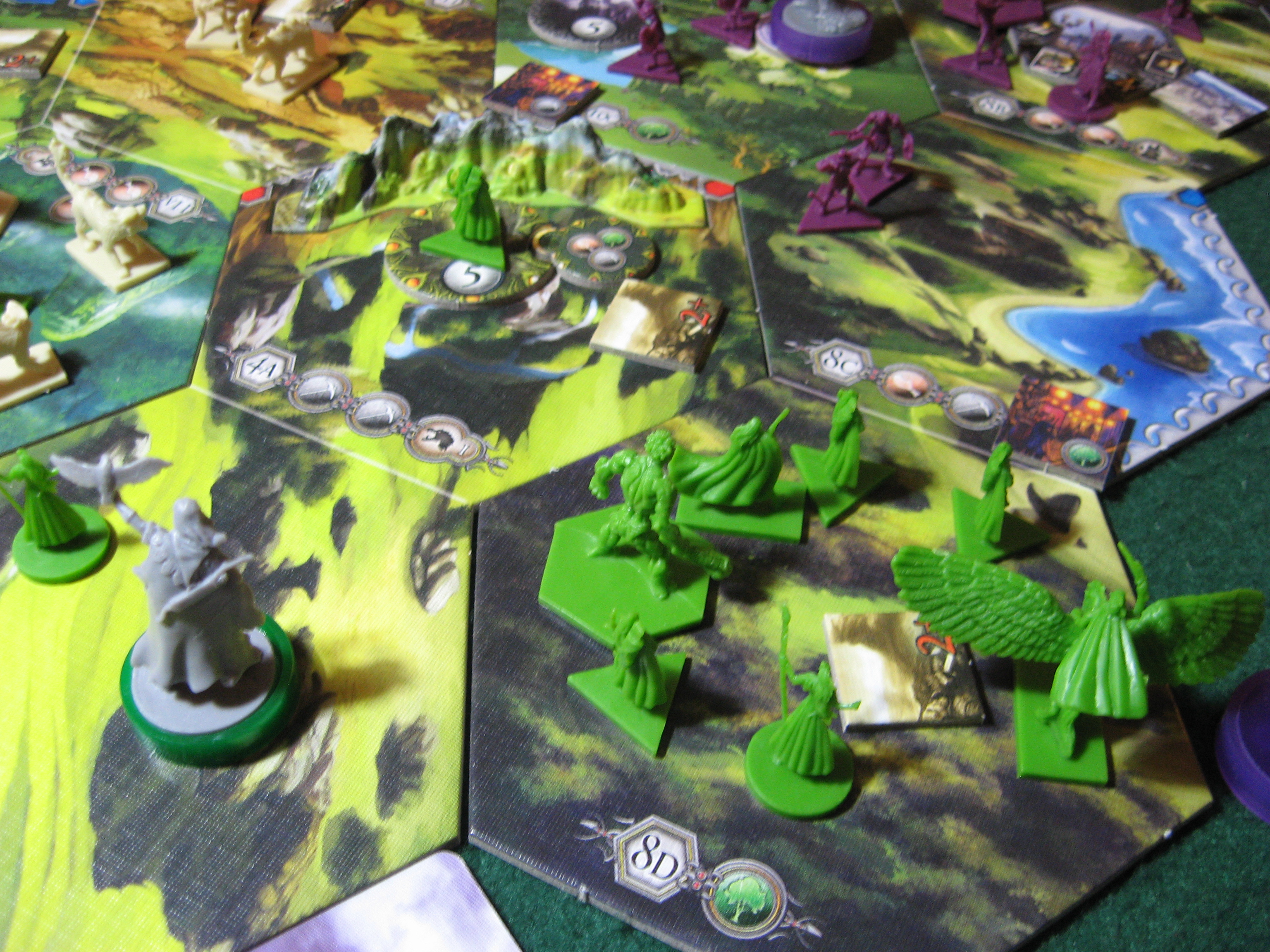
In the south, Vyrah builds the Latari army. Nearby, Mad Carthos oversees Waiqar's troops.
After a sluggish year, Vyrah the Falconer was ready to secure Latari dominance once and for all. They already controlled nearly half of Terrinoth, and the only force approaching their power was Waiqar. In the south, he began to prepare the Latari armies for a conflict that would make the war with the Uthuk barbarians seem like a minor skirmish. All the while, he was aware that Mad Carthos was making similar preparations.
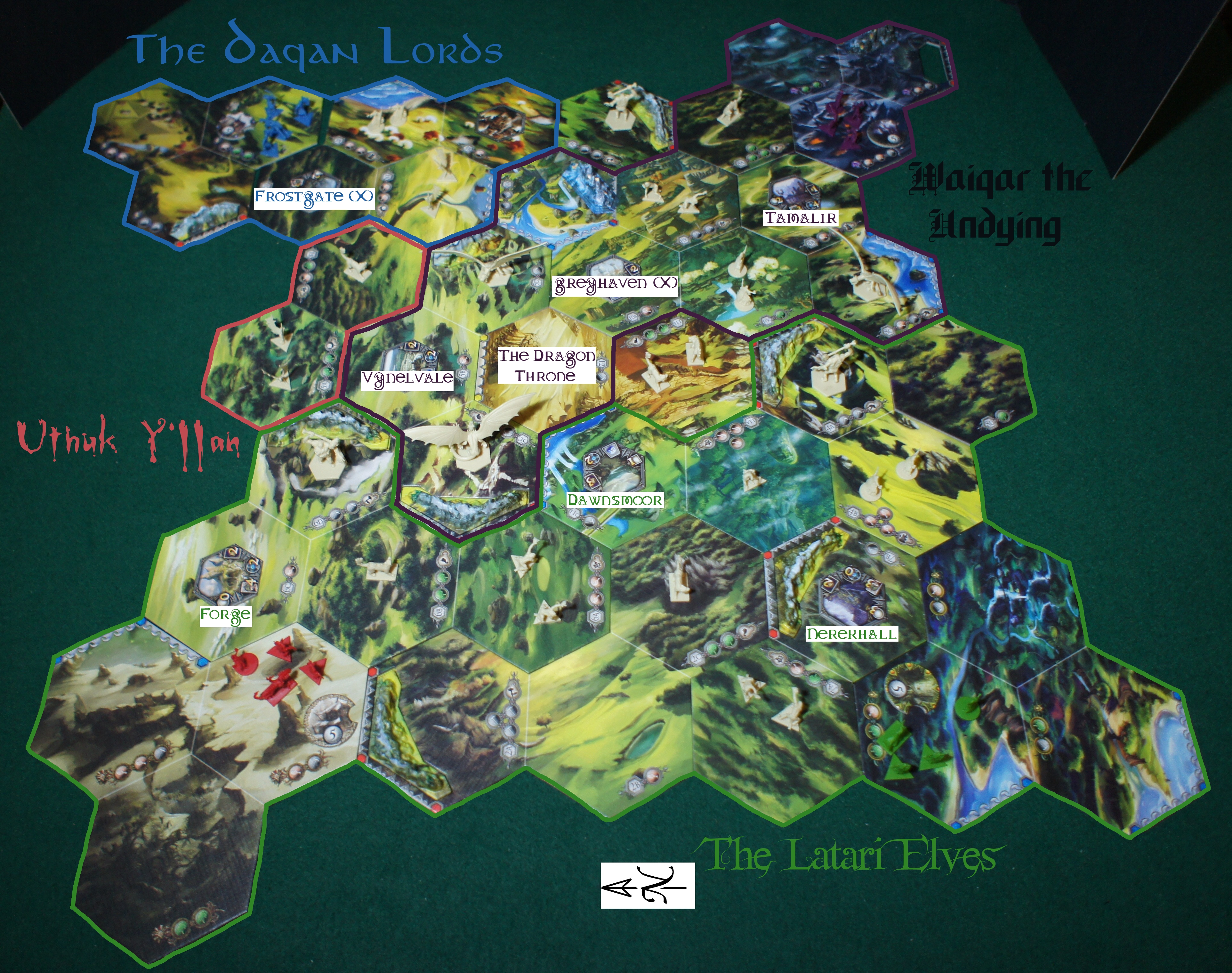
A map showing the political boundaries at the end of the Sixth Year, but nothing else (the final shot of year 6 was blurry and washed-out, for some sad reason).
The sixth year was the least eventful of the entire war, a period between storms. As it ended, each of the four nations found themselves reinvigorated. The Daqan Lords had gained much-needed territory and armies, the Uthuk had survived massive elven aggression, Waiqar was having the time of his life, and the Latari were concluding their internal discussions on the merits of ironwood arrows. All the hags and blind men and hedge-prophets were agreed: the omens for the coming year spoke of bloody war.
Posted on March 8, 2012, in Board Game, Game Diary and tagged Board Games, Corey Konieczka, Fantasy Flight Games, Runewars. Bookmark the permalink. 2 Comments.

 SPACE-BIFF!
Pingback: Runewars Mega, Year 5: Scattering the Horde « SPACE-BIFF!
Pingback: Runewars Mega: The Index « SPACE-BIFF!