Blog Archives
You Merely Adopted the Mist

Remember when Mistborn: House War made the uncomfortable decision to cast its players as the eugenicist oppressors of Brandon Sanderson’s much-loved fantasy series?
Oh, you don’t. Well, I do, and that’s the first thing John D. Clair’s Mistborn: The Deckbuilding Game has going for it. This time around, you’re an actual mistborn, a metal-guzzling, glass-dagger-stabbing, high-flying superhero in a goofy tassled cape. That’s all good stuff, but the real draw is the way Clair turns the deck-building formula on its head and even remediates one of its long-standing deficiencies, once again proving himself one of the hobby’s most overlooked innovators.
I Need an Adult
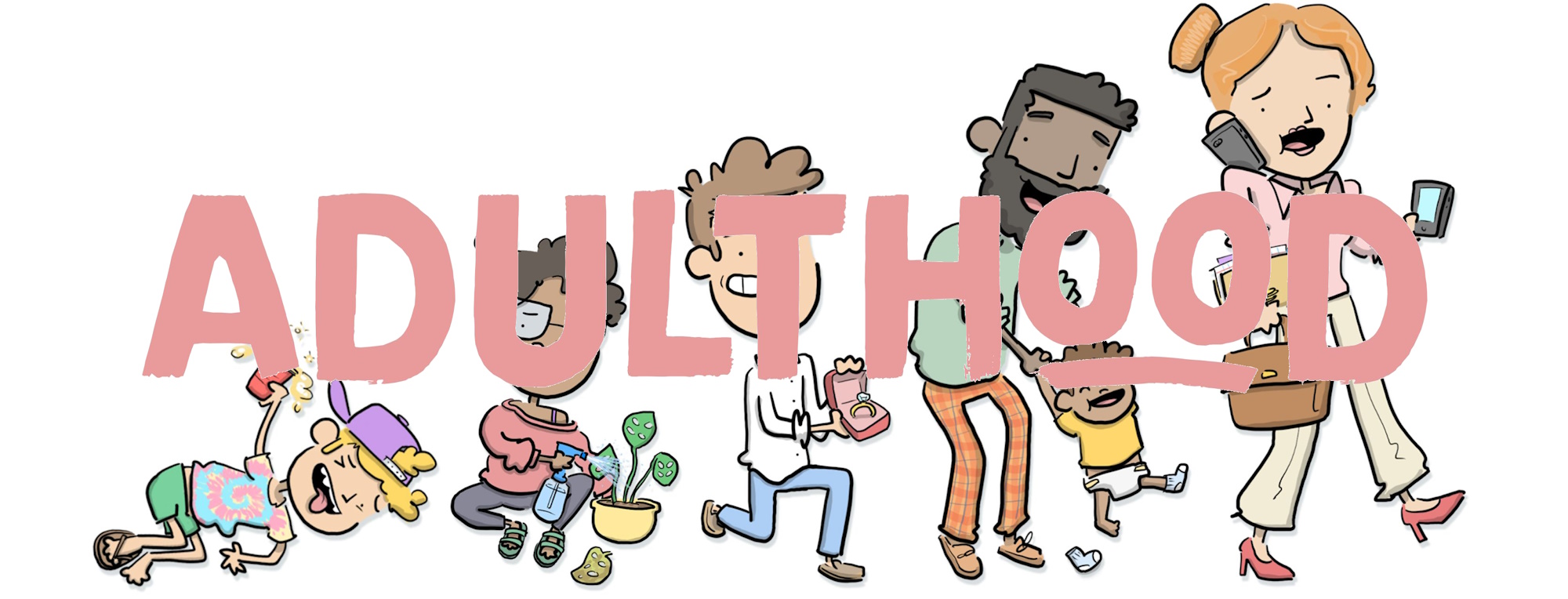
The first time I played The Game of Life — yes, the one from the 1960s with the spinner that went up to ten and the gender-coded pegs in the cars — I loved it. No kidding. I was pretty young, maybe twenty-six or twenty-seven (okay, I was twelve), and it was one of the first non-abstract board games I’d ever tried. I immediately asked for a copy for my thirteenth birthday.
And then I played it again. To this day, I’ve played The Game of Life exactly twice. To use a word I normally don’t like very much, that second play was just so boring. The spinner had lost its novelty, my little car beep-beeped through the exact same story beats, and one player sped to the end and had to sit around for half an hour while everybody else caught up.
Johnny O’Neal’s Adulthood reminds me a bit of The Game of Life. Don’t get me wrong, it’s the better game of the two by at least a dozen country miles. There’s no spinner, but what the game loses in toy factor it makes up for in almost every other regard. Still, though, playing Adulthood raises some of the same thoughts dredged out of twelve-year-old Dan. Namely: Is this really what adulthood is like?
No Franks!

I can’t tell whether Empire’s End, the latest game by John Clair, is trying to invoke the end of the Roman Empire, the Bronze Age Collapse, or a theoretical crumbling of the fleet from Space Base. Given the skinny cards, perhaps it’s the latter. I wouldn’t be surprised to discover that this game’s genesis arose from the former.
Which isn’t to say they’re especially alike. Space Base was an engine-builder with dice. Empire’s End is an engine-builder that occasionally explodes in your face due to No Thanks!-style auctions.
Pretty Chancy

Very few notions have done as much harm to our hobby as the chestnut that “Luck is Bad.” No, silly. Luck is good. Luck is great and generous. Also benevolent, if you accept it into your heart.
Sorry. I got carried away there.
But as I was saying, luck is awesome. It’s just also very hard to do right. Anybody can invent a luck-based dice game. How about this: first one to roll a 4 wins. There. That’s a dice game. An awful one, but a dice game with lots of luck nonetheless.
Unearth has attracted some (very) minor controversy. As far as I can tell, the problem is that it’s a dice game that happens to look good, thus stymieing those who like their games pretty but haven’t yet braced for the possibility of failing thanks to the clatter of the dice. So let’s talk about that.

 SPACE-BIFF!