Blog Archives
All Gold Country

Another day, another cube-rails-adjacent title — although Gold Country, being designed by Reiner Knizia, is decidedly crisper and more rules-light than yesterday’s Stellar Ventures. This one is based on Spectaculum, a game about traveling circuses. I’ve never played Spectaculum, so I can’t comment on how the game may or may not have changed; but in this format, Gold Country offers a slick presentation and some crystal-clear speculation. It’s far from my favorite Knizia, but it’s such a buttery smooth experience that it’s hard to imagine turning a session down.
Real Moytura, Guys
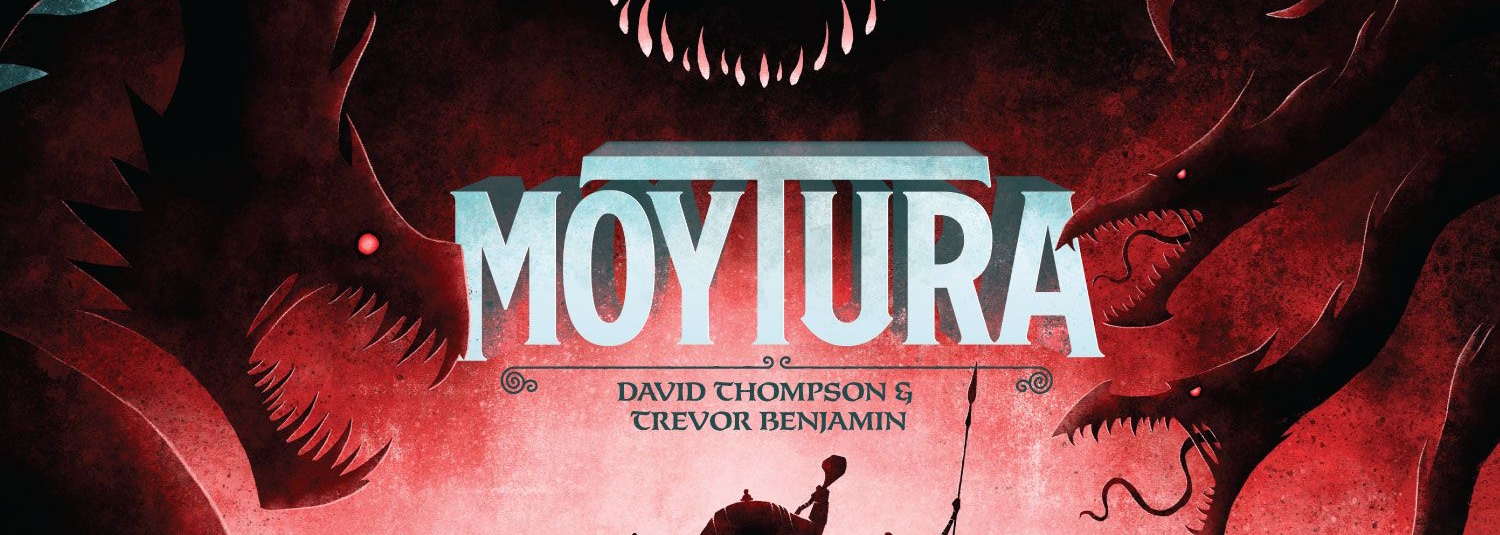
I’ll confess it was a little surprising to unfurl Moytura’s board and see such a literal depiction of Ireland. After the suffocating hoplite melee of Iliad, the checkerboard Mount Olympus of Ichor, and the abstract leylines of Azure, here the membrane between the real and the mythological seems especially thin. Designed by one of the busiest partnerships in the industry, David Thompson and Trevor Benjamin, and fiercely illustrated by A. Giroux and Harry Conway, Moytura loosely retells the Maighe Tuireadh’s ancient clash between men and monsters to decide the fate of pre-Christian Ireland. As an installment in this particular series, it’s something of an odd duck. I’d even go as far as to play loose with some definitions and label it a light wargame.
A light wargame with heaps of monsters, that is. Right from the get-go, Moytura portrays its conflict as a desperate struggle for survival. And let me tell you, the main attraction is all those baddies.
I’m Not Azure About This One

Hot on the heels of Reiner Knizia’s Iliad and Ichor, Bitewing is crowdfunding another pair of titles for their Mythos Collection. As seems to be the pattern with these things, one of them stands head and shoulders above the other — although whether that’s the things’ fault or because we’re doomed to hold everything in comparison to every other thing is harder to tell.
Azure is the one I’m shakier on. Designed by Trevor Benjamin and Brett J. Gilbert, this is an abstract game about controlling four intersecting leylines and the auspicious beasts who inhabit them.
Tick Tick Toe

If there’s anything that tickles the pleasure center of my brain, it’s seeing a designer put their own spin on a classic. Even better when that classic is soggier than bread that’s been tossed into a duck pond. Robert Hovakimyan isn’t the first person to tackle Tic Tac Toe this year. But compared to Brett J. Gilbert and Trevor Benjamin’s Tic Tac Trek, Bombastic is the straighter adaptation, right down to the nine-square grid and make-three gameplay. The big distinction is that everything has already been played to the board. Face-down.
Oh. And there’s a bomb.
She’s a Grisly Monster, I Assure You

You know the story. Buncha monsters storm Mount Olympus. The pantheon is in a scramble. Who’s this coming to save the day — Hercules? More like Hunk-ules.
Reiner Knizia’s Ichor isn’t Disney’s Hercules, and thank the gods for that, although Tyler Miles Lockett’s illustrations do somewhat resemble the Gerald Scarfe amphorae look of the animated feature. When I previewed the thing a year back, I liked it somewhat less than its sibling title Iliad. Now that they’re both finished and on my table, though, I’ve been giving Ichor a second look. And while it’s still the zanier and less measured of the pair, there’s so much to appreciate about Knizia’s portrayal of this divine brawl that I can’t help but be charmed.
Let Me Not Then Die Ingloriously

You know that moment in every ancient battle scene, whether in film or video games, where the lines have collapsed and now the burly infantry boys are fighting one on one, everybody mixed together and slashing wildly? Bonus points when two rival heroes spot each other in the fray and start murdering their way toward one another, hellbent on a personal duel where nobody will happen to spear them through the backside.
Sorry to disappoint, but those scenes are pure invention. There simply weren’t enough suicidal soldiers in the ancient world for such an engagement. Still, it looks hella cool, and it’s significantly easier to stage than an actual line of infantry trying to scare their opposite number into freaking out and running away.
One of my favorite things about Reiner Knizia’s Iliad, which I previewed last year, is the way it evokes those haphazard murder-thons, Greek boys in blue and red squaring off in a checkers-grid melee. Sure, the game is smart and all that, providing a thinky two-player match of wits that emphasizes clever investments over brute strength. But I’m really here for the chaos.
Gingham Takes a Roadside Picnic
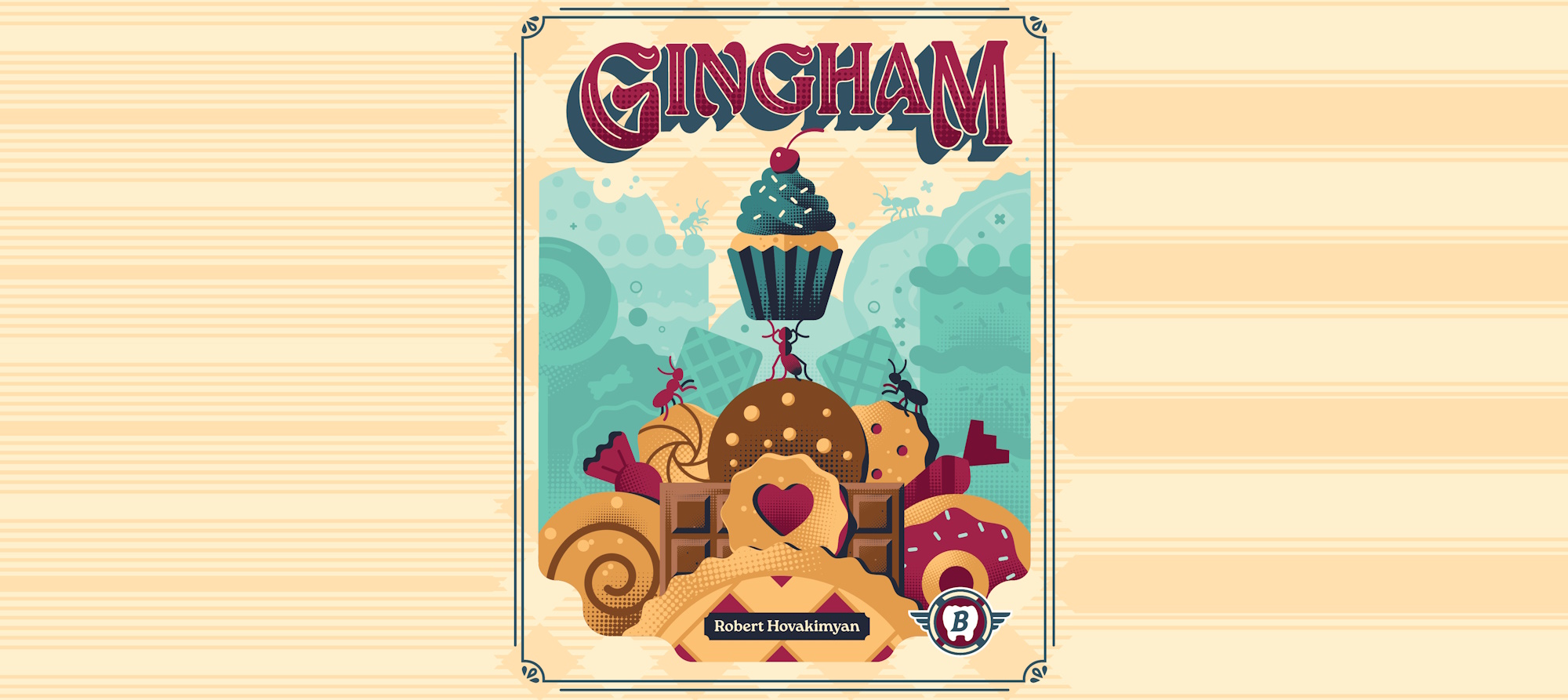
Yesterday I previewed Gazebo, a forthcoming remake of Reiner Knizia’s Qin. In the usual Bitewing tradition, Gazebo has been partnered with another game, one it broadly shares a setting and aesthetic with. That game is Gingham. Created by Robert Hovakimyan, whose titles Bebop and Shuffle and Swing I covered around this time last year, Gingham also takes us to the park. In a few ways, though, it’s less of a spiritual partner to Gazebo than its spiritual opposite.
Gazebo Takes It on the Qin

Right when I’d sworn off writing about any more Bitewing Knizias, they went and got the rights to Qin.
Long out of print, Qin — pronounced “chin,” for those among us who keep stumbling over that Q — is another Reiner Knizia tile-layer, one that effortlessly showcases the Good Doctor’s ability to generate hard stares over a handful of non-matching colors. Now redubbed Gazebo, the original game was about unifying the warring polities of pre-imperial China. In my mind it’s still about that, because merging garden plots doesn’t quite communicate just how ruthless this thing can be.
Intergalactic Knizia, Verse Three: Orbit
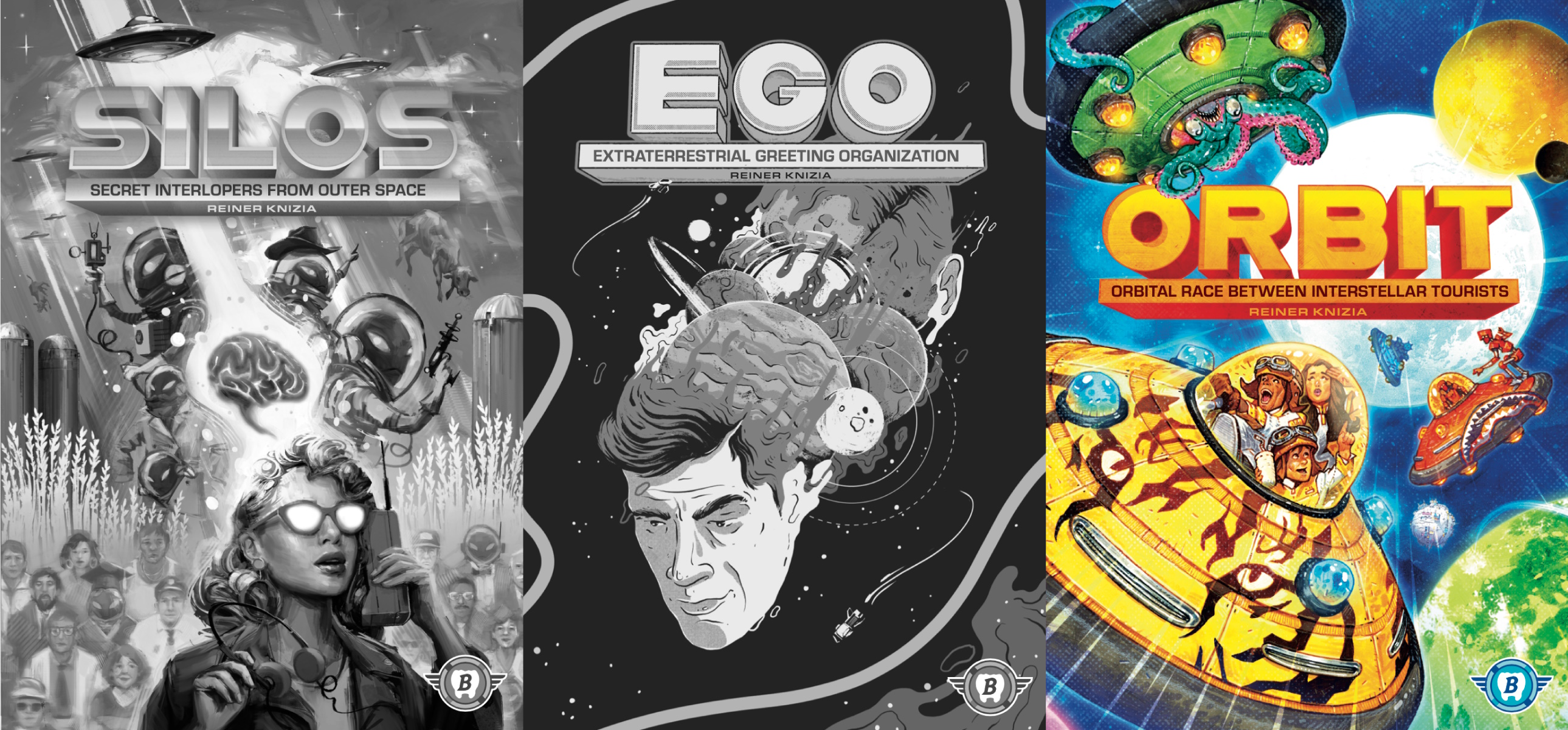
It is the future. The year 2,000. After enduring alien abductions in Silos and a testy diplomatic delegation in Ego, humanity has become just as insipid as ever. That’s the subject of Orbit, the third and final volume in Reiner Knizia’s intergalactic trilogy and the first title of the saga that doesn’t improve on one of the Good Doctor’s older games.
As reluctant as I am to say it, it shows.
Intergalactic Knizia, Verse Two: Ego

As luck would have it, getting abducted by cow-loving aliens isn’t the worst thing to ever happen to humanity. That’s right, Reiner Knizia’s Silos provides an unexpectedly happy ending. No longer prod-fodder for extraterrestrials, we now stand on the cusp of entering the intergalactic community.
Ego is the second volume in Reiner Knizia’s intergalactic trilogy. With a single vessel prepped for interstellar voyage, diplomats from every nation are ready to explore the farthest reaches of deep space. Their five-year mission: to make friends with strange new peoples; to swap technology to our mutual benefit; to hopefully not embarrass our species too badly. Don’t count on that last one.

 SPACE-BIFF!