D’ough
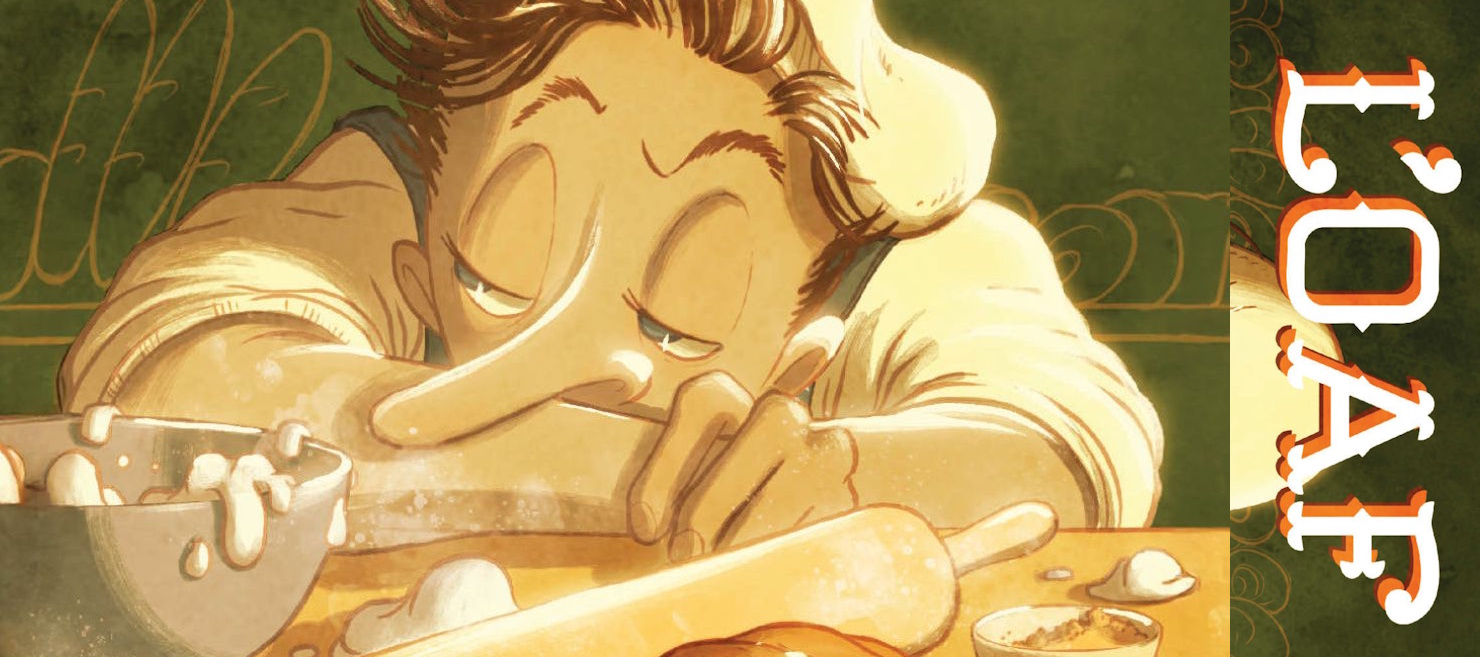
L’oaf is that rarest of gifts: a board game that makes me laugh, and not because it includes any actual jokes. Designed by Bart de Jong, it opens with perhaps the most relatable conceit ever put to cardboard, a dead-end job players are working in order to make ends meet, but one they’re not overly interested in completing beyond the bare minimum. Not quite by accident, it’s about many things — the false enthusiasm of managers, the vast gulf between owners and employees, the oppression of tedium. As if by magic, none of those headier topics break the spell.
Pretty much everything.
In the case of L’oaf, this particular dead-end job is a bakery. Tasked with baking a neighborhood’s daily bread, every round begins with an order. Four loaves per player. Six loaves per player. Eight loaves?! What is this? Are we getting paid any extra for baking twice as many loaves as two days ago? No? Then where is the incentive to knead all this dough? I’m about two loaves away from developing a repetitive strain injury!
The incentive, of course, is the damoclean threat of losing one’s income. If you’re American, add your health insurance to the noxious batter. Either way, it’s all stick, no carrot.
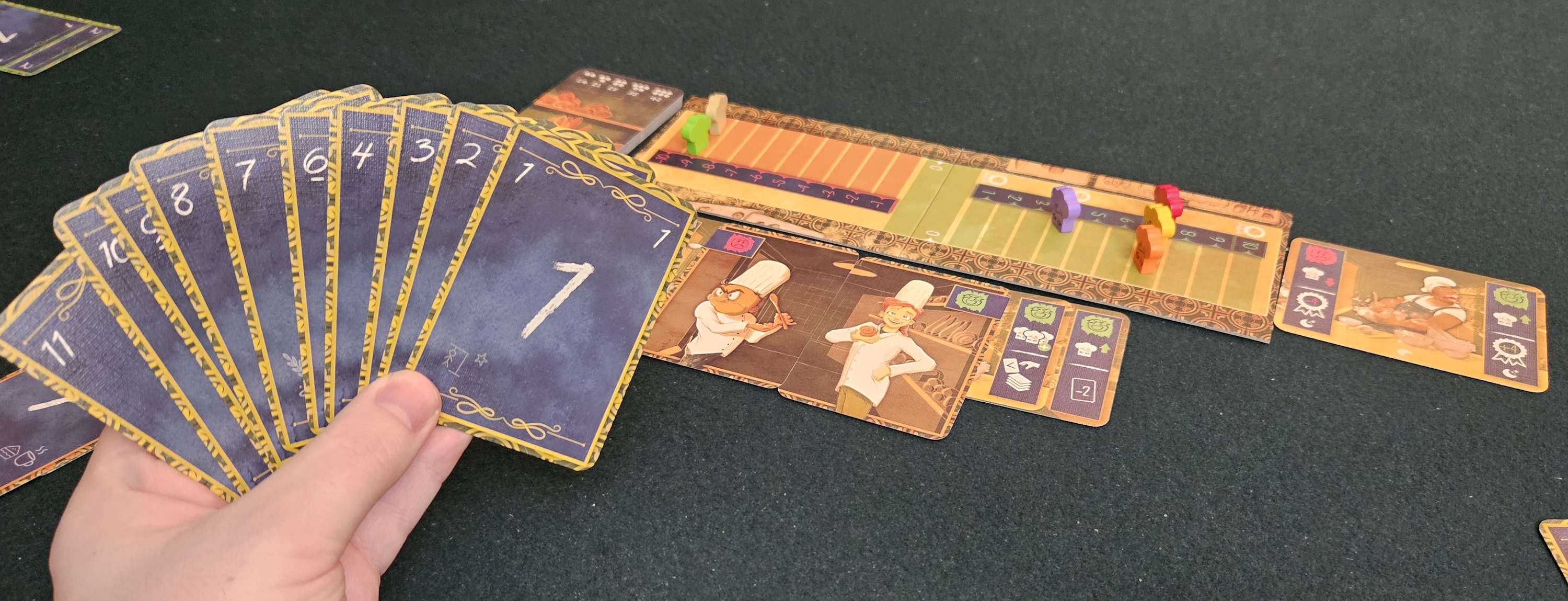
To wit, every round becomes a fraught proposition. You need to bake those loaves. But you also don’t want to put in too much effort to a job that doesn’t award any commensurate value. Everybody at the table holds an identical deck of numbered cards, ranging from zero to eleven, from which they deploy a single digit. This is how much effort they’re putting in for the day. Those cards are flipped and tallied.
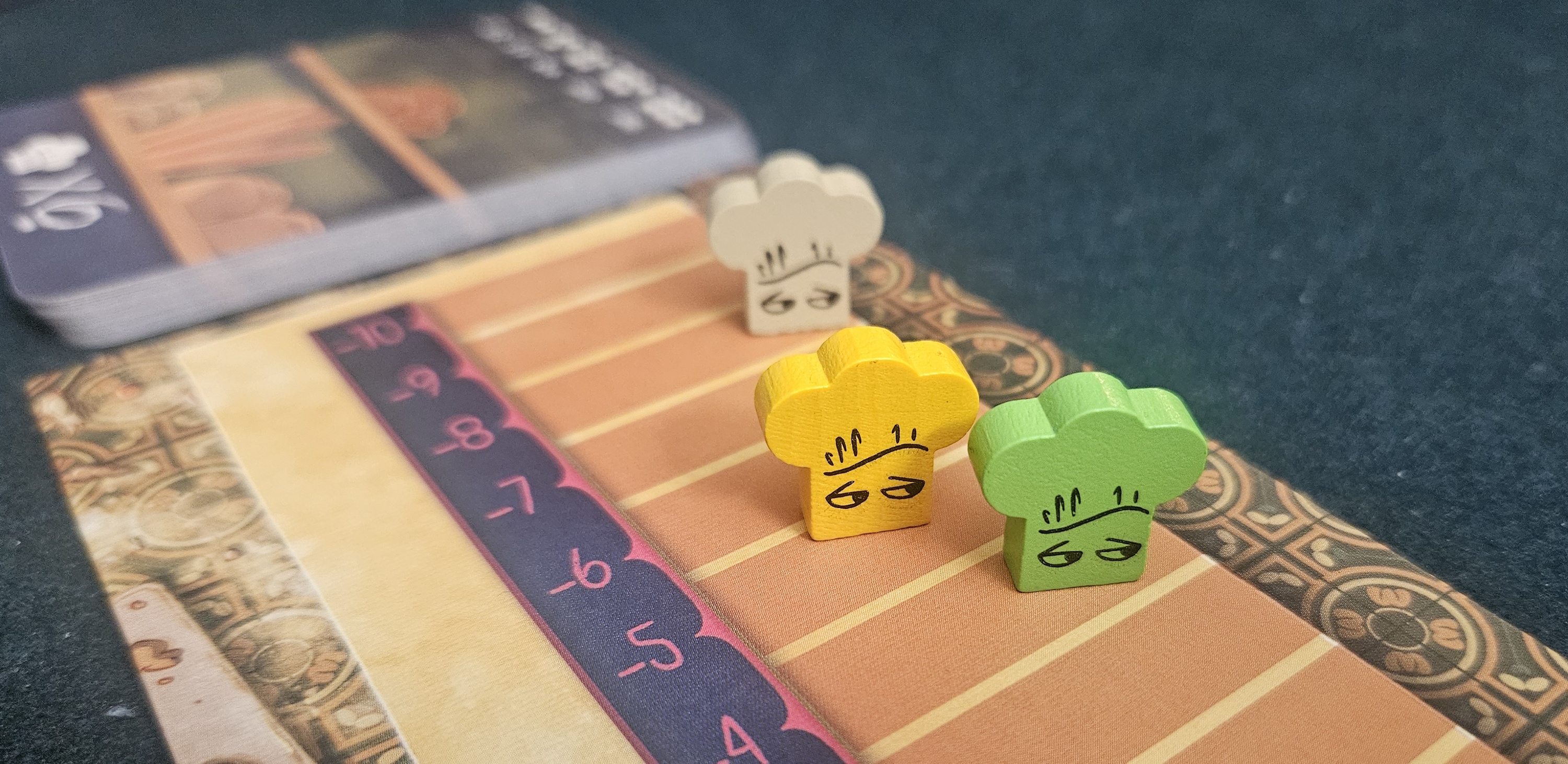
But this is where de Jong shows his cleverness. If your bakers managed the order, great. The highest contributor ticks up on the reputation track, earning a pat on the head for all their extra effort. If not, somebody is going to take the fall… but only the worst slacker. There’s plenty of wiggle room in the middle.
This is important, because while you earn a few points for moving up on the reputation track, most of your final score comes from the cards you never played. The cards ranked ten and eleven? Crucial components in any slacker’s toolkit.
I wish these bosses would go undercover.
There are a few wrinkles that prevent players from racing to the bottom.
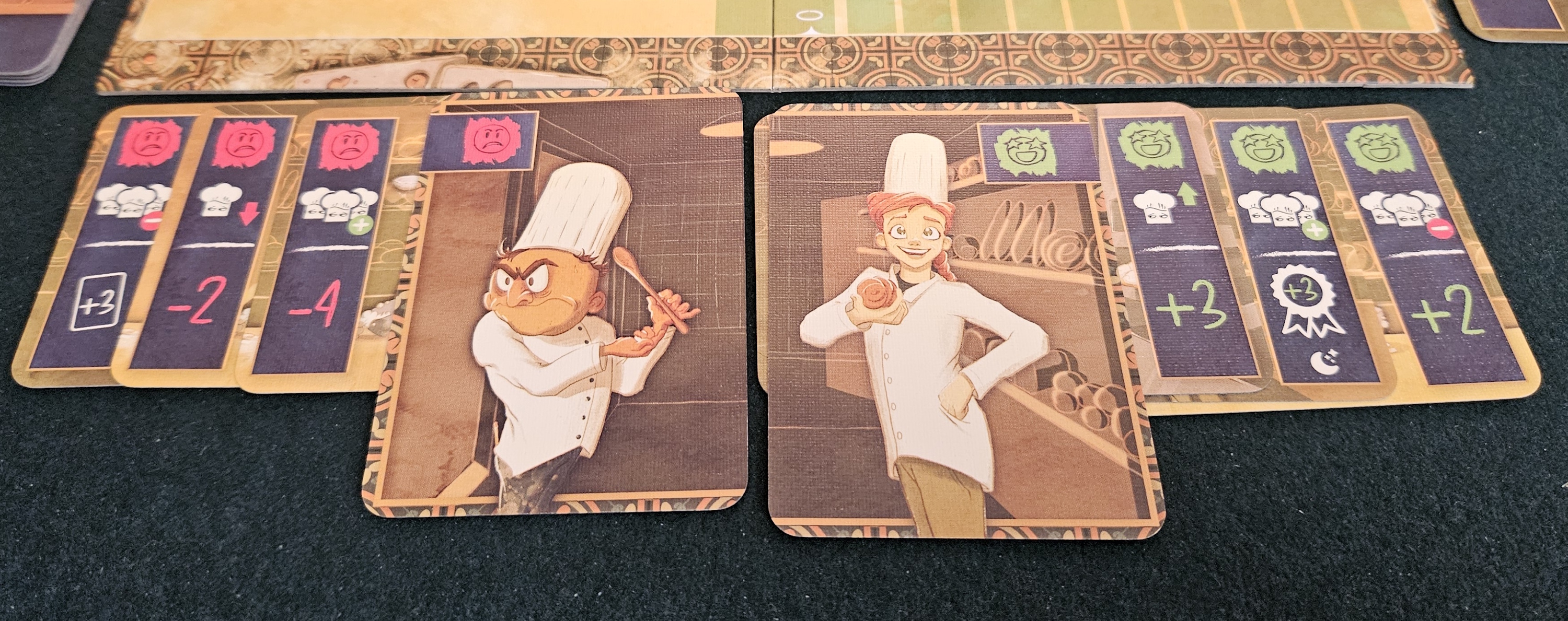
First, that daily order comes paired with an outcome. Depending on the day — and whether you’re playing with the advanced cards, which I heartily recommend everybody shuffle into the mix right away rather than neutering the game’s range of possibilities — there might be a benefit to putting in that effort. Say, the baker with the highest reputation gets to swap out a card from their hand with one they’ve played before. Or maybe everyone on the negative side of things can improve their standing in the boss’s eyes. That sort of thing.
Second, your boss is tracking all those successes and failures. L’oaf only ends once you’ve tallied five outcomes in the same category. Which is to say, you aren’t quite sure when the game will conclude. More importantly, depending on whether your bakery has a run of good or bad days, the scoring criteria are slightly modified. If the bakery fulfills more orders than it misses, everybody scores the cards in their hands. But if not, everyone with a reputation in the red is fired. No scoring for you.
This transforms L’oaf into quite the mind game. Sure, you want to slack off. But you also need to keep this job. But that means putting in effort tactically, not all the time. But that risks losing face with management if everybody else puts in more effort than you. But if everybody is putting in more effort, that means you probably won’t get fired anyway, so you might as well preserve your strength. But if somebody notices you slacking, they might slack, too.
It’s quite the pickle. In gameplay terms, L’oaf develops a certain tidal motion, players adjusting and compensating for one another, putting in more effort, then pulling back, then failing, then succeeding, and back again. It isn’t uncommon for the game to go the full distance, your boss’s angry-meter and pleased-meter both on the verge of maxing out. Which is to say, it’s surprisingly tight. At least I was surprised. A game about slacking off? Psh. I would never. Until, within a single twenty-minute play, it becomes apparent just how fine-tuned the whole experience is.
Check out these utter kings and queens.
And how familiar, too. L’oaf doesn’t only work because it’s tuned to such a precise degree. Nor does it work only because it produces such cautious predictions about how far you can strain your relationships before they snap. No, it works because it captures the long afternoons of a summer job. You know the one. The one you got up early for, the one that took out more than it gave back. Unless you’re one of those aliens who puts maximum effort into everything. In which case, by all means, return to that diet of point salads. Enjoy your fiber. You can poop a car.
For the rest of us, L’oaf is a lovely little thing. Tense, smart, relatable. Funny, too. More than once, the entire table has burst out into laughter when somebody slacked at exactly the wrong moment, their reputation dropping precipitously. Or burst into a smarmy cackle as they barely fulfilled an order and still came away rosy in the boss’s eyes. This is the good stuff. I hope Bart de Jong was sometimes late in getting a revision back to his publisher.
A complimentary copy of L’oaf was provided by the designer.
(If what I’m doing at Space-Biff! is valuable to you in some way, please consider dropping by my Patreon campaign or Ko-fi. Right now, supporters can read about which films I watched in 2025, including some brief thoughts on each. That’s 44 movies! That’s a lot, unless you see, like, 45 or more movies in a year!)
Posted on March 18, 2026, in Board Game and tagged Board Games, L'oaf, Wulfhorn Games. Bookmark the permalink. 6 Comments.

 SPACE-BIFF!
This was the game in that collection that almost got me to back the campaign, but then shipping to the US was too high for me so I passed. Glad to see it’s a good game! But that does trigger my FOMO. 😅
Interesting, I wasn’t even aware it was part of a collection! What else was in there?
This was the campaign: https://www.kickstarter.com/projects/abgd/amsterdam-board-game-design-season-2
Thanks! Of those three, L’oaf definitely looks like the most interesting.
This game has been a delight to share with friends. The humorous theme comes across as endearing and relatable. It prompts lots of smiles and laughs, especially when players get caught taking big risks. I adore the title and its double entendre.
Triple entendre, even!