Broccoli and Sulfur Pizza
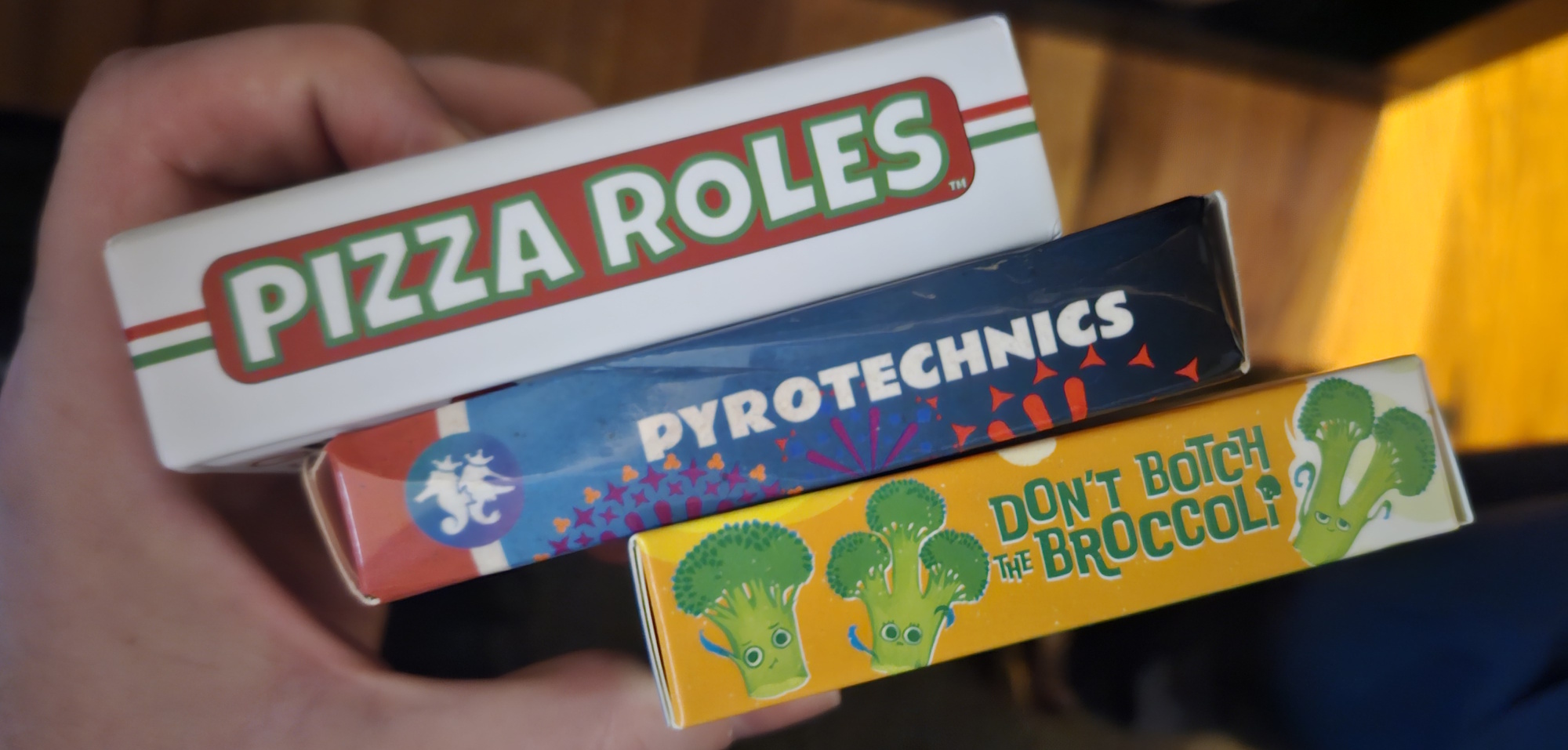
I like small games. No, smaller. Smaller. Small enough that I can fit at least three of them in my hand at once, comfortably, without even stretching. Today we’re looking at three such titles, all of which are, and I’m quoting my offspring now, “Huh! Not bad!” That’s high praise coming from a six-year-old critic.
Oh, and not a one of them is a trick-taker. Take that, tricksters.
What pervert lurks among us?
Pizza Roles
Designed by Thomas Mathews, Pizza Roles is a game about dressing a pizza, debating toppings while your pal is on the phone with the pizza place right now, and trying to conceal that all you’re in the mood for is pepperoni. It’s maybe the most relatable a board game premise has ever been.
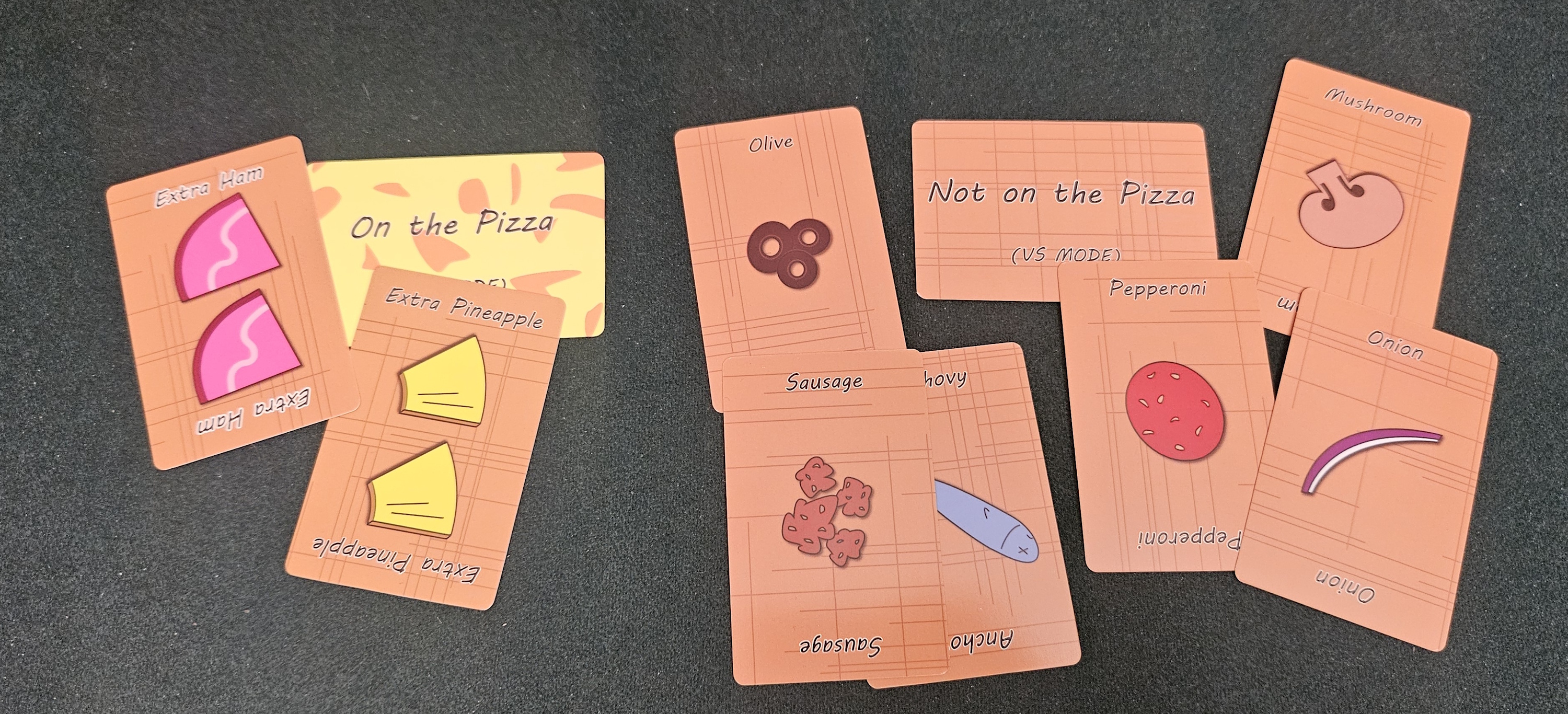
It begins with a secret. The titular pizza role, in fact. Everybody has a hidden set of preferences. Maybe you, as Fishy Fin, want to pack your pizza with anchovies, maybe with some sausage and mushrooms, but definitely anchovies. Oh, and absolutely not any pineapple or olives. Or maybe you’re more of a purist: Picky Pete, wanton lover of pepperoni, olives, and onions, but anchovies, ham, and mushrooms belong at the bottom of a composter, not anywhere near your Italian delicacy.
You can see the problem. Everybody wants something different. Sometimes those wants might overlap, but the chances of them aligning entirely are rarer than any syzygy. (Yes, this was all a ruse to use the word “syzygy.”)
What follows is an extended discussion. By which I mean a five-minute discussion, because like the pizza delivery place down the block, Pizza Roles is nothing if not speedy. Everybody has a hand of cards, each representing a different adjustment to the shared pizza you and your flatmates are ordering. Perhaps you’ll propose a topping, moving it on or off the pizza. Maybe you’ll double down on something, flipping it to its extra side. This doubles the points it’s worth, both positive and negative.
Doubling is the first of a few clever touches. The next is that certain cards encourage some minor social deduction even though this isn’t one of those hidden role games where you strictly need to figure out everybody’s stance on who to feed to the village werewolf tonight. For example, your demure pizza lover might instead select somebody else at the table to suggest a topping. If you have their preferences pegged, all the more likely that they’ll select something you also like. Or you might harbor strong feelings for somebody in the room. A crush. A grudge. Either way, these will net you points for fulfilling (or anti-fulfilling) that person’s needs. Or perhaps you just have social anxiety. These cards can’t be played at all, but they net an extra point at the end of the game.
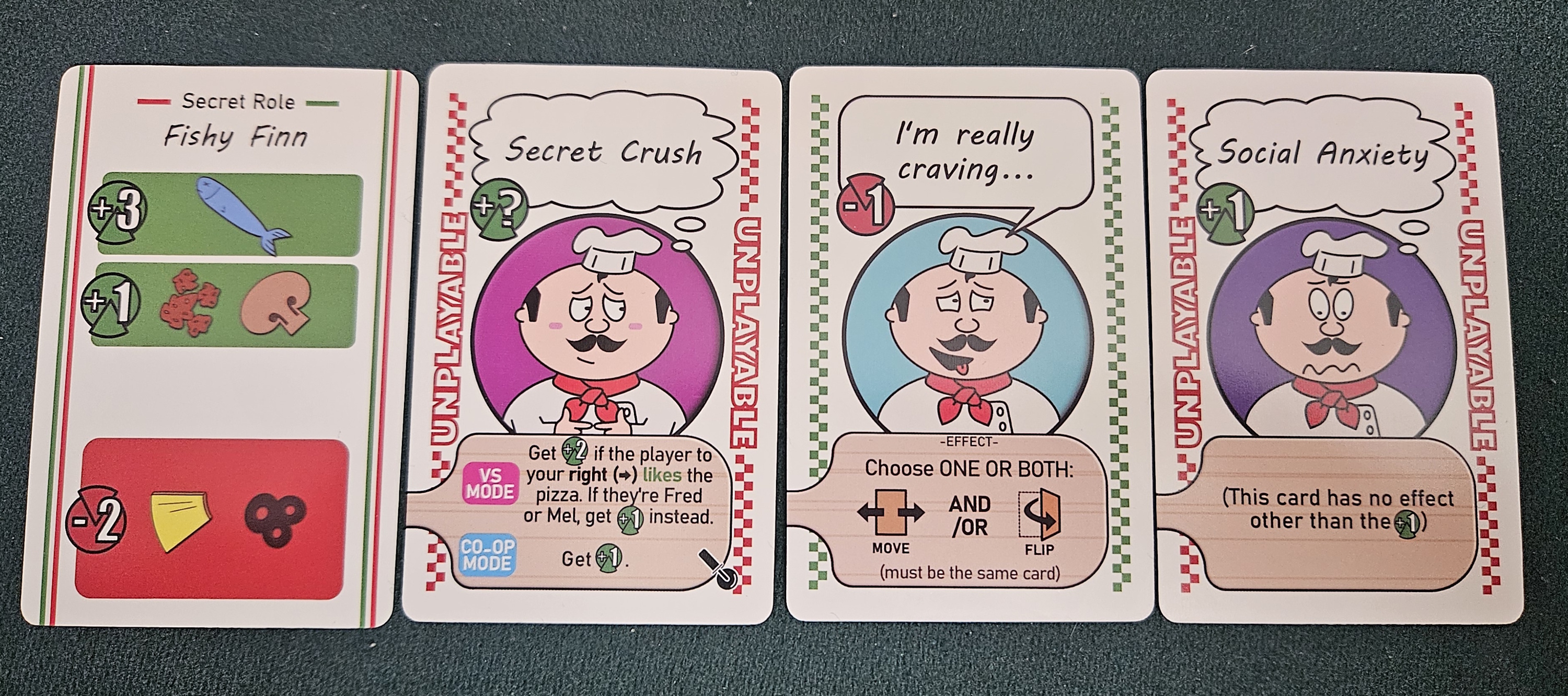
The cards are cute. Especially when you’re harboring a secret crush.
Okay, anchovies first: sometimes these cards mean you won’t have much to do. It’s entirely possible you’ll begin with a hand that only favors other players, expresses deep apprehensions that really ought to become the topic of your next therapy session, or, sure, dominate the round with powerful moves like throwing a temper tantrum to ensure everybody has to endure limp mushrooms on the dish they’re cost-splitting.
But these cards also inject a tremendous deal of uncertainty into what is otherwise a fairly rote experience. There’s no guarantee anyone will use their entire hand! In fact, it’s pretty common to go around the table a couple times, then experience a certain degree of silence. Is the pizza done? Have we done the impossible by ordering the pizza in less time than it will take to deliver? Then, uh oh, somebody raises their hand. Actually, about those olives…
There’s a cooperative mode as well. Here the goal is to ensure that everybody gets something they want across two pizzas. It’s fine, as these things go, but Pizza Roles is at its sharpest when it’s forcing confrontations. Not open confrontations, mind you. Snitty confrontations. Suggestions and scowls. Little surprises and reversals. It doesn’t always work, to be clear. Sometimes it ends before anybody starts a back-and-forth over some contentious addition.
Most of the time, it works great. It helps that this is one of those multi-victor games that have been slowly gaining momentum around the hobby’s edges. As long as the pizza earns you at least one point, you’re a winner. Maybe not as much a winner as the next fella, but a winner still. Which is to say, yeah, the taste, mouthfeel, and delivery time of Pizza Roles are all in its favor.
Lights and colors.
Pyrotechnics
I don’t know why the inclusion of tokens makes me feel like Pyrotechnics is cheating. I noted that these were little games, not that they were tokenless games. But there it is. Tokens is cheating. Even if only in my head.
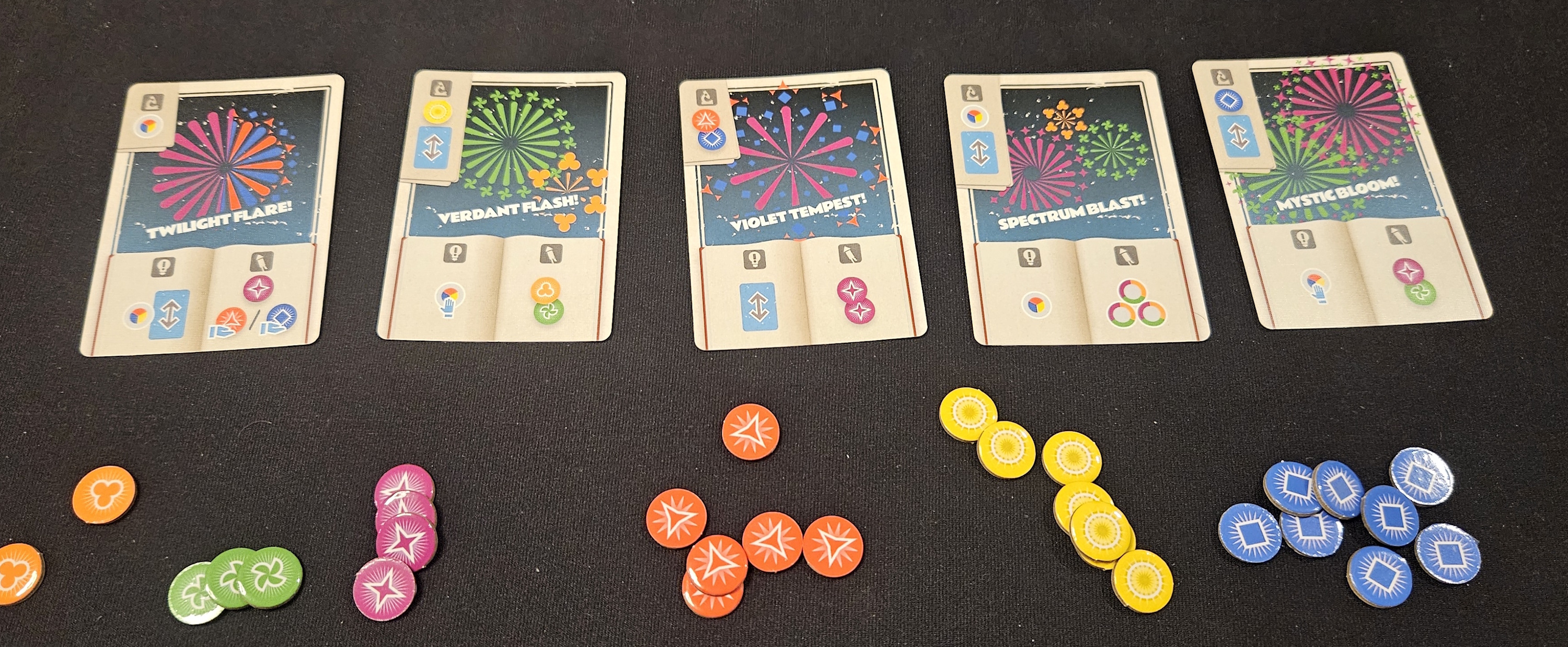
Designed by Michael Byron Sprague, Pyrotechnics is a race between two players to empty their hand of cards. Those cards, it so happens, are fireworks, while the tokens (the little cheaters) are the sparks that fill the rockets. Sparks? I know, I know, the sparks aren’t in the fireworks. That would be potassium nitrate and aluminum powder and other toxic accelerants. But maybe this is fancy fireworks talk. Just go with it.
Anyway, Pyrotechnics blends resource conversion and hand management. On a turn, I pick a card from my hand to use for its research value. Usually this earns a basic spark, one of the primary colors, or maybe lets me blend two basic sparks into an advanced color. Easy enough. But now I pick a firework from the center row. This I either also use for its income — using a different portion of the card this time — or exchange the necessary sparks to set it off. Either way, the card I played from my hand is now shifted into the marketplace, while the card that previously sat in the middle either goes in front of me as a finished product or shifts into my hand.
It’s simpler than it sounds, especially after one quick hand. The main takeaway is that everything is always in motion. Your sparks, which are always being alchemized into different sparks, or even stolen outright by your uppity firework rival, but the cards in your hand and/or market as well. Anything in the middle can be used by your opponent, but it’s inevitable that something you’re holding will eventually become more valuable in the middle than taking up space in your hand. Thus your cards move in and out of public circulation, in and out of safety.
There’s probably a chemistry lesson in there. Something about change.
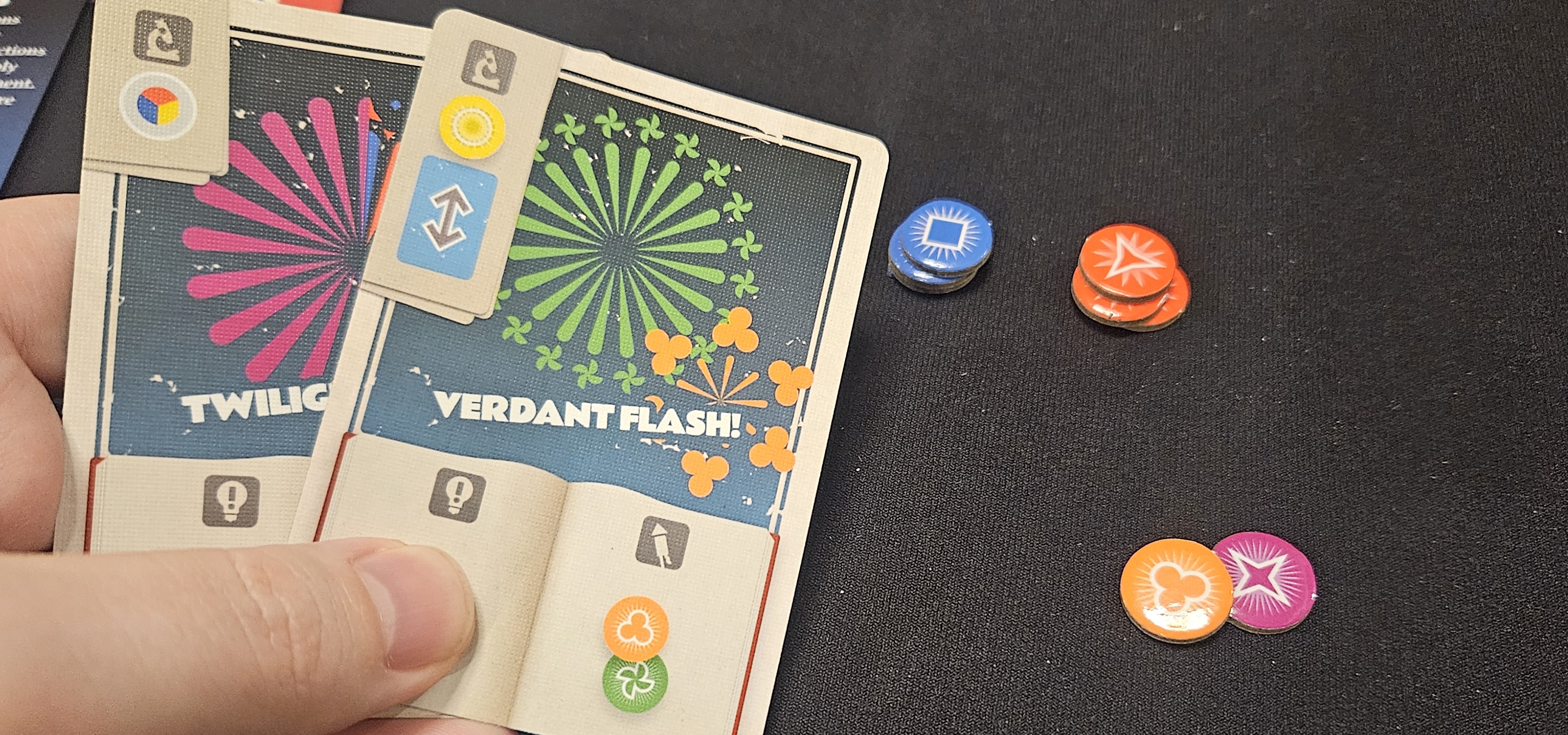
My hand is getting thin. That’s a good thing.
Pyrotechnics is a tidy little game, especially once you realize it’s about managing your opponent as much as it is about swapping colors. Successfully becoming a Feuerwerksmeister means keeping an eye on your opponent: which sparks they’re holding, which fireworks they’re intent on launching, even the cards that circulate into their hand. This isn’t strictly necessary; it’s possible to play as poorly as you like. But since this is a race, every detail is valuable information.
Especially since there’s room for low-key sabotage. Extremely low-key, but still. There’s nothing stopping you from hoarding certain colors, picking up a card one turn before your opponent launches it, or leaning into the “steal a spark” powers. These become sharper as both players empty their hands, leaving more of the card-share on the table. These ever-tightening constraints turn the back half into a frantic dash for the last few essential powers.
If there’s any one problem for Pyrotechnics, it’s that the entire thing is too tidy, with exchanges that are a little too bankable to permit truly cunning plays. Sprague avoids the common newbie pitfall of making the game too balanced; here there are plenty of card effects that are twice as powerful as others. But the action economy is tight enough, and the actions similar enough, that most moves struggle to distinguish themselves from those sitting to their right and left. For a game filled with sparks and fireworks, it wouldn’t have been a bad thing to permit the occasional chemical reaction.
On the whole, though, Pyrotechnics is a successful two-player race. It’s colorful, pleasant, and encourages constant trade-offs. Also, the tokens are fine. (Shudder.)
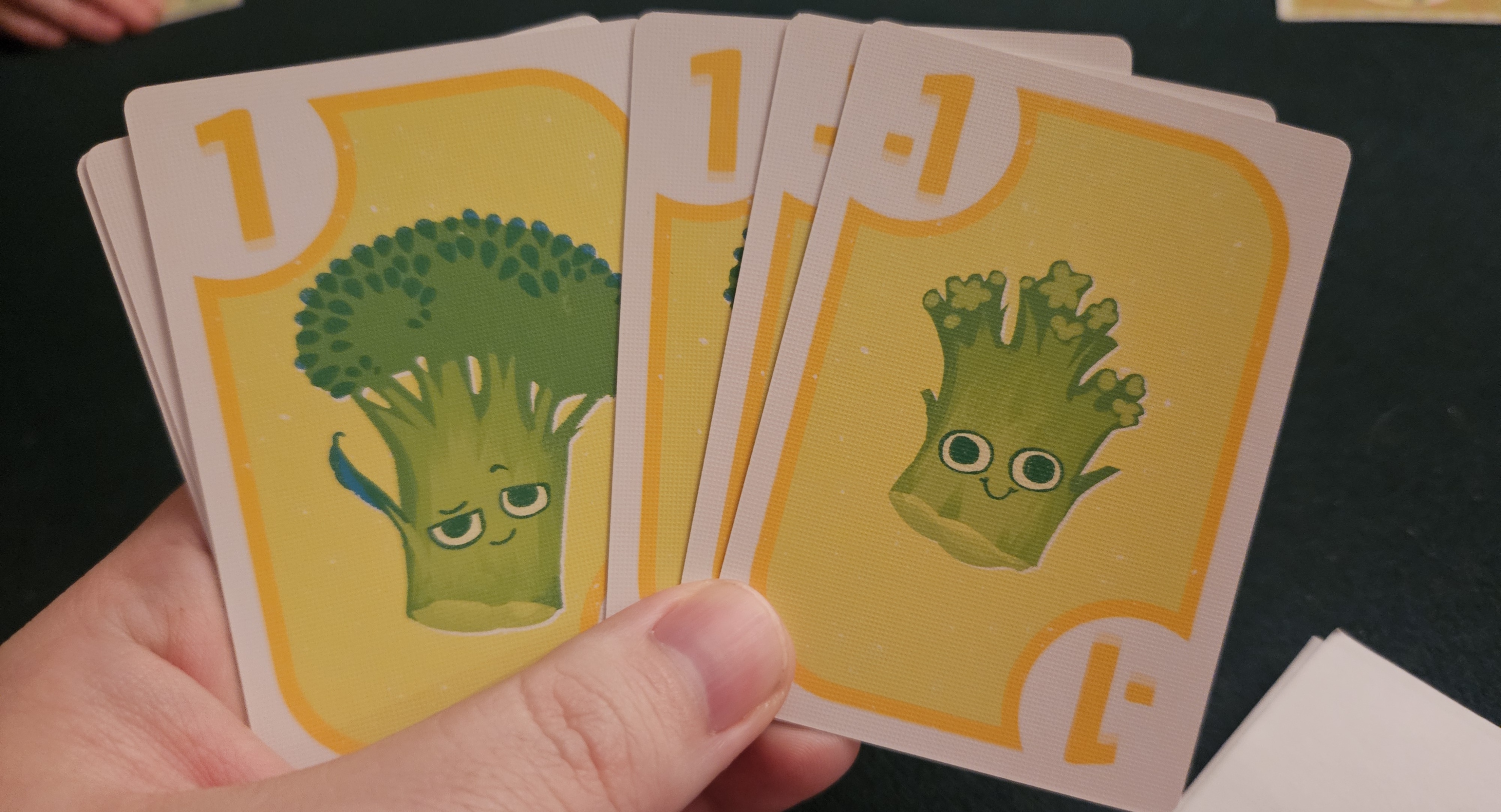
Happy broccolis.
Don’t Botch the Broccoli
Unlike the previous two titles in today’s steamer, Don’t Botch the Broccoli isn’t a freshman outing. I covered Mark McGee’s previous title, the perspective-altering Tether, just a couple years back. The unfortunate side-effect is that this particular batch of broccoli left me colder (and limper, and more sulfurous) than expected. Perhaps that isn’t fair. At a certain level, Don’t Botch the Broccoli is hyper-competent at what it sets out to do.
The idea is simple enough. This is one of those games where everybody plays a card hoping nobody will play its duplicate. The problem is that cards have a range of values, from a score-erasing negative one all the way up to positive four. Obviously, you’re going to play the four. Obviously. But then somebody else will also play the four, and that’s the batch botched.
Or, well, that’s how it would normally go. McGee is too clever for that. Instead, matching numbers are all added to your “steamer,” a face-up stack of cards in front of you. Then, and only then, the lowest remaining number finishes cooking, moving both that card and every single card in its owner’s steamer to their scoring pile. All other cards botch, moving them and their steamer’s contents back into their owner’s hand.
In other words, you want to get high numbers into your scoring pile, but you also want to play low cards in order to finish cooking everything. This encourages some interesting behaviors. For once, high cards are somewhat poisonous, at least when it comes to steaming. But the more you add to your steamer, the more information you’ve sputtered onto the table. Now everyone else can try to sabotage your cookery.
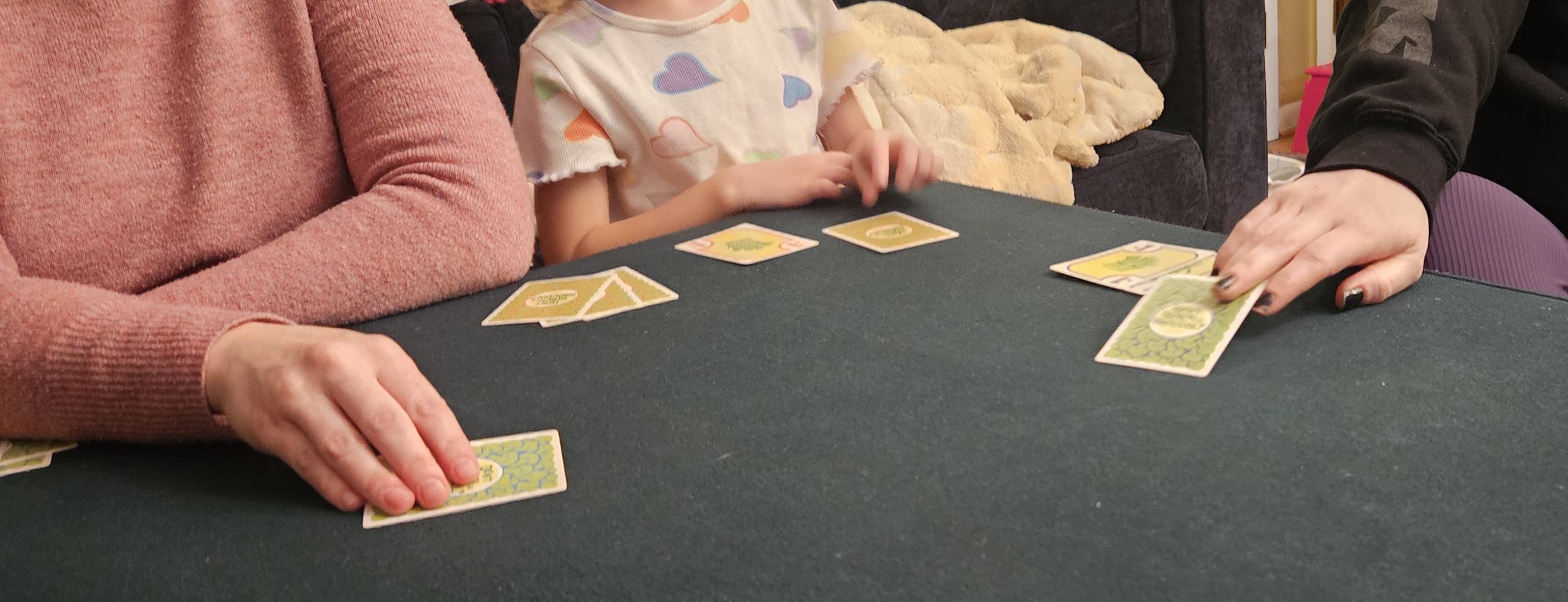
Don’t Botch is easy to play with kids. Take that as you will.
Does this have anything to do with broccoli? I don’t think so, and I’ve charred my share of the cruciferous bastards. But as a psychological game, Don’t Botch the Broccoli comes across as the Platonic Ideal of the form, stripped of every extemporaneous flourish.
Turns out, I like those flourishes. At least I like some of them. There’s a certain emptiness to Don’t Botch the Broccoli that prevents me from wanting to spend more time in its presence. Too often, I feel like the strongest play might as well be to select randomly from my hand. And, look, I know that isn’t the case. There are considerations to be made, inferences to draw, guesses that are better informed than ignorant. But it doesn’t always feel that way.
Or maybe that’s because my six-year-old keeps winning. To the game’s credit, everyone in my household can play with equal adroitness. To its diminishment, even the kiddos don’t think much of it. When I last dragged it out, both girls asked if we could instead play anything else. Those were their exact words: “Anything else.” Ouch. (Also, they’re lying. There are games they despise with white-hot rage. It’s just that I know better than to produce those games during family time.)
Anyway, that’s the final title in this particular steamer. Sadly, it’s a bitter irony that Don’t Botch the Broccoli was the one that got botched.
Complimentary copies of Pizza Roles, Pyrotechnics, and Don’t Botch the Broccoli were provided by their respective designers.
(If what I’m doing at Space-Biff! is valuable to you in some way, please consider dropping by my Patreon campaign or Ko-fi. Right now, supporters can read about which films I watched in 2025, including some brief thoughts on each. That’s 44 movies! That’s a lot, unless you see, like, 45 or more movies in a year!)
Posted on March 10, 2026, in Board Game and tagged Board Games, Don't Botch the Broccoli, How to Steam Broccoli, Pet Roc Games, Pizza Roles, Pyrotechnics, The Seahorse and the Hummingbird. Bookmark the permalink. 4 Comments.

 SPACE-BIFF!
poor broccoli 🥦
Oooh, Pizza Roles looks like it has similar flavors to Duhr and Courtesans! I love these secret objective social games where everyone has a unique starting goal–more of them please!
Thinner, thenar, huh? Nice work.
Thank you. I’m sizzling off those calories.