Monopoly Ruins a Great Train Robbery
Early in the rulebook for The Glasgow Train Robbery, designers Eloi Pujadas and Ferran Renalias — whose names you might recognize from fashion dueler The Battle of Versailles — clearly spell out their stance on the 1963 train robbery that is the topic of their game. “The Glasgow Train Robbery is a board game inspired by historical events,” the disclaimer reads. “It does not intend to glorify crime or violence.”
Look, I’ll just come out and say what we’re all thinking: Unlike Pujadas and Renalias, I absolutely intend to glorify robbing a train full of cash. That’s the coolest and most morally correct action a human being can take. Yes, people were hurt. Yes, property was stolen. But the only villain here is Monopoly. That’s right, the board game. Without it, the heist would have been successful.
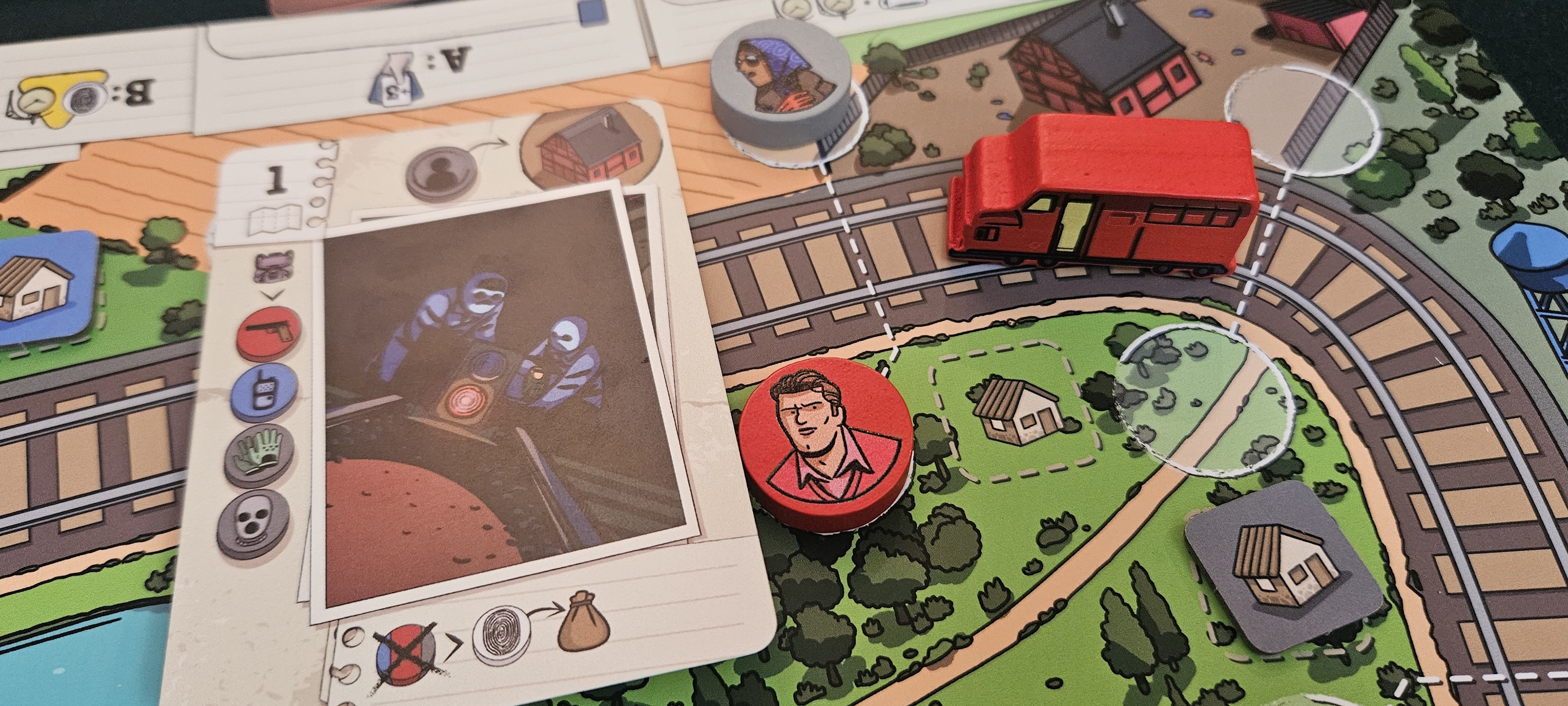
How to rob a train, a step-by-step primer.
When The Glasgow Train Robbery opens, we find ourselves in the shoes of those plucky gangsters during the early hours of 8 August 1963. It’s dark out. The nearby town is asleep. The tracks are beginning to hum.
The gang consists of roughly fifteen individuals, although Pujadas and Renalias limit their players to two roles. First up is the Coordinator. This player is tasked with running things from the safe house: tallying inventory, passing out equipment, minding how much evidence the crew leaves in their wake, keeping everybody on the same page. Next is the Operative. They’re out in the field, moving down the paths that run parallel to the tracks, ferrying tools and manpower from one place to another, handling problems on the fly.
Right away, the beauty of this particular cooperative system is that it doesn’t quite resemble anything that’s come before it. There are antecedents, of course, but they’re pleasantly muted. Unlike the world’s thousand Pandemic imitators, this isn’t one of those games that sees players responding to three fresh crises per turn; unlike our hobby’s countless adventure games, there are no encounters to resolve.
Instead, the core experience could be described as one of fragmentary communication. There are plenty of board games about that, too, but here the few garbled words spoken through commercial walkie-talkies are especially precious. Both players have their jobs to do, and they’re different enough that they only intersect at certain junctures. But those junctures are crucial enough that even the slightest misstep can result in mission failure.
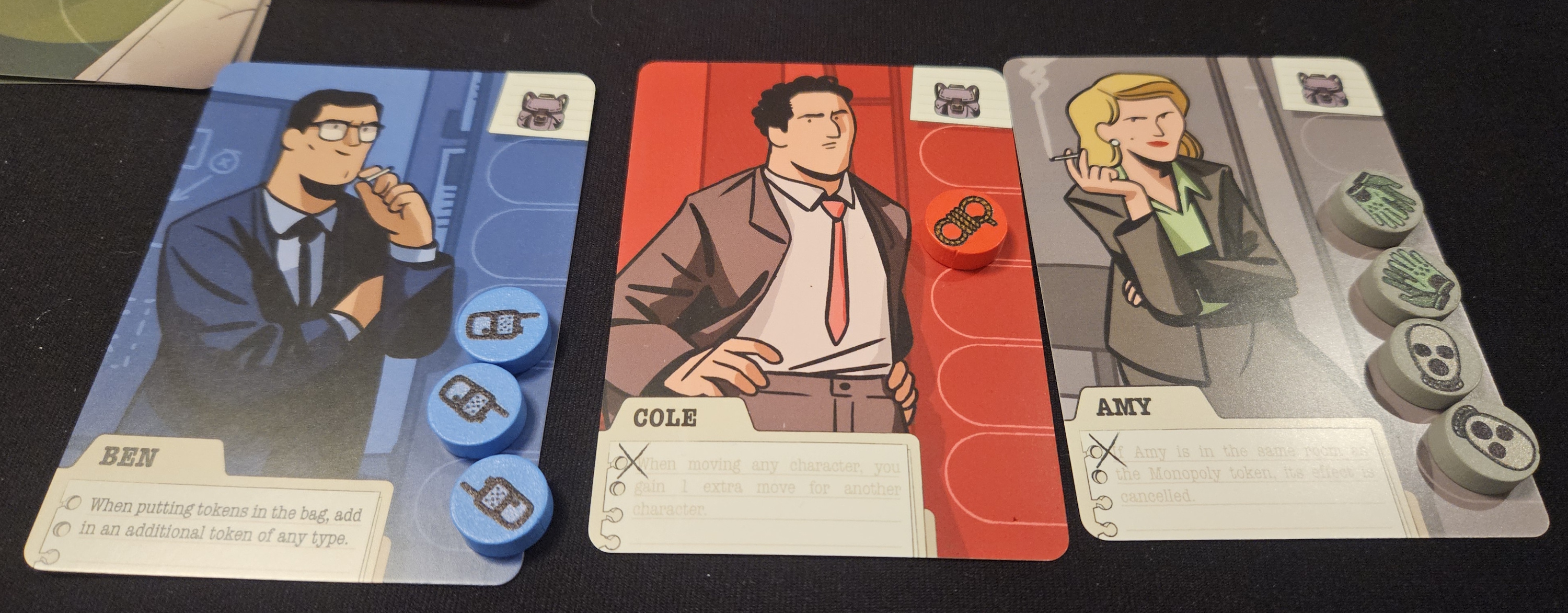
Each character can carry a limited number of tools.
Here’s what this setup looks like. At any given moment, both players are neck-deep in their own concerns. The Coordinator is running a safe house that’s been transformed into a temporary loading dock, crammed full of coiled rope and guns and masks and gloves. They have plenty of helpers — nine people in that little farmhouse when the game begins — but it’s still all they can do to pass out enough tools.
Outside, the Operative is playing their own game. They take those tools and head down to the tracks. There they use their limited manpower to access caches of equipment, quiet any passing patrols, and, above all, prepare for the train’s arrival.
In other words, while one person plays warehouse manager, the other is playing a movement game with a sprinkling of whack-a-mole.
But as the train grows closer, the game counting down its passage one sleeper at a time, those roles converge. There are five steps to the plan: stop the train, tie up the crew, unhitch the back cars, roll the mail car into position, unload the loot onto the waiting truck. Each step requires the players to get the right people into the right locations, not to mention bring along the proper tools. The details of those steps, however, are unknown when the game begins. Worse, once known, they can’t be communicated openly.
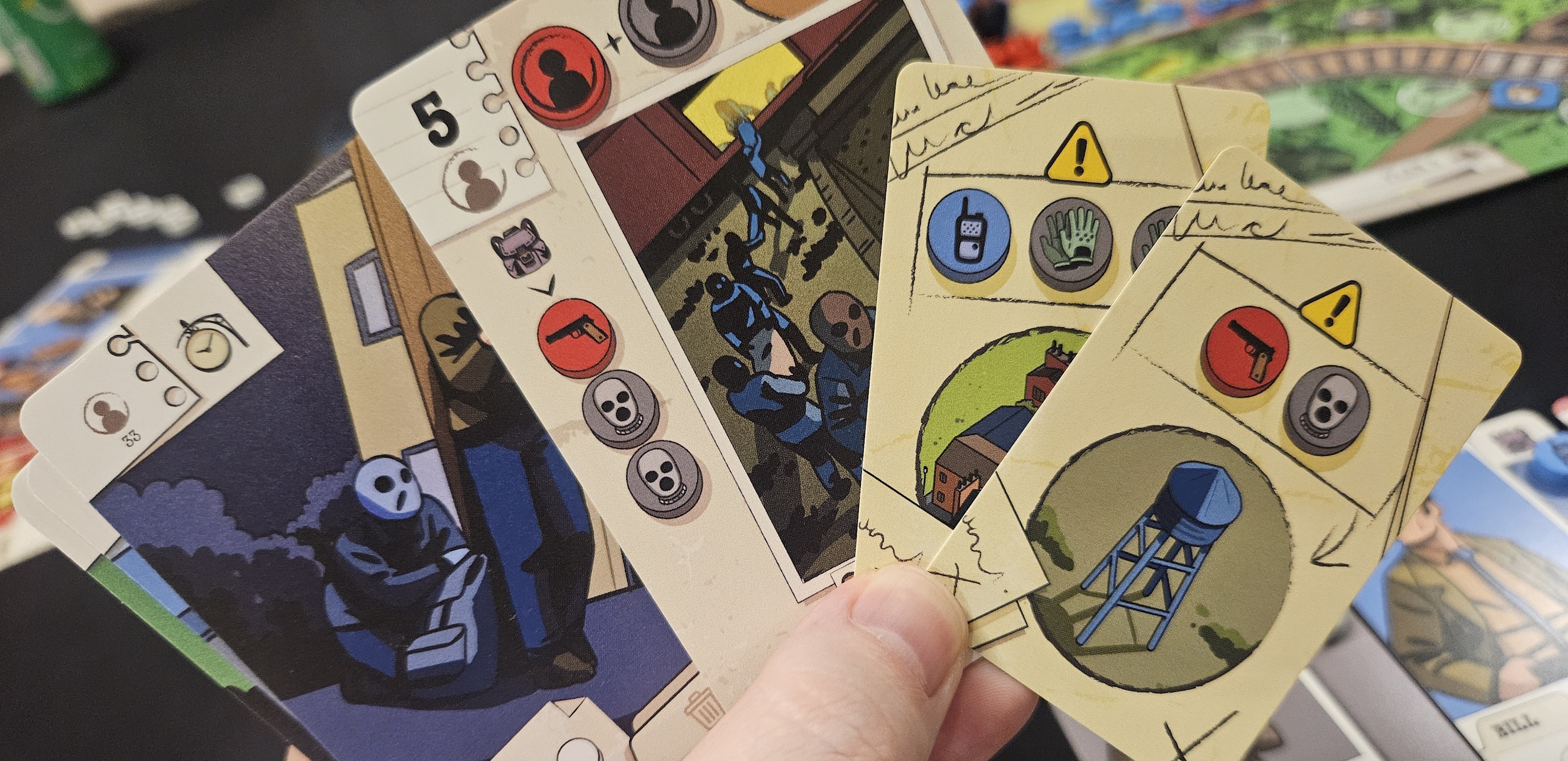
As the Operative, you need to tackle problems as they crop up.
Instead of talking like mature adults, the Coordinator and Operative prefer to communicate solely through signals and occasional bursts of static. Toxic masculinity, am I right? This presents some unique conundrums. Perhaps the upcoming step will require the train to stop alongside the open field with the tractor, require an individual with technical aptitude to be nearby, and ideally provide some walkie-talkies and batteries for rejiggering the whatsit.
But as the Coordinator, how do you tell your partner what you need? As the Operative, how do you hint that you need an extra gun and some gloves to solve the problem over at the water tower? The easiest option is to call them up on the radio, but these opportunities are few and far between. Limited, too, with players only capable of speaking two or three words per card. So other possibilities appear. Maybe you can divide the tools in such a way that your partner realizes you need extra rope. Maybe you boot another smooth-talker out of the safe house for them to walk down to the tracks. Maybe, eventually, you thump the table or something. That’s probably cheating. But you know what they say. Ninety percent of all communication is cheating.
What begins somewhat sedately, that train seeming distant enough that there’s no need to rush, very quickly becomes a race to tackle the last few steps and get away free and clear. It’s a brilliant little system, capturing both the drawn-out tension of planning and the scurry of tackling a half-dozen problems at once. As new witnesses wander into the scene, as the evidence accumulates, as the train gets closer to passing in the night, the game starts to feel suitably close to any number of heists we’ve only watched on the screen or read about in thrillers.
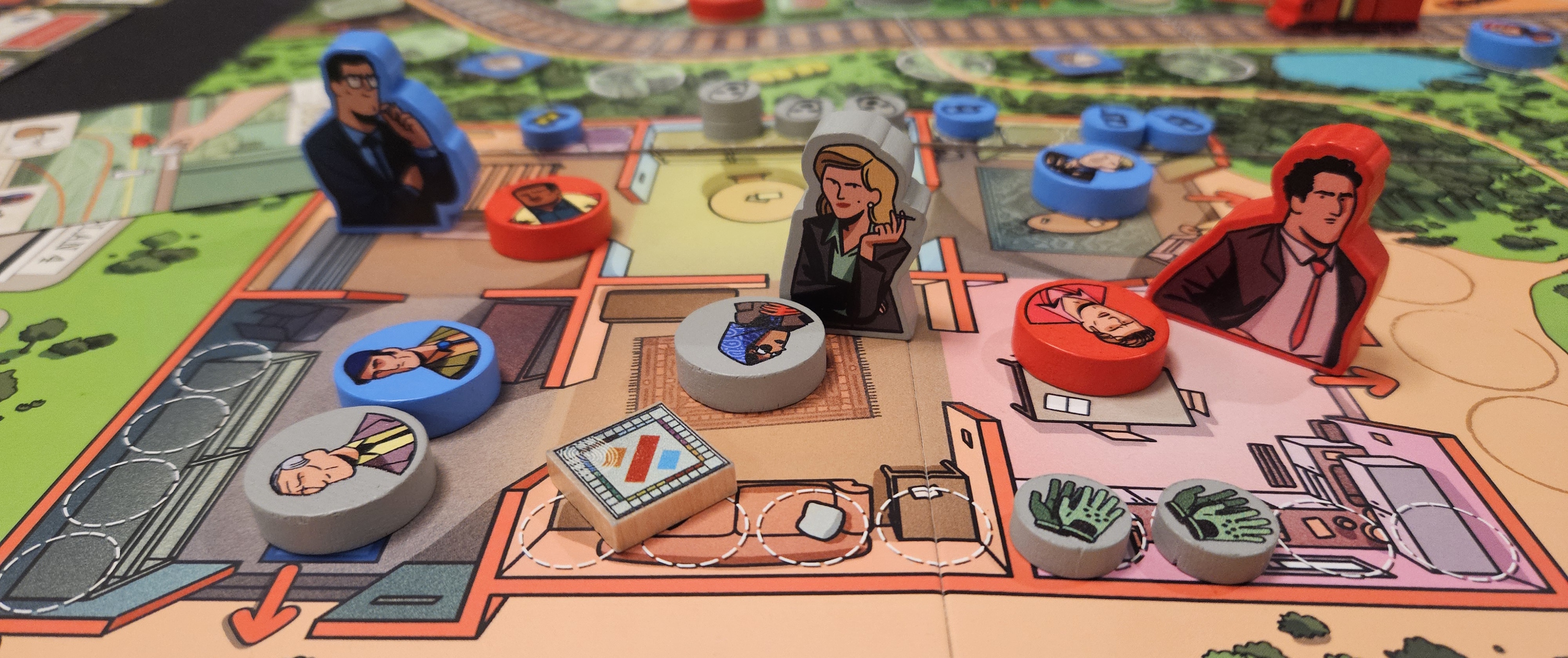
Leaving as many fingerprints on this Monopoly board as possible.
After a few tries, the game’s limited communication becomes second nature. You and your partner in crime learn to divvy up tools like two hands of the same body, deploy gangsters to their proper posts at exactly the right moment, and handle your own troubles without making them the other guy’s problem. This is when Pujadas and Renalias suggest to begin mixing in additional modules. Now there are patrols on the tracks, or your insider on the train needs help overpowering the conductor, or there’s an all-new way to distribute tools that’s more powerful but also more dangerous. There isn’t unlimited variety here, but the game contains more to explore than I first assumed.
Along the way, perhaps the game’s one misstep is that the roles aren’t equally interesting to play. The Operative is the more challenging and dynamic job, always shifting between issues as they arise, while the Coordinator mostly feels like a glorified warehouse manager who’s sorting guns and balaclavas instead of crates of cereal and T.P. The distinction isn’t that great — both tasks are still challenging — but the Coordinator is given the lion’s share of the game’s intel while their partner gropes around in the darkness.
And then there’s Monopoly. The historical Great Train Robbery of 1963 very nearly got away with the crime. But while waiting in their safe house, they passed the time by playing the Parker Brothers ripoff that would compel multiple generations to associate board games with tedium. Even after the gang wiped the place down for fingerprints, and paid some bum to burn it to the ground (he ran off), Monopoly preserved everyone’s fingerprints. Most of them, anyway. Some members of the gang were never caught, and the money was never recovered. We can take some consolation from that.
(Yes, the game does include the Monopoly board! It’s the main component in what is basically a miniature rondel game for the Coordinator. Evidence piles up whenever anybody is left in the room with the game. It’s very silly. But like many silly things that seem too goofy for fiction, it’s also what happened in real life, so I’m happy to see it included.)
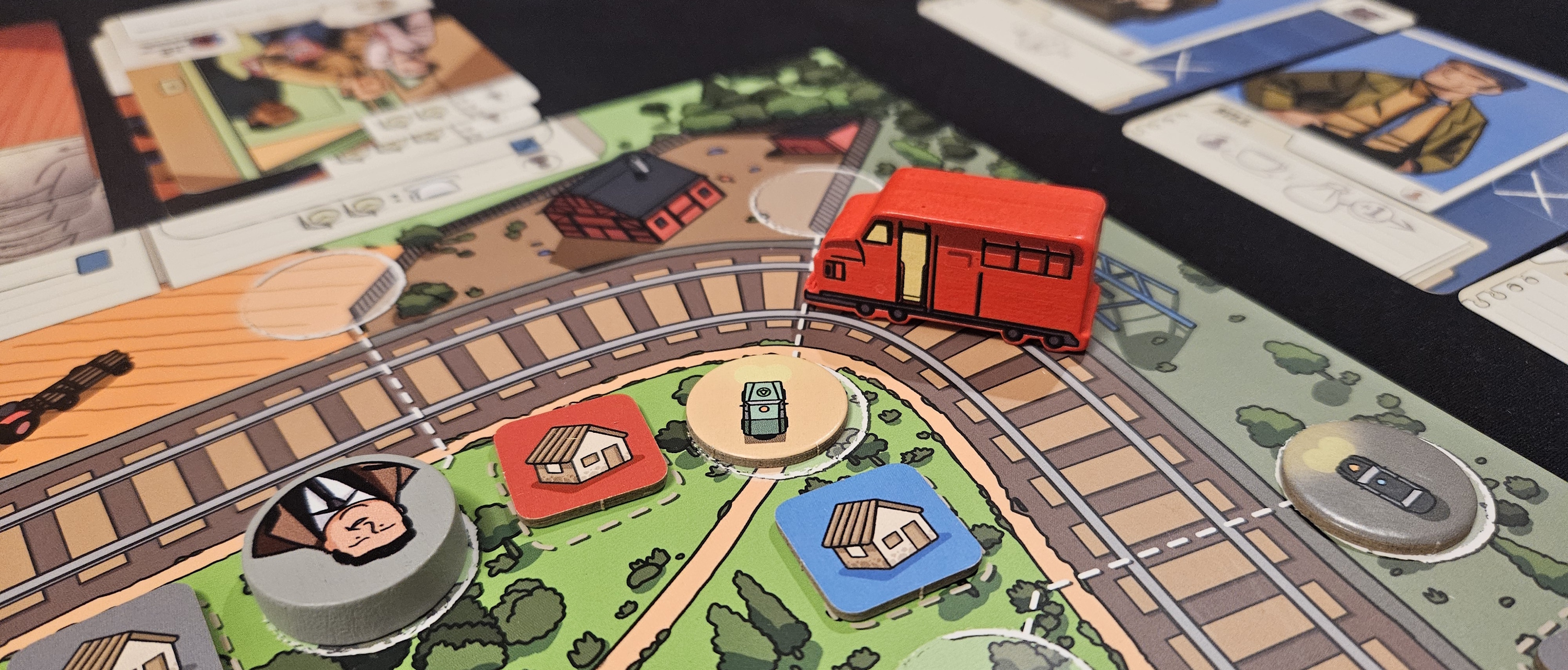
A handful of modules make the heist even harder to pull off.
I’ve written before that Salt & Pepper is publishing some of historical board gaming’s most interesting titles right now. Whether they’re examining war criminals, papal conclaves, naval hunts, anarchist guerrillas, or Pujadas and Renalias’s own game of high fashion, I can always count on them to deliver a colorful, evocative, and capable portrayal of history. The Glasgow Train Robbery is no exception. It draws on familiar tropes while still feeling fresh, covers some surprisingly dense subject matter with a few clever turns of abstraction, and above all produces a kettle-tight heist unlike any other I’ve tabled to date.
A prototype copy of The Glasgow Train Robbery was temporarily provided by the publisher, but unlike some prototypes it was 99% finished, so I’m calling this a review.
(If what I’m doing at Space-Biff! is valuable to you in some way, please consider dropping by my Patreon campaign or Ko-fi. Right now, supporters can read about which films I watched in 2025, including some brief thoughts on each. That’s 44 movies! That’s a lot, unless you see, like, 45 or more movies in a year!)
Posted on March 9, 2026, in Board Game and tagged Board Games, Salt & Pepper Games, The Glasgow Train Robbery. Bookmark the permalink. 3 Comments.

 SPACE-BIFF!
I’ll come out and say it too, glorifying people getting hurt and acting like its cool, which the game doesnt intend to do, just goes to show how dumb you are.
I didnt care to read after that.
Haha, thanks for the laugh. I needed that. Have a great day!
Find yourself a good primer on literary rhetoric, focused on irony and satire, and come back some day.
You might just enjoy yourself!